This week, Colombia will undergo one of the most consequential political transitions in its recent history as right-wing President-elect Abelardo de la Espriella succeeds left-wing President Gustavo Petro.
Like several other Latin American countries that have shifted to the right, Colombia is likely to face deepening polarization, suggesting that a strong opposition, possibly led by Petro himself, will emerge.
The new administration will inherit a mixed economic legacy. On the social front, multidimensional poverty has continued to decline, a trend that dates back to the 1991 constitution and has been supported by sustained growth in social spending.
But these gains reflect improved access to education, health care, public utilities, and housing, rather than meaningful improvements in income.
Meanwhile, the rural-urban gap has widened, and the health-care system faces a deep crisis.
Similarly, while unemployment has declined significantly under the Petro administration, much of this improvement appears to reflect the expansion of public-sector employment.
Progress could thus be reversed by the necessary fiscal adjustment the new government is expected to undertake.
Labor-market informality remains extremely high, affecting nearly half of urban workers and more than four-fifths of those in rural areas.
Growth of non-traditional exports
At the same time, the new administration’s 7% growth target seems overly ambitious.
A more realistic objective—perhaps around 4%—could be achieved through a recovery in sectors that performed poorly under Petro, such as oil, mining, and construction.
Yet the top priority is to stimulate investment, which has hovered around 17% of GDP in recent years, compared with roughly 22% during the 2010s.
Another priority will be sustaining the growth of non-traditional exports, which in Colombia refers to exports other than oil, coal, and coffee.
El Niño could disrupt agricultural production while increasing the risk of electricity rationing
The success of this effort will depend on whether the central bank’s recently approved interventions in the foreign-exchange market can slow the peso’s sharp appreciation.
US President Donald Trump’s tariffs are also poised to weigh on export growth, although their effects could be partly offset by economic recovery in Venezuela, formerly Colombia’s second-largest trading partner.
Plenty more challenges are clouding the near-term outlook. El Niño could disrupt agricultural production while increasing the risk of electricity rationing.
Colombia’s heavy reliance on hydroelectric power, limited generation capacity (which expanded only slowly under Petro), and a growing natural-gas shortage leave the country particularly vulnerable.
High interest rates, maintained by the central bank to contain rising inflation, could also slow economic activity.
Fiscal crisis
Looming over all these challenges is the severe fiscal crisis the new government will inherit.
Since 2024, fiscal deficits have exceeded 6% of GDP—among the highest in Latin America. Public debt rose above 66% of GDP in 2025, one of the highest levels in Colombia’s history.
Much will depend on the scale of the budget cuts the government actually implements.
De la Espriella aims to reduce public spending by roughly 3% of GDP through a “shock plan” that involves eliminating a significant number of public-sector jobs.
But this target will be hard to achieve given the limited flexibility of many spending categories and the need for additional funding for health care and other key sectors.
A major tax reform may ultimately prove necessary, although de la Espriella’s team has indicated that it is not an immediate priority
A major tax reform may ultimately prove necessary, although de la Espriella’s team has indicated that it is not an immediate priority.
On the positive side, interest rates on both domestic and external public debt have declined since the election, reflecting improved market confidence.
Whether this trend continues will hinge on the credibility of the new government’s fiscal policies.
National security
There are, of course, other major concerns. National security was the central issue in de la Espriella’s campaign, and delivering on his pledge to dismantle illegal armed groups may require additional spending.
Equally important is rebuilding the public sector’s administrative capacity, particularly in health care, where the erosion has been most severe.
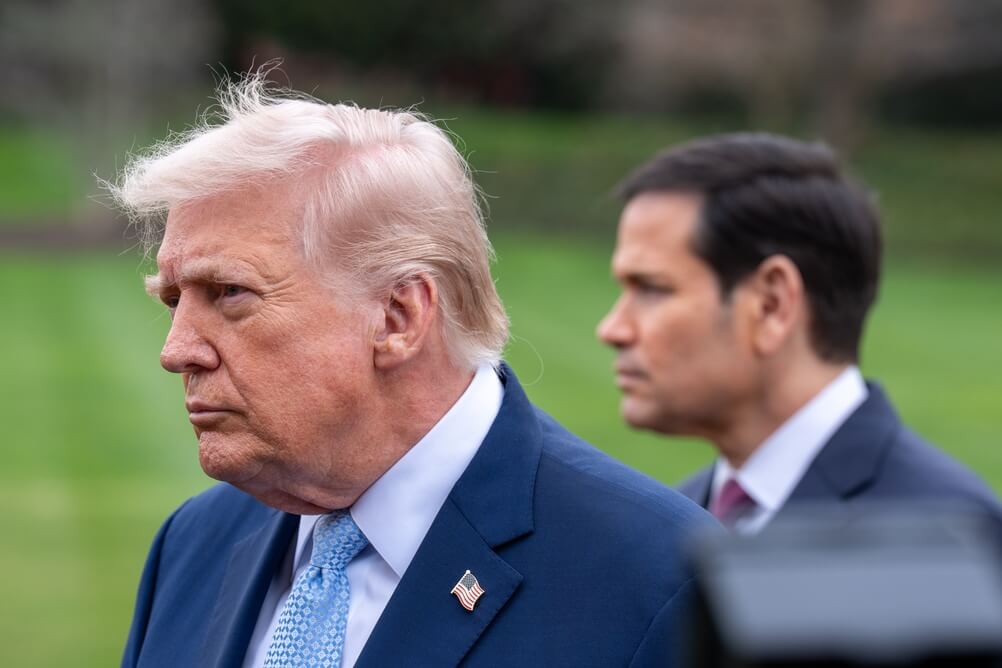 One of the new government’s first tests will be how closely it aligns itself with the Trump administration
Lastly, there is the question of foreign policy. One of the new government’s first tests will be how closely it aligns itself with the Trump administration.
Some of de la Espriella’s proposals, including his plan to limit Colombia’s participation in the United Nations and other multilateral institutions and sever diplomatic ties with Cuba, have already provoked strong domestic opposition.
Whether these policies will ultimately be adopted, however, remains to be seen.
Taken together, these challenges leave the incoming administration with a daunting agenda.
For Colombia’s rightward shift to bear fruit, the new government will need to restore fiscal stability and boost investment without sacrificing the social gains of the past few decades.
José Antonio Ocampo, a former United Nations under-secretary-general and a former minister of finance and public credit of Colombia, is a professor at Columbia University, a member of the UN Committee for Development Policy, and a member of the Independent Commission for the Reform of International Corporate Taxation.
