Wildfires have once again devastated parts of Europe this summer. One affected area was Zaragoza, the region I grew up in. Extreme heat has pushed temperatures to dangerous levels across the continent, while drought and dry vegetation have created conditions in which fires can spread rapidly.
The economic cost of this summer's European wildfires has already exceeded €15 billion, according to Reuters.
We now need technology to help us understand environmental change, predict extreme events, protect communities, manage energy systems, restore ecosystems, and adapt to new conditions.
That creates a much bigger technology opportunity. We need satellites watching our planet from orbit. We need artificial intelligence analysing enormous quantities of environmental data. We need smarter electricity grids. We need energy storage that can balance intermittent generation. We need sensors monitoring forests, agriculture, water systems, and infrastructure. We need better ways to manage heat, drought, flooding, and wildfire risk.
The goal cannot simply involve building cleaner technology. The goal should involve building a more resilient planet.
From satellites to AI, technology can help us see the crisis earlier
One of the most important developments involves something we rarely see directly. Data.
Our planet generates extraordinary amounts of environmental data every day. Satellites capture imagery, weather systems generate continuous measurements, sensors monitor soil, water, air quality, temperature, and vegetation. Governments and research organisations collect historical records stretching back decades.
The challenge involves turning all of this information into decisions quickly enough to make a difference.
This creates an enormous opportunity for artificial intelligence, and wildfire management provides a compelling example.
Europe already operates sophisticated systems through Copernicus and the European Forest Fire Information System. EFFIS tracks fire danger, detects active fires, assesses damage, monitors emissions and smoke dispersion, evaluates potential soil loss, and tracks vegetation regeneration.
The system draws on data from 43 countries and contains almost two million fire records from participating countries. Wildfire management starts long before firefighters arrive.
We need technology to tell us where a fire could become dangerous before it reaches that point
AI can analyse satellite imagery, weather conditions, vegetation moisture, wind patterns, terrain, and historical fire behaviour to identify areas with elevated risk.
Researchers are already exploring AI models capable of detecting fires and smoke from satellite imagery and producing prioritised risk assessments.
Other research explores onboard processing, allowing satellites to analyse imagery closer to the point of collection instead of sending every image back to Earth for processing.
The role of technology is changing. We don't need technology only to tell us where a fire is burning. We need technology to tell us where a fire could become dangerous before it reaches that point. The same principle applies across the environmental technology ecosystem.
The real opportunity comes from connecting capabilities like digital twins, sensors, satellites, AI and machine learning.
A satellite detects an environmental change, and AI interprets it. A forecasting system calculates the likely consequences, and a public authority receives an alert. Then, emergency services respond, and communities receive information.
Technology thus becomes part of a complete resilience strategy. That is where climate technology becomes particularly powerful.
The energy transition needs more than renewable generation
The second major technology story involves energy. We often talk about solar and wind as if installing more generation automatically solves the energy transition. It doesn't.
The electricity system needs flexibility, storage, transmission, intelligent controls, and resilient infrastructure. As Europe experiences extreme heat, the relationship between climate and energy becomes increasingly obvious.
Extreme weather can increase electricity demand through cooling while simultaneously putting pressure on generation and grid infrastructure. Low water levels can affect hydropower and thermal power plants. Heat can also create additional stress across transmission infrastructure.
The energy system therefore needs to become smarter and more flexible.
AI can identify equipment faults, predict renewable energy production, forecast electricity demand, optimise battery charging, and help grid operators
Battery storage represents one important piece of the puzzle. Large-scale batteries can store electricity when renewable generation exceeds demand and release it when the system needs additional capacity.
Grid operators can combine storage with demand response, forecasting, distributed generation, and intelligent control systems to create a more responsive electricity network.
AI can improve infrastructure. AI can identify equipment faults, predict renewable energy production, forecast electricity demand, optimise battery charging, and help grid operators manage ever more complicated networks.
Managing that complexity requires software. It also requires manufacturing. Because it requires transformers, power electronics, semiconductors, cables, batteries, sensors, and energy management systems.
The world needs companies that manufacture the physical infrastructure behind the energy transition. It needs companies developing the software that manages it; it needs connectivity providers that connect assets and customers; it needs investors willing to fund long-term infrastructure.
The energy transition will succeed through an ecosystem.
Technology cannot replace nature. It has to work with it
There is one area where the technology industry needs more humility. Technology cannot solve the climate crisis on its own. We need technology, but we also need nature.
The United Nations Environment Program emphasises the value of natural solutions. According to UNEP estimates, restoring and protecting nature might provide about one-third of the mitigation effort needed over the next ten years.
This is where we can scale these efforts with technology. Illegal deforestation can be detected, and forest health can be tracked using satellite images. AI can analyse biodiversity data. Sensors can track soil moisture. Reforestation operations can benefit from the use of drones. Precision farming can use less fertiliser and water. Digital mapping can help governments identify ecosystems that require protection. This creates an important principle for the next decade.
Sometimes climate innovation becomes distracted with the next big thing. In reality, a satellite cannot put out a wildfire, an AI model cannot rebuild a forest, and a battery cannot by itself address climate change. When technology is integrated with infrastructure, policy, human knowledge, and natural systems, it becomes far more powerful.
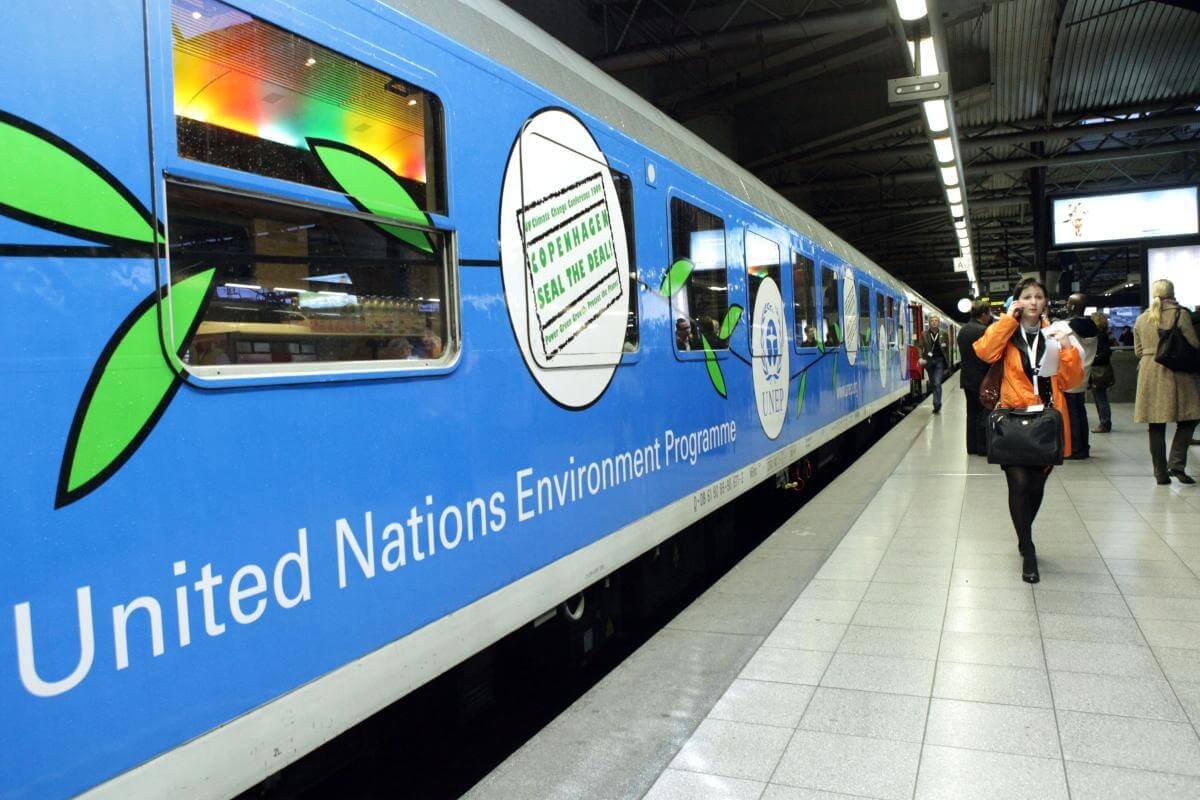 Restoring and protecting nature might provide about one-third of the mitigation effort needed over the next ten years - UNEP
The next five years should bring a rapid acceleration in climate intelligence. We will see more satellites, more sensors, better AI models, smarter energy networks, improved forecasting, and more sophisticated environmental monitoring.
Expect climate adaptation to become a much larger technology market. Companies should build solutions around heat resilience, wildfire detection, water management, agricultural efficiency, disaster response, and infrastructure protection. That development will create an important change in how we think about climate technology.
In the past, we focused heavily on preventing future damage. Now we also need to prepare for the damage that is already approaching.
Technology gives us capabilities that previous generations never had. We can observe the planet continuously, process enormous datasets, forecast risks, optimise energy systems, and coordinate responses across borders. But we need to use those capabilities intelligently.
Our planet has given us the warning
Europe's flames are a stark reminder of how rapidly environmental conditions can change. While technology might not be able to stop every disaster, it can help us identify threats earlier, react more quickly, safeguard infrastructure, and provide communities with better information.
We are moving from measurement to prediction, from prediction to prevention, and from prevention to resilience.
The planet needs technology that delivers measurable outcomes
The planet needs technology that delivers measurable outcomes. We already have the tools to build cleaner energy systems, smarter infrastructure, more resilient communities, and better ways to protect the natural world.
The next step requires us to connect those tools and deploy them at the scale the challenge demands.
The technology exists to help us do more. Our planet has already given us the warning. Now we need to decide what we do with that information.
