A partial reopening of the Strait of Hormuz may be on the horizon. But is a lasting regional settlement any closer?
The prevailing narrative is that the United States has lost control over the situation in the Persian Gulf.
And it is certainly true that Iran has acquired a powerful card—the ability to threaten shipping in the Strait—that it did not previously hold.
In that sense, the balance of power in its relationship with the US has shifted toward Iran.
This shift, along with the matching US blockade of Iranian-connected shipping, implies four possible scenarios: China brokers a lasting peace; Iran descends into chaos; the US walks away entirely; and some muddled version of the status quo continues.
The good news for US President Donald Trump is that he still holds the initiative and can likely choose the scenario he prefers.
But Trump still has a major problem because he has three primary objectives: unwind the Iranian nuclear program, permanently reopen the Strait, and not become the president blamed for “losing” Taiwan to China.
The bad news for Trump is that he can achieve at most two of these goals.
China’s price for becoming involved will be steep
After his recent summit with Chinese President Xi Jinping, Trump evidently hopes that China’s engagement in the Gulf will go beyond its current behind-the-scenes role.
China certainly could help to bring about a peace accord that would address what is arguably the most important issue for the US—Iran’s nuclear program—while delivering what Iran wants most: massive infrastructure investment (and no more bombing).
Unfortunately, after the Trump-Xi summit, it is increasingly clear that China’s price for becoming involved will be steep.
The prospect of China gaining control over Taiwan looms large
While China imports more than 11 million barrels of oil per day—and thus wants lower crude prices—it has large stockpiles and seems confident that it can withstand oil prices at around their current level.
China was also buying about a quarter of its liquefied natural gas from Qatar, where output remains severely constrained by the ongoing hostilities and extensive infrastructure damage.
But overall, the prospect of China gaining control over Taiwan looms large.
China’s leaders will be looking for a series of concessions from the US, while attempting to persuade the Taiwanese that they would be better off with China.
The optimal Chinese strategy is to be helpful but not let the US off the hook too quickly. American global weakness helps project Chinese regional strength.
The drone threat remains
In the second scenario, Trump launches further attacks, either selective (such as on Iran’s overland export routes) or widespread (as he has already threatened several times).
No one doubts the US military’s ability to kill a lot of people and destroy bridges, roads, and buildings. But while this strategy might make Iran ungovernable, it does not end armed resistance.
Remember that the main threat to the Strait of Hormuz comes from low-cost, easily operated drones.
If Iran fractures into warring factions, does that reduce or increase the threat to the Strait?
If Iran fractures into warring factions, does that reduce or increase the threat to the Strait?
If some version of the drone threat remains, will oil tankers (and their crews and insurers) be willing to transit the Strait?
The level of realized violence needed to limit tanker traffic is small—the outcome reflects the credibility of the threat.
In this scenario, the Strait does not open consistently, the conflict most likely inflicts substantial damage on Iran’s Gulf neighbors, and chronic regional instability leaves almost everyone worse off.
An uneasy ceasefire that breaks down periodically
In the third scenario, which Trump has also foreshadowed, the US washes its hands of the situation, telling Gulf countries, the European Union, or someone else to take responsibility.
This might well reopen the Strait, but likely on terms negotiated by Iran and China.
For the US, this scenario implies zero progress on the Iranian nuclear program, making the war worse than pointless: Iran gains effective control over the Strait, and the US walks away with nothing. It would be very hard for the White House to spin this story as a win.
The most likely near-term scenario: an uneasy ceasefire that breaks down periodically
This brings us to the most likely near-term scenario: an uneasy ceasefire that breaks down periodically.
When the US is less confrontational, ships can move through the Strait. But if the US lashes out, Iran can choke off traffic in a proportionate manner.
Periods of reciprocal opening and reduced tensions could ease pressure on global prices for oil, natural gas, plastics, and fertilizer, potentially creating space for limited trust-building measures and, over time, renewed negotiations over the nuclear issue.
But this is a narrow path on a fragile cliff—one that could collapse at any point before a final agreement is reached.
And while the Trump administration might argue that the nuclear issues are now on a “separate track,” the US would have made no progress on this front.
Fragmented regional balance
In all this, Russia will be the big winner and potential spoiler. With oil prices up and US sanctions against the Russian oil industry in abeyance, President Vladimir Putin has the hard currency he needs to fund his war with Ukraine.
Putin wants the Americans bogged down, repeatedly embarrassed, and feeling the need to allow maximum Russian oil exports.
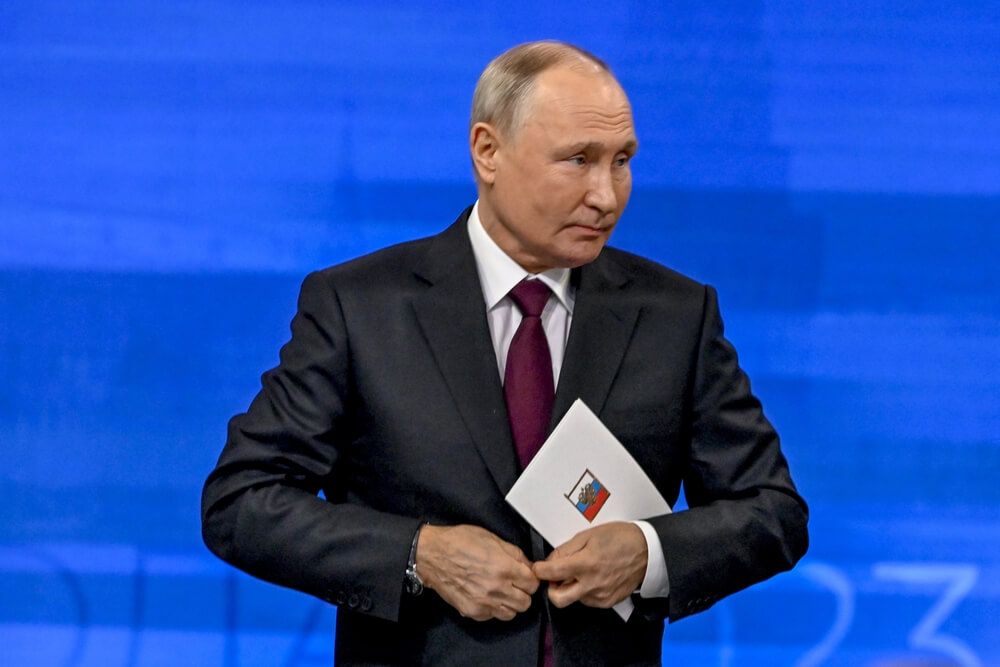 Putin wants the Americans bogged down, repeatedly embarrassed, and feeling the need to allow maximum Russian oil exports
In all imaginable scenarios, we should expect Russia to supply Iranian forces with drones and missiles—a highly profitable business model for the Kremlin.
Whether Trump turns to a transactional Xi, risks a broader regional breakdown, or settles for an unstable equilibrium, the era of implicit uncontested US control over the Persian Gulf is over.
What emerges instead is likely a more complex and fragmented regional balance in which the Strait of Hormuz remains open only conditionally, with significant implications for global economic stability.
Simon Johnson, a 2024 Nobel laureate in economics and a former chief economist at the International Monetary Fund, is a professor at the MIT Sloan School of Management, Co-Director of MIT’s Stone Center for Inequality and Shaping the Future of Work initiative, Co-Chair of the CFA Institute Systemic Risk Council, and an AI Ambassador for the UK.
Amir Kermani, Professor of Finance and Real Estate at the Haas School of Business at the University of California, Berkeley, is a research associate at the National Bureau of Economic Research.
