It is that time of year when the glamorous microstate of Monaco is ready for the Grand Prix, which stands in a category of its own.
Prestige, danger, exclusivity, engineering precision, celebrity culture, and relentless speed inside one of the smallest racing circuits in the world.
It feels part sporting event, part technology summit, and part luxury gathering hidden behind tinted glass and yacht decks.
In this piece, I reflect on how deeply technology has transformed Formula One (F1) and whether the sport risks losing part of its soul in the process.
F1 has always represented innovation, but today the sport operates in a completely different technological universe. Many long-time fans still crave the raw unpredictability of older eras.
The Monaco Grand Prix showcases the future of elite sports technology while preserving one of motorsport's oldest and most glamorous traditions.
Formula 1 built its legacy on innovation before AI entered the grid
It is important to remember that F1 has advanced through technological disruption. Carbon fibre altered automobile construction in the 1980s, improved telemetry changed race engineering in the 1990s, aerodynamics changed racing in the 1960s and 1970s, and hybrid power units have changed performance and sustainability in recent years.
The intelligence of the systems teams use today is what makes the difference. Hundreds of sensors are installed in modern F1 cars, which continuously send data across international cloud infrastructure.
Engineers sitting thousands of miles away support race decisions instantly through remote operations centres.
I discussed sports innovation in my July article last year, which examined the impact of technology on modern industries. F1 was one of the highlights.
Technology helps drivers prepare, but courage still decides the outcomes
Behind every technological breakthrough sits a human being making emotional decisions under pressure. That human factor is what we cannot forget in F1.
Drivers still face fear at 300 kilometres per hour, teams still experience heartbreak when reliability fails, and fans still celebrate unexpected victories and devastating crashes with raw emotion. That is what makes F1 great.
Technology enhances the spectacle, but it does not erase human vulnerability. And Monaco proves this every year.
No amount of AI will ever remove the challenge of having to navigate tight corners, and no machine will ever eliminate the psychological pressure drivers feel while threading through Monaco's Casino Square or attacking the tunnel at full speed.
Technology helps drivers prepare, but courage still decides the outcomes.
Technology and innovation elevate Formula 1
One of the most technologically advanced sports ecosystems in the world, is F1, which operates like a live corporate technology deployment under extreme conditions every major race weekend.
AI & Cloud partnerships have also become key to F1 operations. Teams rely heavily on hyperscale computing environments to process and analyse race data globally. Real-time collaboration between trackside engineers and remote analysts drives many strategic decisions.
A few examples of the impact of the tech giants:
The F1 Insights platform, powered by Amazon Web Services (AWS), provides real-time data to viewers worldwide, machine learning models, and predictive race analytics, and is just one instance of how tech titans impact F1.
Oracle provides cloud infrastructure, AI-driven planning systems, and sophisticated simulations.
Salesforce's influence has grown thanks to AI-driven fan engagement tools.
Additionally, Lenovo offers high-performance computers that facilitate remote cooperation and race operations.
During the season, engineering technology firm Hexagon assists teams in measuring components with microscopic precision to optimise performance gains, and logistics powerhouse DHL transports thousands of tonnes of equipment around the world.
F1 has become a global entertainment brand thanks to streaming culture, social media storytelling, and behind-the-scenes footage
During Monaco Grand Prix week, these companies operate behind the scenes while millions of viewers focus on the drivers.
Digital fan engagement has also undergone dramatic transformation. Viewers consume Formula 1 through augmented statistics, onboard telemetry feeds, immersive camera angles, predictive graphics, and AI-generated race insights. Fans interact with live data ecosystems throughout the experience.
F1 has become a global entertainment brand thanks to streaming culture, social media storytelling, and behind-the-scenes footage, which draw younger internet audiences.
I can see why some purists feel alienated, as I did when I expressed my opinions over the upgrading of the Wimbledon line judges.
Modern F1 is perceived by older fans as being excessively planned. They debate whether engineers have more power to affect races than drivers, and they wonder if too much radio coaching reduces the spontaneity they once enjoyed.
Privacy plays an unusually important role in Monaco. The Monaco Grand Prix attracts celebrities, billionaires, executives, athletes, and political figures who, above all, value exclusivity and privacy.
People attend Monaco to see and be seen, but many attendees want privacy and discretion first. Technology can support both objectives through sophisticated security and digital infrastructure.
The future of Formula 1 and the human experience
There is no doubt that AI will keep advancing. Every facet of the sport should be improved via autonomous systems, digital twins, sophisticated simulation settings, biometric analytics, more accurate race predictions, and engaging spectator experiences.
Predictive maintenance technologies might almost eliminate unplanned mechanical failures, AI co-pilots could facilitate strategic communication, and mixed-reality race viewing could become routine.
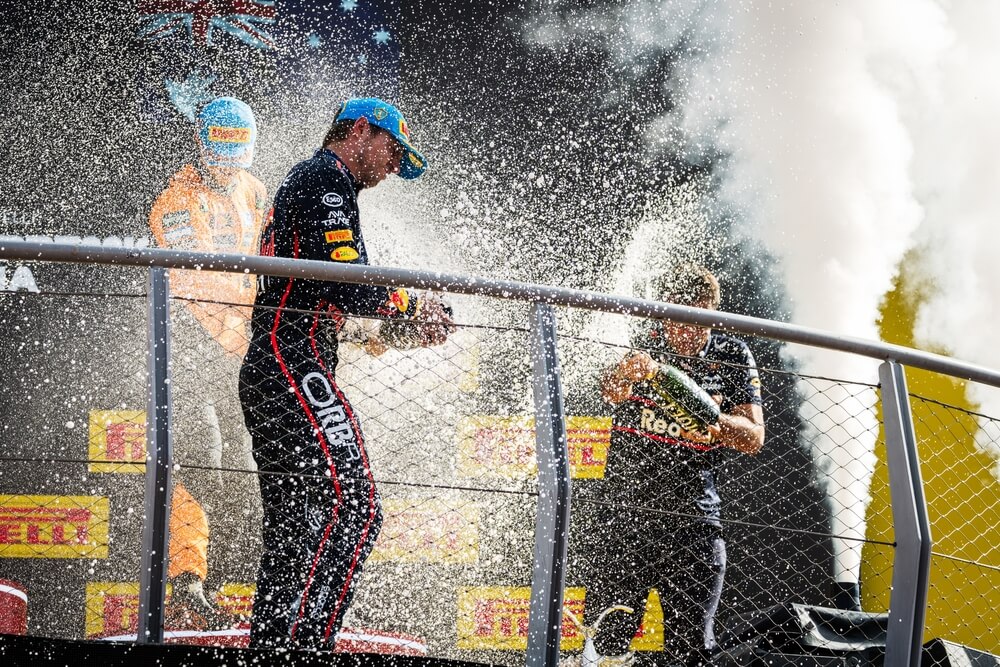 In a hyper-digital future, famous circuits like Monaco, Silverstone, and Monza are a reminder that history is still important
If F1 loses its emotional authenticity, none of these innovations will matter. The reason fans connect with drivers is that they represent human ambition under impossible pressure and scenarios. They connect with rivalries, mistakes, recovery stories, and moments of bravery that no machine can ever replicate.
In a hyper-digital future, famous circuits like Monaco, Silverstone, and Monza are a reminder that history is still important.
The yachts, the glamour, the narrow streets, the danger, the heritage, and the engineering brilliance create an atmosphere no simulation can fully reproduce. Thus, "simulation" is not reality.
F1 continues racing towards a future shaped by AI, data, and digital transformation. Monaco reminds us that behind every sensor, every strategy model, and every line of code sits a deeply human story.
That remains the true engine of F1. F1 should keep protecting the racing industry's emotional core.
As the lights prepare to go out once again in Monaco, can F1 continue leading the technology race without losing the humanity that made the world fall in love with it in the first place?
