From the Iran war and nuclear weapons to tariffs and AI, the agenda for this week’s Beijing summit between US President Donald Trump and Chinese President Xi Jinping is packed.
Xi will also almost certainly bring up Taiwan, if only to demonstrate his inflexibility on the matter.
But no one needs to meet with Xi face-to-face to understand his stance. A visit to the National Museum of China on Tiananmen Square—in particular, the Road to Rejuvenation exhibition, which chronicles the rise and rule of the Communist Party of China—might be even more revealing.
Xi took the Politburo Standing Committee to the Road to Rejuvenation in 2012, just weeks after taking power, using it as the backdrop for his declaration that the biggest “Chinese Dream” is the “great rejuvenation of the Chinese nation.”
Xi expanded the exhibition in 2018 with a glitzy annex devoted to his own achievements: an entire floor of military dioramas, scale models of warships and missile launchers, and displays of China’s technological mastery, from deep-sea submersibles to semiconductor fabrication.
The annex, in particular, provides a glimpse of how China’s most powerful leader since Mao Zedong sees his place in history.
To understand its message, however, we must first consider what is not there. Though Xi considers “reunification” with Taiwan to be a keystone of his vision for national rejuvenation—putting it at the “core of China’s core interests,” as a foreign ministry spokesperson recently noted—the island is not mentioned in the exhibit at all.
What Xi’s annex does include is a series of photographs depicting how another illustrious Chinese leader, Deng Xiaoping, compelled the British to hand over Hong Kong in 1997.
There was no invasion; no shots were fired. Instead, Deng ensured British capitulation by accumulating overwhelming leverage and maintaining a firm stance.
A slow-motion coercion campaign
Xi intends to apply a similar strategy in Taiwan. The most likely crisis scenario is not a bolt-from-the-blue invasion, but a slow-motion coercion campaign to strangle the island.
For example, China could declare a “customs enforcement zone” around Taiwan, requiring commercial vessels to register at mainland ports before entering Taiwanese harbors.
And it could expand its military exercises around the island, thereby normalizing the presence of warships in the area and creating a kind of rolling quasi-blockade.
China could pressure multinationals to reclassify Taiwan as a Chinese domestic market
China could also pressure multinationals to reclassify Taiwan as a Chinese domestic market, severing the island’s economic identity one contract at a time.
Crucially, none of these steps would constitute the kind of dramatic act that would force the United States to respond militarily.
Together, however, they would gradually erode Taiwan’s autonomy, choke its economy, and open the way for a “peaceful” Chinese takeover.
Propaganda and disinformation
Economic and military coercion is only half the strategy; the other half is psychological.
China would flood Taiwan with propaganda and disinformation designed to convince the Taiwanese that US support is a mirage, and resistance to China’s influence is futile.
Creating a sense of despair and inevitability would make a Chinese takeover far easier.
As one senior Taiwanese national security official told me, “China’s war on minds may be even more important than the war on our bodies.”
China will try to spin the meeting as evidence that the US is prepared to abandon Taiwan
The Trump administration could inadvertently bolster this campaign. Every careless statement positioning Taiwan as a bargaining chip or casting doubt on America’s willingness to fulfill its security commitments would be highlighted.
This is why Xi wanted to meet with Trump in the first place. Regardless of what is said in private, China will try to spin the meeting as evidence that the US is prepared to abandon Taiwan. If Trump is not careful, that will be the story.
How to safeguard Taiwan’s autonomy?
Xi has instructed the People’s Liberation Army to be ready for a fight. He has donned fatigues and inspected scale models of Taiwan’s presidential office on the plains of Inner Mongolia, where troops rehearse decapitation strikes.
A successful move against Taiwan would cement Xi’s status as one of China’s greatest leaders.
But a failed invasion would destroy the legacy he has already built and chronicled in that National Museum annex.
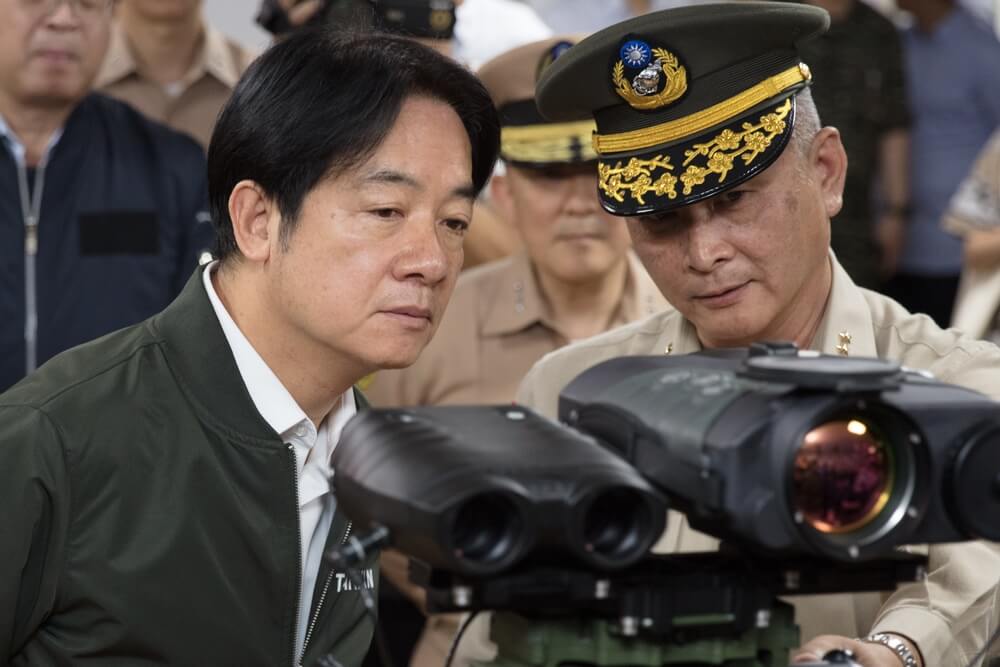 The US must reassure Taiwan that its commitment to the island remains credible, including by pursuing agreements with Taiwan on energy, technology, and trade - Lai Ching-te
Xi understands this well. As ambitious as he is, his self-imposed deadline for “rejuvenation” is 2049, at which point he would be 96. This is not the timeline of a man who would pursue a rash invasion.
Xi evidently believes that if China keeps getting stronger and thinking strategically, the problem will eventually solve itself.
As the US dithers and the Taiwanese lose hope, China will be able to coerce Taiwan into submission.
Denying Xi this theory of victory will require the US to work with its allies to establish a joint playbook for gray-zone scenarios—quarantines, economic coercion, and military intimidation that fall short of armed attack.
But such an effort depends on allied unity. The US must therefore strengthen its coalition with Australia, Japan, and other partners.
At the same time, the US must avoid rhetoric that convinces Xi that his window is closing.
And it must reassure Taiwan that its commitment to the island remains credible, including by pursuing agreements with Taiwan on energy, technology, and trade.
If Taiwan’s leaders and residents become convinced that they are on their own, China’s psychological strategy will have succeeded, and its hand will be much stronger.
At this week’s summit, Trump will be facing a patient, perceptive, and ambitious leader.
The best way to safeguard Taiwan’s autonomy is to ensure Xi never receives the signal that patience is no longer required—and that Taiwan never doubts who its friends are.
Eyck Freymann is a fellow at the Hoover Institution at Stanford University.
