Nicolás Maduro is now the former president of Venezuela, a prisoner in US custody.
His ouster at the hands of US Special Forces is, however, best understood as the end of the beginning rather than the beginning of the end.
To be sure, few in Venezuela, or anywhere, will mourn Maduro’s removal. He was an autocrat who stole an election, repressed his people, ran his country’s economy into the ground despite possessing enormous oil reserves, and trafficked in narcotics.
But that does not mean that this military operation was either warranted or wise.
In fact, it was of questionable legality. It was also of questionable strategic value: Maduro hardly posed an imminent threat to the United States. Make no mistake: this was a military operation of choice, not of necessity.
There are some superficial similarities between this operation and the one launched by President George H.W.
Bush in 1989 to remove Panamanian strongman Manuel Noriega from power. But there was a stronger legal case against Noriega, one involving not just drugs but also the killing of a US serviceman.
And there were legitimate concerns about the threat to other US military personnel stationed in Panama and the security of the Panama Canal itself.
The main priority
The choice to target Venezuela is revealing of President Donald Trump’s motive.
The main priority, Trump suggested during his press conference after the operation, was American access to Venezuela’s oil reserves, the world’s largest.
Secondary objectives included ending Venezuela’s involvement in the drug trade, helping those who left the country to return home, and tightening the squeeze on Cuba, which is heavily dependent on subsidized Venezuelan oil to bolster its struggling, sanctioned economy.
It would be premature in the extreme to declare the operation a success
But it would be premature in the extreme to declare the operation a success.
It is one thing to remove an individual from power. It is another, fundamentally different and more difficult task, to remove a regime and replace it with something more benign and enduring.
With regard to Venezuela, former Secretary of State Colin Powell’s “Pottery Barn rule” applies: we broke it, so now we own it.
Trump has declared that the US would “run Venezuela.” Details are scarce, and whether this will require an occupying army is unclear.
Pro-regime elements
One thing is clear, at least for now: the Trump administration prefers to work with remnants of the existing regime (it seems to have reached an understanding with Maduro’s vice president, who is now heading up the government) rather than empower the opposition.
This aligns with a policy motivated by the prospect of commercial gain, not by a desire to promote democracy and safeguard human rights.
Pro-regime elements will be active, and the opposition is anything but united and may well resist being shut out
One can assume away all potential problems, but the main one – a breakdown in order – should be forthrightly acknowledged.
Pro-regime elements will be active, and the opposition is anything but united and may well resist being shut out.
Such unknowns could raise difficult policy choices for the US in terms of what it would be prepared to do to shape developments if they were to spin out of control.
Three regional orders
The operation captures the essence of Trump’s foreign policy. It was unilateral to its core. It paid little heed to legality or international opinion. It emphasized the Western Hemisphere rather than Europe, the Indo-Pacific, or the Middle East.
The goal was commercial benefit, in this case access to oil reserves, and to strengthen homeland security, reflecting concerns over drugs and immigration. Military force was used, but in bounded ways.
The biggest downside of the Venezuela operation could be the precedent it sets, affirming the right of great powers to intervene in their backyards against leaders they deem to be illegitimate or a threat.
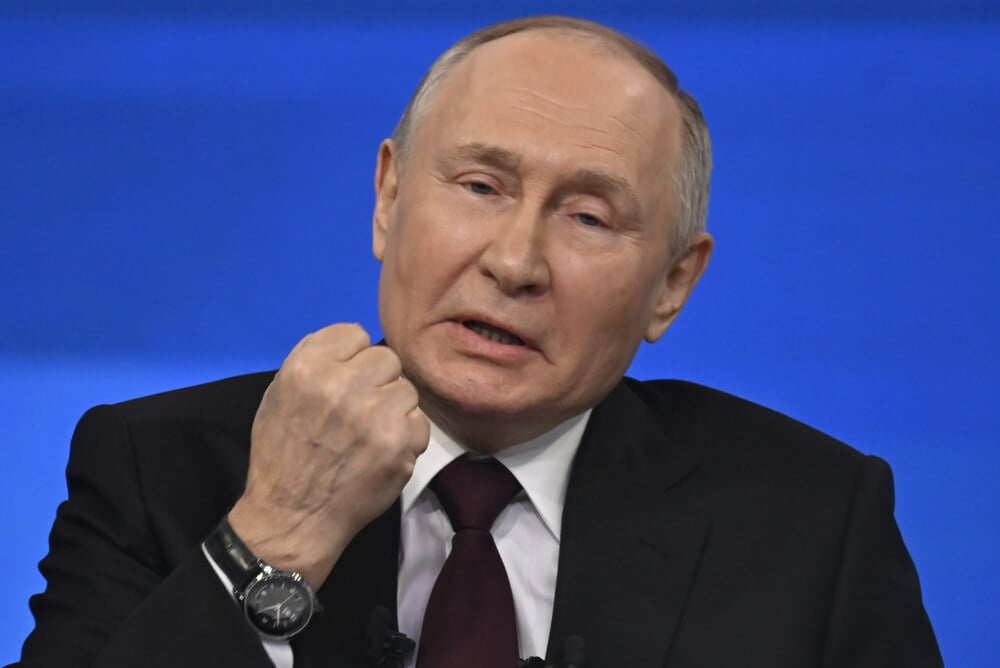 Trump’s military operation in Venezuela makes a negotiated end to the Russia-Ukraine war even more remote than it already was - Vladimir Putin
One can only imagine Russian President Vladimir Putin, who is calling for the “de-Nazification” of Ukraine and the removal of President Volodymyr Zelensky, nodding in agreement.
Trump’s military operation in Venezuela makes a negotiated end to the Russia-Ukraine war even more remote than it already was.
A similar reaction is likely in China, which views Taiwan as a breakaway province and its government as illegitimate.
This is not to say that President Xi Jinping will suddenly act on his ambitions for Taiwan, but events in Venezuela could increase his confidence that he would succeed if he were to invade, besiege, or otherwise coerce the island.
The operation to oust Maduro makes clear that the recently released US National Security Strategy should be taken seriously, and that the Trump administration sees the Western Hemisphere as a region where US interests take precedence.
Russia and China will welcome this as a sign that Trump shares their vision of a world divided into spheres of influence, where the governments in Moscow and Beijing have the upper hand in Europe and the Indo-Pacific, respectively.
A global order that has endured for 80 years is on the verge of being replaced by three regional orders that are likely to be anything but orderly – or free.
Richard Haass, President Emeritus of the Council on Foreign Relations, senior counselor at Centerview Partners, and Distinguished University Scholar at New York University, previously served as Director of Policy Planning for the US State Department (2001-03), and was President George W. Bush's special envoy to Northern Ireland and Coordinator for the Future of Afghanistan.
