As ever, US President Donald Trump’s speech at the World Economic Forum’s annual meeting in Davos last month was a rambling jumble of fabrications, non sequiturs, and malapropisms.
It did, however, contain one piece of good news: after weeks of threatening to take Greenland, by force if necessary, he appeared to back down.
By agreeing to a “framework of a future deal” that he claimed would give the United States “total access” to Greenland – which it already effectively has – Trump seemed, at least momentarily, to accept the principle that one sovereign country should not invade the territory of another.
For someone who once described Russian President Vladimir Putin’s invasion of Ukraine as “genius,” that suggests some degree of evolution, albeit prompted less by self-reflection than by a remarkable display of resolve from European leaders.
Even so, this newfound pragmatism did not translate into any respect for Denmark, which retains sovereignty over Greenland.
Despite being a close US ally, Denmark has long been a frequent target of Trump’s derision.
At Davos, he claimed that the US has “never gotten anything” from Denmark in return for liberating the country from Nazi occupation in 1945.
Trump’s version of history
Trump’s version of history conveniently erases the vital role played by other countries and leaders, particularly Winston Churchill and the British armed forces.
Had Trump been around at the time, he would undoubtedly have followed his America First predecessor, Charles Lindbergh, in opposing America’s entry into World War II.
To be sure, many Americans died heroically during that war, and nothing can take away from their courage or the strategic leadership of the Allied Supreme Commander Dwight D. Eisenhower.
But Trump’s assertion that Denmark has contributed nothing to NATO is simply false, not least because it ignores the disproportionate sacrifices made by Danish troops in Afghanistan after NATO invoked Article 5 in response to the September 11, 2001, terrorist attacks.
While the US State Department still has many capable diplomats, they are too often undermined and embarrassed by the actions of their president
Denmark was not the only target of Trump’s ignorance and falsehoods at Davos. He also claimed, falsely, that British troops stayed “off the front lines” in Afghanistan. In reality, 457 British service personnel were killed there, and hundreds more suffered serious injuries.
Will any American official apologize to the families of the British war dead? The US embassy in London is unlikely even to acknowledge letters of complaint, let alone offer an apology.
Gone are the days when London was served by ambassadors such as Kingman Brewster and Raymond Seitz, both outstanding diplomats with whom I worked closely during my time as European commissioner for external affairs.
While the US State Department still has many capable diplomats, they are too often undermined and embarrassed by the actions of their president.
Trump tends to do whatever Putin wants
Trump’s contempt for longstanding allies has been given a spurious intellectual gloss by his deputy chief of staff, Stephen Miller, who believes that force and military power are the only things that matter in international affairs.
Miller seems to yearn for a return to the days in which powerful states bullied smaller states, according to the logic famously outlined by Thucydides: “The strong do what they can, and the weak suffer what they must.”
While Trump ruled out military action against Greenland (and Iceland, for that matter), the “deal framework” he announced at Davos – supposedly aimed at strengthening Greenland’s defenses against potential Russian or Chinese aggression – raises an obvious question.
Why is Trump suddenly so concerned about Russia’s intentions toward Greenland?
Given that Trump tends to do whatever Putin wants, especially when it comes to Ukraine, why is he suddenly so concerned about Russia’s intentions toward Greenland? His record offers little reason to take his assurances at face value.
That skepticism was articulated most clearly by Canadian Prime Minister Mark Carney. In a landmark speech at Davos, he forcefully rejected Trump’s might-makes-right approach and put to shame leaders who have chosen appeasement over principle.
Carney’s model
Recognizing that no amount of deference can satisfy Trump’s insatiable need for flattery, Carney called for midsize democracies like Canada, Australia, the European Union’s member states, and the United Kingdom to work together to preserve what remains of the postwar international order and its supporting institutions.
In doing so, Carney offered a model for others to follow: confronting Trump’s destructiveness not through appeasement, but by deepening cooperation on trade, diplomacy, defense, and economic policy.
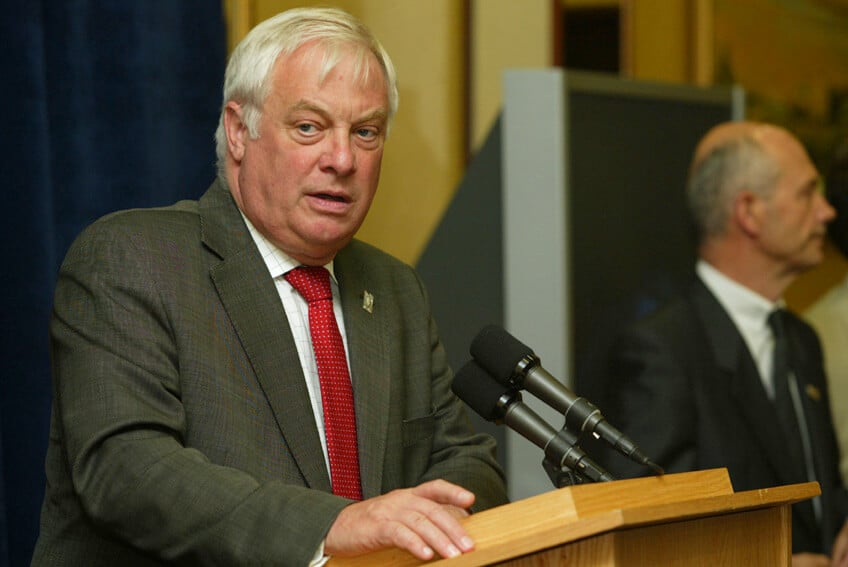 Ukraine’s allies must provide it with the resources it needs to defeat Russia - Chris Patten
Encouragingly, countries like France, Germany, and Australia appear ready to move in this direction.
The UK should follow suit by rebuilding its trade, economic, and security ties with the EU.
UK Prime Minister Keir Starmer should also focus on two key foreign-policy priorities.
First, Ukraine’s allies must provide it with the resources it needs to defeat Russia.
Second, Britain and its partners should recommit to the two-state solution, which remains the only viable path to lasting peace between Israelis and Palestinians and to stability in the Middle East.
This agenda should command support from the more responsible elements of the Conservative Party.
The alternative is to allow Nigel Farage’s far-right Reform UK and Jeremy Corbyn’s far-left Your Party to dominate the public debate with reckless economic proposals and pro-Russia foreign policies. The UK – and Europe – cannot afford either.
Chris Patten, the last British governor of Hong Kong and a former EU commissioner for external affairs, is a former chancellor of the University of Oxford.
