In a remarkable commentary published at the end of June, a former leading economist in the Trump administration acknowledges (and endorses) what many have suspected: The function of Trump’s foreign economic policy is to act like a 21st-century robber baron.
The original robber barons were greedy industrialists who grew rich through monopolistic practices in the United States during the Gilded Age.
In the late 19th century, men like John D. Rockefeller and Andrew Carnegie built massive fortunes by suppressing competition and charging exorbitant prices in industries such as oil and steel.
They were called robbers because exploiting your consumers to enrich yourself is probably the most denigrated business practice in the world.
Yet that is precisely what the US has been doing over the past year and a half, boasts Stephen Miran, chair of President Donald Trump’s Council of Economic Advisers until February 2026, who now serves on the board of the US Federal Reserve.
Miran applauds this approach, arguing that it is working wonders for the US (never mind foreigners!).
Miran does not state his case this clearly, of course. Couching his argument in technical terms that obfuscate the full implications of his argument, he appeals to economists’ idea of the “optimum tariff,” which states that a country can make itself better off by applying protective import levies.
Of course, such a strategy works only if a country is large enough to wield market power in the world economy—that is, if it acts as a monopolist.
Optimum-tariff policy
An optimum-tariff policy is the country-level equivalent of the strategy perfected by Rockefeller’s Standard Oil in the 1880s.
By reducing demand for the goods sold by its trade partners (and equivalently reducing the supply of its own exports on world markets), the optimum tariff shifts world market prices in favor of the home economy, essentially making foreigners pay a large chunk of the tariff.
When the tariff is set at the right level, whatever the country loses on the gains from trade is more than made up for in monopoly rents.
The losers are the country’s trade partners (and the world economy as a whole)
The losers are the country’s trade partners (and the world economy as a whole).
Although this is the archetypal beggar-thy-neighbor dynamic, Miran thinks it is a great deal for the US, because it kills two birds with one stone.
Aside from the monopoly rents, the policy allows the federal government to reduce the inefficiencies associated with domestic taxes.
Tariffs generate revenues for the treasury, which can be used to offset the revenue losses from reducing other taxes, such as those on income. The economic logic, in his mind, is impeccable.
The loss of reputation and credibility
One difficulty is that despite its size and apparent market power, the US may not have as much ability to make foreigners pay the tariffs as Miran thinks.
Recent evidence suggests that the bulk, if not all, of US tariffs are passed on to domestic consumers.
But the real problem with Miran’s argument lies elsewhere. It beggars belief to suggest that, in this day and age, it makes sense for a major power to extract tribute from other countries so blatantly.
The fall in stature to international pariah may not be easy to price in dollars and cents; but it is substantial, nonetheless
In offering his cold calculus, Miran seems not to have considered the loss in reputation and credibility that the US has suffered by acting like a robber baron.
The fall in stature to international pariah may not be easy to price in dollars and cents; but it is substantial, nonetheless.
Miran may not care about America’s standing in the world, but his economic argument is also ultimately self-defeating.
When economists discuss the optimum tariff, they typically hasten to add that it does not work in the long run.
Others can play the same game
After all, more than one country can play the same game. The European Union and China each account for roughly similar shares of world trade as the US.
When the US jacks up its tariff to improve its terms of trade, the world’s other trading powers can do the same.
And since retaliation offsets the terms-of-trade effects but magnifies the loss in the gains from trade (leaving all countries—including the US—worse off), it can be an effective deterrent.
Miran claims that there was no retaliation when Trump first imposed his tariffs, which he sees as a strike against those economists who claimed the optimum tariff would fail.
While it is true that the European response was muted, China did in fact retaliate against the “Liberation Day” tariffs
But while it is true that the European response was muted, China did in fact retaliate against the “Liberation Day” tariffs.
Vowing to match every further tariff increase on the US side, the Chinese ministry of commerce said: “China will fight till the end if the US side is bent on going down the wrong path.” The US and China eventually lowered their tariffs.
Ironically, Miran’s willingness to say the quiet part out loud virtually ensures that others, including the EU, will choose to retaliate if the US persists with its optimum-tariff logic.
The logic of retaliation
It is one thing to claim that you are raising tariffs because of national-security concerns or because you want to reinvigorate domestic manufacturing.
These are plausible domestic-policy objectives, even if one may disagree about the usefulness of import tariffs in achieving them.
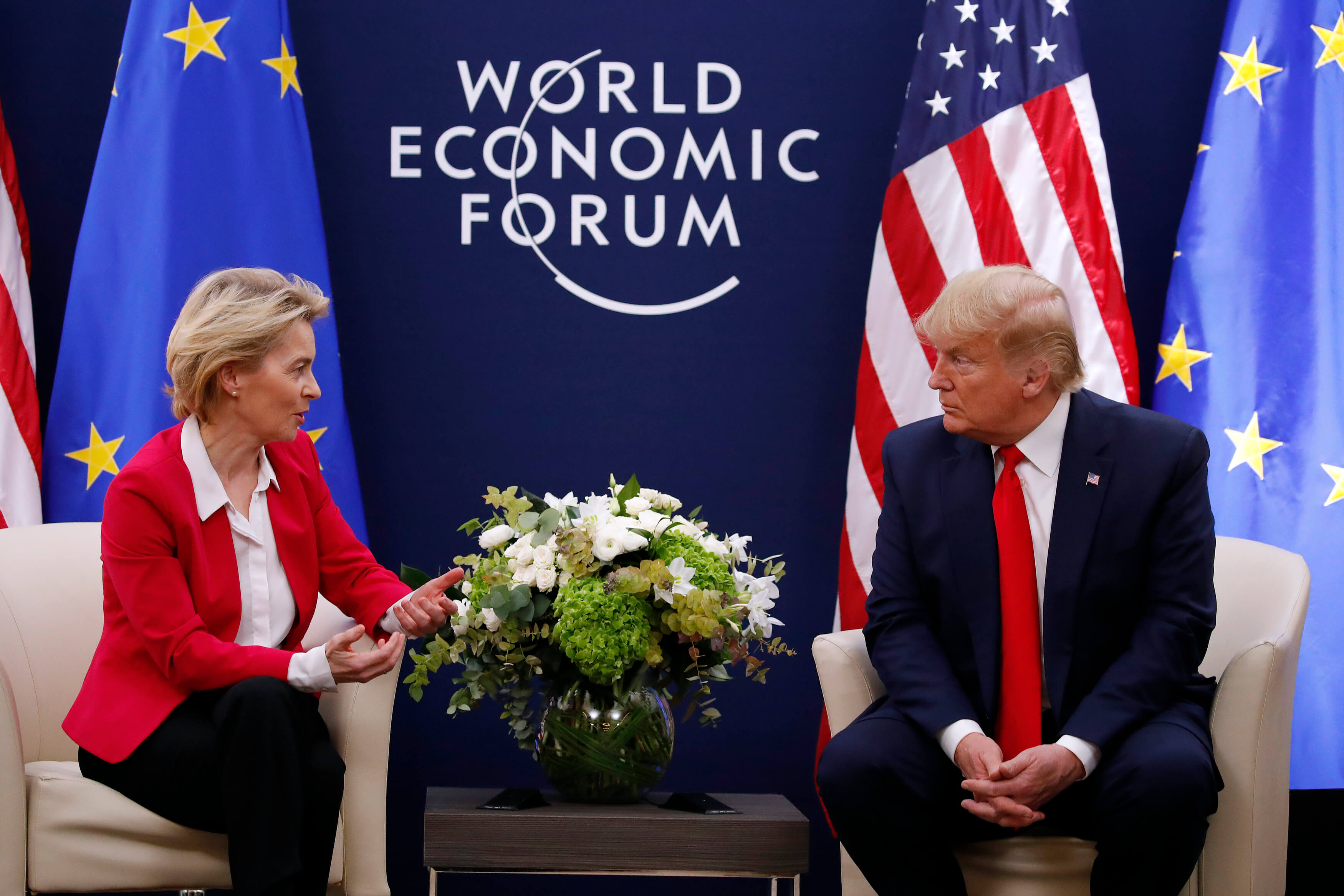 A trade policy based on the optimum-tariff argument amounts to a naked assertion of economic power designed to harm others, including long-term allies in Europe and East Asia
But it is quite another thing to say, as Miran does, that the goal is to squeeze monopoly rents out of foreign countries by manipulating their terms of trade.
When that is so clearly presented as the objective, others will respond accordingly.
I was among those who argued against retaliation a year ago, because I believed Trump to be impervious to the damage high tariffs (at home or abroad) would do to the US economy.
The logic of retaliation works only if political leaders understand the economic consequences of high tariffs and care about the gains from trade.
The paradox is that by replacing Trump’s illogic with an economic logic that now fully justifies retaliation by other countries, Miran’s argument undermines itself.
A trade policy based on the optimum-tariff argument amounts to a naked assertion of economic power designed to harm others, including long-term allies in Europe and East Asia.
Such an approach provides, at best, short-term gains at the expense of soft power and global leadership. It is also economically self-defeating and will inevitably backfire.
Dani Rodrik, Professor of International Political Economy at Harvard Kennedy School, is Past President of the International Economic Association.
