US negotiators asked Ukraine whether it would withdraw its troops from part of Donbas, the eastern area comprising the Donetsk and Luhansk regions, if, in return, it were accepted into NATO.
Ukrainian President Volodymyr Zelenskyy stated this on 13 November, after a week in which the American, Ukrainian and Russian delegations met in Abu Dhabi, and Donald Trump’s envoys Steve Witkoff and Jared Kushner spoke with Vladimir Putin and Zelenskyy.
According to Zelenskyy, the Americans, for the first time, linked withdrawal to admission to the alliance. Ukraine would abandon the positions from which it defends the country, and what it receives in return would depend on decisions that American negotiators cannot make on their own.
Until now, Washington has opposed Ukraine’s membership of NATO. US Secretary of Defense Pete Hegseth said in February 2025 that the United States did not regard Ukraine’s membership as a “realistic outcome” of peace negotiations, and the US 28-point peace plan from November of the same year called for Ukraine to write into its constitution that it would never join NATO and to withdraw from the part of the Donetsk region it controls.
Membership is now back in the conversation as possible compensation for territory Russia failed to win, although the question raised by negotiators does not mean that the Trump administration has changed its policy or is ready to bring Ukraine into the alliance.
Zelenskyy did not accept the territorial concession but said he would ask citizens about the whole package if other Western countries confirmed the guarantees.
According to him, the package would have to include security guarantees from NATO and the European Union, a strong army with a guaranteed number of soldiers and weapons, and money for reconstruction from prearranged sources.
He said it had not yet been agreed who would provide those guarantees, how large the army would be, or where the money would come from, and that everything was still under discussion.
The crucial question is what would protect Ukraine from the day the army leaves its positions until the day the country becomes a member, and what would happen if it never does.
An offer that Washington cannot fulfil alone
Admission to NATO requires the consent of all 32 members. After an invitation is issued, each member must confirm its agreement to the admission of the new state in accordance with its constitutional rules, and in the United States this requires the consent of two-thirds of the senators present.
Once all members have confirmed acceptance, the Ukrainian government would hand over its instrument of accession to the US government, which holds the alliance’s founding treaty.
Ukraine would become a member only on that day, and only from then on would Article 5 of the North Atlantic Treaty apply to it, under which an attack on one member is considered an attack on all.
At the summit in Washington in 2024, NATO leaders stated that Ukraine’s future lies in NATO and that its path to membership is “irreversible”, indicating that they would not give up on its admission.
It would be irresponsible to ask Ukraine to decide on withdrawal from Donbas before the proponents of the deal have agreed on what they will guarantee in return
In the final declarations of the summits in The Hague in 2025 and in Ankara in July 2026, Ukrainian membership was not mentioned again, although in Ankara they promised Ukraine €70 billion, about $80 billion, in military aid for 2026 and at least the same sum for 2027.
Slovak Prime Minister Robert Fico, whose country would also have to approve Ukraine’s admission, said in September that he did not want Slovakia to be part of the armed conflict “because of some Article 5”.
The first step must be taken by Washington, by deciding whether it wants Ukraine in NATO at all. The American president can then win over allies and take political responsibility for enlargement, but cannot decide on their behalf.
It would be irresponsible to ask Ukraine to decide on withdrawal from Donbas before the proponents of the deal have agreed on what they will guarantee in return.
A line that Russia has failed to conquer
Ukraine controls roughly a fifth of the Donetsk region, including Slovyansk, Kramatorsk and Druzhkivka, the cities around which the most fortified section of Ukraine’s eastern defences has been built during the war.
The Russian army has been fighting for nearby Kostiantynivka for more than a year without capturing it, and in October it carried out fewer than one attack per day towards Kramatorsk.
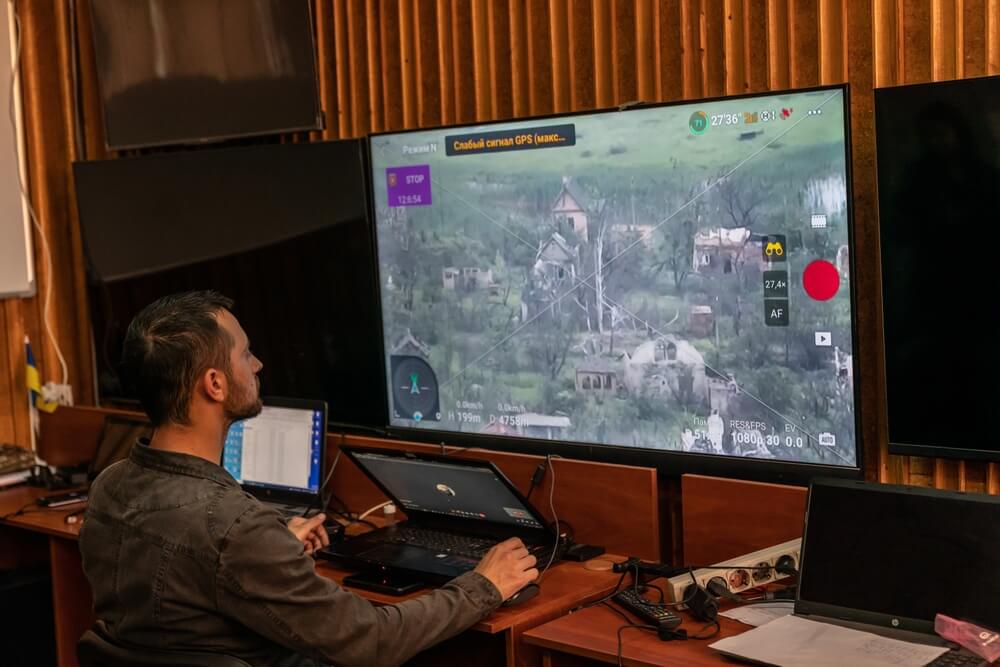 If it abandoned the cities it had fortified during the war, the Ukrainian army would have to build a new line of defence in new positions
Through a Ukrainian withdrawal, Russia would gain, without fighting, the defensive line on which it has so far been stopped.
If it abandoned the cities it had fortified during the war, the Ukrainian army would have to build a new line of defence in new positions and establish new supply routes.
Ukraine would thus become more vulnerable, and the countries that guarantee its security would have to accept greater military obligations than at present.
A withdrawal presented as a way to reduce the threat of another war would increase the burden on those tasked with defending Ukraine.
The danger would be even greater if the withdrawal were linked to limits on the Ukrainian army, as envisaged in the US 28-point plan, which caps its strength at 600,000 personnel.
How well Ukraine could withstand a new attack before its allies reacted depends on the number of soldiers, the quantity of weapons and its ability to supply itself.
Sweden had support while it waited
Sweden applied for membership on 18 May 2022 and only became a member on 7 March 2024, as Turkey and Hungary delayed for months before approving its admission.
A week before the application, Britain and Sweden signed a declaration stating that if one of them were attacked and requested assistance, the other would help in various ways, including military means.
The declaration was explicitly political and did not create obligations under international law, but through it London signalled that it would not calmly observe threats to Sweden while it awaited accession to NATO.
Ukraine would need much stronger protection, which could be developed in parallel with the accession process. The Coalition of the Willing, a group of European and other countries led by Britain and France, is already working on this.
Its Paris Declaration of 6 January provides for guarantees that would be politically and legally binding and would take effect with the start of a ceasefire; participation in US-led ceasefire monitoring; long-term aid for the Ukrainian military; and a multinational force for Ukraine.
According to the British Ministry of Defence, these forces already have a joint British-French command in Paris, with pledged military contributions from 24 countries, and from 9 to 22 November around 2,800 soldiers in Poland are practising deployment and supply.
Ukraine would be left without Donbas and without membership, weaker than before the negotiations
The main task of these forces would be to rebuild and strengthen the Ukrainian army. They would be sent to Ukraine only after the fighting had stopped and the political and military conditions had been fulfilled.
On the basis of these documents, there is currently no obligation for states to enter the war if Russia attacks again, and what is decisive for Kyiv is precisely what those governments would do in that case.
Ukraine needs air defence systems, munitions, funding and agreed supply routes, as well as a predefined plan for who responds, and how, if Russia violates the agreement.
The guarantees that Ukraine would receive from the Coalition of the Willing and other countries would need to remain valid even if accession to NATO were stalled or failed, for example if a member refused to approve it.
If those guarantees were to lapse alongside a failed accession, Ukraine would be left without Donbas and without membership, weaker than before the negotiations, and Moscow would gain proof that a single government in the alliance can overturn the entire agreement.
Full membership would still leave questions unresolved, since Article 5 obliges allies to assist a member under attack, but each country decides for itself what measures to take, including the use of military force.
Kyiv does not recognise the occupied territories as Russian, and the allies would have to state in advance whether Article 5 would apply only to the front line or also to the borders that Ukraine considers its own.
The citizens of Ukraine would vote on the promise
The withdrawal of the army in itself does not change the border in a legal sense, but Zelenskyy says that he cannot decide on such a package without the citizens.
Article 73 of the Ukrainian constitution stipulates that changes to state territory must be decided exclusively in a referendum, and the law prohibits a referendum during a state of war, introduced after the Russian invasion in February 2022 and regularly extended by parliament.
According to an analysis by OPORA, a Ukrainian non-governmental election-monitoring network, it takes six to nine months to prepare a referendum, and the result is valid only if at least half of registered voters take part.
For their consent to be meaningful, citizens would need to know what commitments the other party has already undertaken.
61% of respondents rejected withdrawal from the remaining part of Donbas in exchange for American and European guarantees
In a survey conducted by the Kyiv International Institute of Sociology, a Ukrainian public opinion polling agency, between 8 and 16 October, 61% of respondents rejected withdrawal from the remaining part of Donbas in exchange for American and European guarantees, while 35% said they would accept it.
The question did not mention NATO membership, and from these numbers it is not possible to predict how citizens would vote on a different offer.
However, they show that, after almost five years of war, most Ukrainians do not accept such an exchange under these conditions.
Moscow is seeking Donbas and threatening the guarantors
Moscow rejects Ukraine’s membership of NATO, while at the same time seeking the part of Donbas that its army failed to capture. Kremlin spokesman Dmitry Peskov said in June that the war could end “by the end of the day” if Zelenskyy ordered the military to leave the areas Russia claims as its own.
Russian Foreign Ministry spokeswoman Maria Zakharova said on 15 July that Moscow would regard soldiers of the multinational force being prepared by the Coalition of the Willing as “legitimate military targets” if they were sent to Ukraine.
Russia is demanding territory from Ukraine while rejecting both forms of protection that Ukraine could receive in return, namely NATO membership and the presence of foreign soldiers on Ukrainian soil.
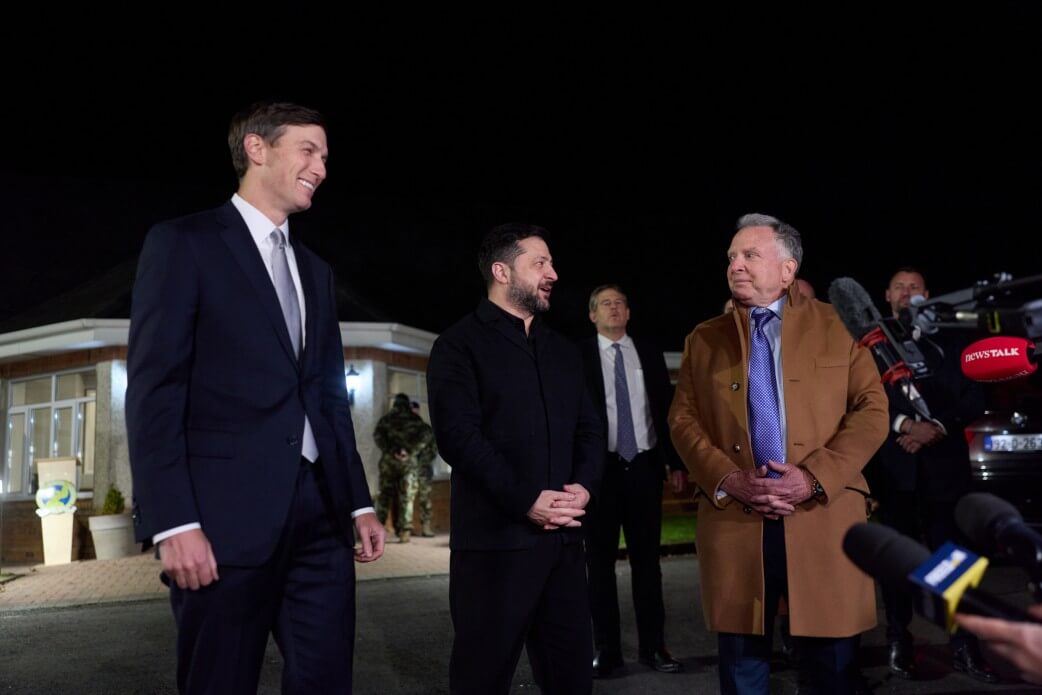 Ukraine should not relinquish any position in Donbas until its protection is agreed, funded and ready to operate from day one
If membership were taken off the table in the next negotiations, while the demand for withdrawal remained, Ukraine would be negotiating over Donbas without compensation, which is why the issue was raised in the first place.
Moscow would benefit most from such an outcome, gaining Donbas without accepting any obligations regarding Ukraine’s security.
It is very likely that the next negotiations will again prioritise guarantees outside membership, for which there is a more detailed plan and which individual states can adopt without the consent of the whole alliance.
They will also show whether the guarantor countries uphold their commitments despite Russian threats, and how willing the United States is to stand behind them. An agreed withdrawal from Donbas in the coming months is unlikely, as Moscow is demanding such a withdrawal before any other steps.
Ukraine should not relinquish any position in Donbas until its protection is agreed, funded and ready to operate from day one, regardless of whether, or when, it becomes a member of NATO.
In Budapest in 1994, together with the United States and Britain, Russia committed to respect Ukraine’s borders in return for its renunciation of nuclear weapons, but then attacked it in 2014 and 2022, while Washington’s and London’s signatures did not include any obligation to defend Ukraine.
Moscow’s promise that the war would end “by the end of the day” as soon as the Ukrainian army left Donbas is worth no more than that signature, and Western guarantees that oblige no one to defend Ukraine would not be worth much more.
Governments that do not want to take that risk themselves have no right to ask Ukraine to take it on their behalf, to hand over to Moscow the cities the Russian army fails to conquer and then wait for years for the allies to decide whether to defend them.
