Amid the noise and fury of the US and Israel’s war against Iran, a much under-discussed implication is the impact on the Horn of Africa, where the UAE and Saudi Arabia are key backers of different armed opponents in several conflicts.
A key unknown is to what extent Gulf countries may choose to focus on ending their own bickering to concentrate on their own security when they cease being a target for Iranian missile attacks.
To date, few would accuse Gulf countries of nuance in their scramble for resources and influence in Africa, where many accuse them of fuelling conflicts and abetting war crimes.
The outcome of the Iran war will be pivotal to their future course of action in the Horn.
As the world tries to grapple with rising energy risks and an economic downturn, some analysts are warning of a “mega-war” in Africa if renewed conflict in Ethiopia pulls in neighbouring Sudan.
The stances of the UAE and Saudi Arabia towards their respective partners in these countries will be key to whether such doomsday scenarios play out in the Horn.
Reducing rather flaming tensions
More may be known about whether the UAE and Saudi will shift towards reducing rather flaming tensions by 15 April when the Quartet countries - US, Egypt, Saudi Arabia and UAE - meet in Berlin for negotiations on Sudan.
Next month sees the third anniversary of the war between the two main warring parties, the Sudanese Armed Forces (SAF) and the Rapid Support Forces (RSF).
The Sudan war this week again spilled over the border into neighbouring Chad
Other conflicts in the region where Gulf countries also play a key role include Ethiopia, Eritrea, Yemen, Somalia and Somaliland.
In Sudan, Saudi Arabia, together with Egypt, Turkey and Somalia have aligned behind the SAF, while the UAE, Ethiopia, Somaliland and Israel favour the RSF.
The Sudan war this week again spilled over the border into neighbouring Chad, where the army began the emergency relocation of refugees as it prepared to retaliate after a drone attack from Sudan killed 17 people. Chad said it might carry out operations on Sudanese territory.
Mega-war warnings
Tensions are also high in Ethiopia, where Abiy Ahmed, Ethiopian prime minister, has repeatedly insisted his country must have direct sea access, and the Eritrean port of Assab is viewed as a potential target.
In any renewed war between Ethiopia and Eritrea, Sudan’s SAF is a potential source of supplies to Eritrea as well as forces in the Ethiopian separatist region of Tigray, while Ethiopia may want to draw on support from the RSF.
Saudi Arabia is working alongside the US and Israel to avoid provoking the Houthis into entering the Iran war
“We are in an incredibly dangerous situation, where both sides [Ethiopia and Sudan] view the other as actively helping their armed opponents,” Alan Boswell of the International Crisis Group told the New Humanitarian. “All the ingredients are there for a much wider regional blow up – really, a regional mega-war.”
Then there is Yemen, where the Iran-aligned Houthis have so far not entered the fray of the Iran war. Saudi-UAE rivalry broke out earlier this year after Riyadh accused Abu Dhabi of helping a Yemeni separatist leader to flee.
Now Saudi Arabia is working alongside the US and Israel to avoid provoking the Houthis into entering the Iran war, according to a Wall Street Journal report.
A “hexagon of alliances”
Another regional flashpoint is Somalia and Somaliland. Analysts say ties between the UAE, Ethiopia and Israel were deepened after Israel formally recognised Somaliland as a state independent of Somalia. Saudi Arabia, Qatar, Egypt and Turkey took a stance against the move.
Ethiopia signed a memorandum of understanding with Somaliland in 2024, and with global attention on Iran, it may see an opportunity in formalising sea access through Somaliland’s port of Berbera.
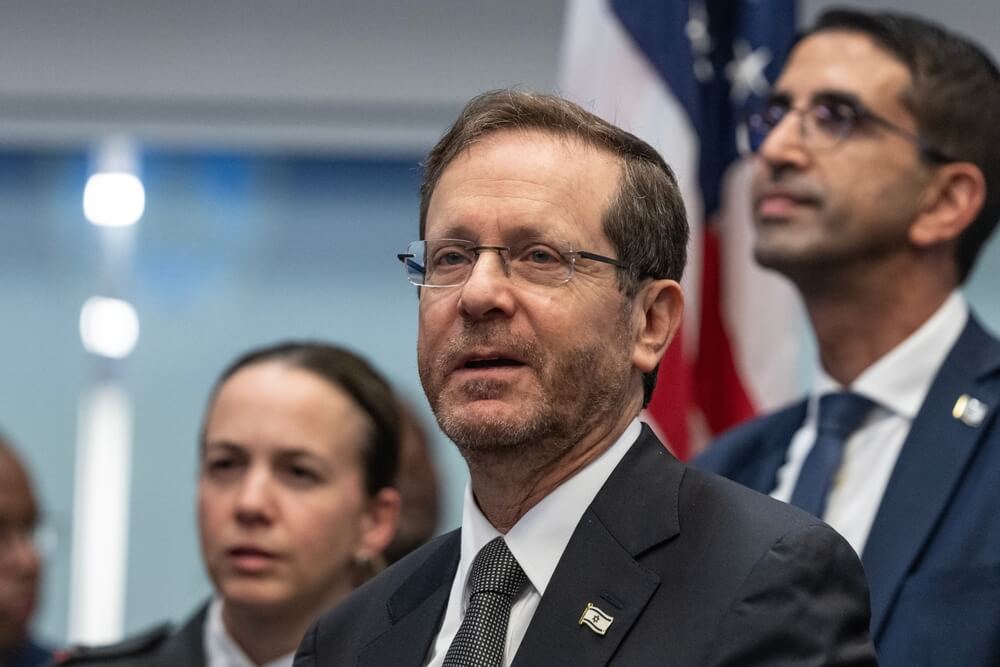 Days before the Iran war started on 28 February, Isaac Herzog, the Israeli president, visited Ethiopia as part of what was called a charm offensive in Africa
Ethiopia and Somalia were on the brink of blows after Ethiopia agreed to the 2024 Somaliland memorandum, and Turkish mediation prevented an escalation.
Days before the Iran war started on 28 February, Isaac Herzog, the Israeli president, visited Ethiopia as part of what was called a charm offensive in Africa.
There was much speculation that Israel was hoping to push Ethiopia towards recognising Somaliland at the risk of arousing further anger in Mogadishu.
Herzog’s visit to Ethiopia followed a flurry of others by high-level delegations from Turkey and Saudi Arabia.
It was not known if Ethiopia would be part of a “hexagon of alliances” to stand against “radical” adversaries as proposed by Benjamin Netanyahu, the Israeli prime minister. He said such a hexagon will include Israel, India, Greece, Cyprus and others.
A “one-conflict ecosystem”
This multitude of players and interests in the Horn are likely to shift and strain the attention of Washington, never overly focused on the region at the best of times.
Furthermore, events are moving fast, and the differing conflicts could merge into what some have called a “one-conflict ecosystem.”
The Horn is unlikely to grow calmer - Brendon J. Cannon
The Iran war will prove decisive in whether Gulf states scale back their interventions in Africa, in which case there may be a temporary cooling-off period in the various conflicts, or there might be an escalation by states and armed groups as their patrons are distracted, wrote Brendon J. Cannon of Khalifa University.
“Either way, the Horn is unlikely to grow calmer. Instead, longstanding grievances, between Ethiopia and Eritrea, for instance, may become more pronounced,” he said. “Gulf states have been opportunistic precisely because they had the capacity to act in the Horn when the Gulf itself was stable. That capacity may now be constrained.”
