Iran’s effective closure of the Strait of Hormuz, through which about a fifth of the world’s oil and a quarter of its fertilizer passes, has highlighted a well-known vulnerability of our complex networked global economy: a single point of failure can create massive and costly disruptions. Yet such points of failure have been proliferating for decades.
Global trade flows through a number of other critical passages, which could also become disruptive bottlenecks.
The Strait of Malacca between Malaysia and the Indonesian island of Sumatra – one of only two sea lanes linking the Indian Ocean to the Pacific – receives much attention in war simulations.
When the Suez Canal was blocked for six days by a massive container ship, the Ever Given, in 2021, the disruption reverberated across supply chains for months. The Panama Canal raises similar risks.
Excessive market concentration generates similar vulnerabilities. The dominance of a few Japanese producers of microcontrollers and engine airflow sensors – small but essential components in automaking – meant that, when a massive earthquake and tsunami hit Japan in 2011, the global auto industry contracted sharply.
Diversification comes with trade-offs
Such vulnerabilities are somewhat easier to address than those embedded in geography, like the Strait of Hormuz.
Since 2011, automakers have diversified their suppliers, built up buffer stocks, and created large data systems that improve transparency in complex supply chains, making it easier to identify hidden single-source risks.
But diversification comes with trade-offs, as the advanced-semiconductor sector is likely to learn.
A single Dutch company, ASML, produces all the extreme ultraviolet lithography equipment required to produce the most advanced semiconductors, and only two companies, Taiwan’s TSMC and South Korea’s Samsung, have the capabilities to produce 2-nanometer semiconductors.
It is not clear that the diversified supply chains currently being built will be able to keep up with demand
Given the obvious vulnerabilities this creates, governments are now promoting diversification.
The United States and the European Union have introduced incentives for TSMC and Samsung to diversify their production geographically, and the US government is backing the development of Intel’s advanced-semiconductor capabilities.
Meanwhile, China is investing heavily to reduce its dependence on external sources in semiconductor design and fabrication.
But while this approach might increase resilience, the sector can ill afford lower efficiency.
The most advanced semiconductors are crucial not only to training generative-AI models, but also to advancing physical-AI applications (such as robotics and autonomous vehicles), which require low latency, high thermal efficiency, low power consumption, and a long battery life.
It is not clear that the diversified supply chains currently being built will be able to keep up with demand.
Rare earths
Rare earths represent another notable vulnerability in technology supply chains.
A range of critical and strategic products – including electric vehicles, consumer electronics, medical technologies, and advanced military technologies – depend on these essential ingredients, yet China alone controls about 60% of global rare-earth mining and over 90% of processing.
Points of failure characterize the financial sector as well. The US-controlled SWIFT inter-bank messaging system for cross-border transactions is an obvious example.
Excessive dependence on any one source for anything – from energy to demand – can generate a point of failure
At the economy level, excessive dependence on any one source for anything – from energy to demand – can generate a point of failure, as Europe learned after Russia’s full-scale invasion of Ukraine in 2022.
This is true not only because of the risk of an accident or shock, but also because excessive dependence enables extortion or other forms of pressure, exemplified by China’s rare-earth export controls, America’s enforcement of sanctions via SWIFT, and US President Donald Trump’s use of tariffs.
Investors are motivated to optimize for efficiency
The proliferation of points of failure has to do with the global economy’s design and incentives.
In a highly decentralized and competitive network, investors are more motivated to optimize for efficiency (the benefits of which are appropriable, meaning they accrue largely to the investor) than for resilience (the benefits of which are spread across the network).
When there are many investors, none has an incentive to internalize the costs of balancing efficiency and resilience
When there are many investors, none has an incentive to internalize the costs of balancing efficiency and resilience.
Networks with a greater concentration of ownership are more likely to optimize for resilience.
Three companies (Alcatel Submarine Networks, SubCom, and NEC) supply and maintain 87% of the vast global network of undersea fiber-optic cables, which convey over 95% of international data traffic, including payments and other financial transactions.
These “architects” have a powerful incentive to build resilience into the system, such as by increasing the number of cables, spreading out landing points, ensuring wide dispersion, implementing looped designs, using internet protocols for seamless rerouting around blockages, and including spare capacity. After all, resilience is part of the package they are selling.
The same is true in the auto sector, where large players like Toyota control a sufficiently large chunk of the supply chain to benefit from optimizing for both cost and resilience.
For the internet, it was the US government that acted as the primary architect, ensuring, for example, that embedded protocols automatically reroute traffic around blockages.
Eliminating or mitigating points of failure will be expensive
In fact, large national economies are important players because, to some extent, they internalize and aggregate the benefits of resilience across a range of small private-sector players.
When markets undersupply resilience, countries become important players in delivering it.
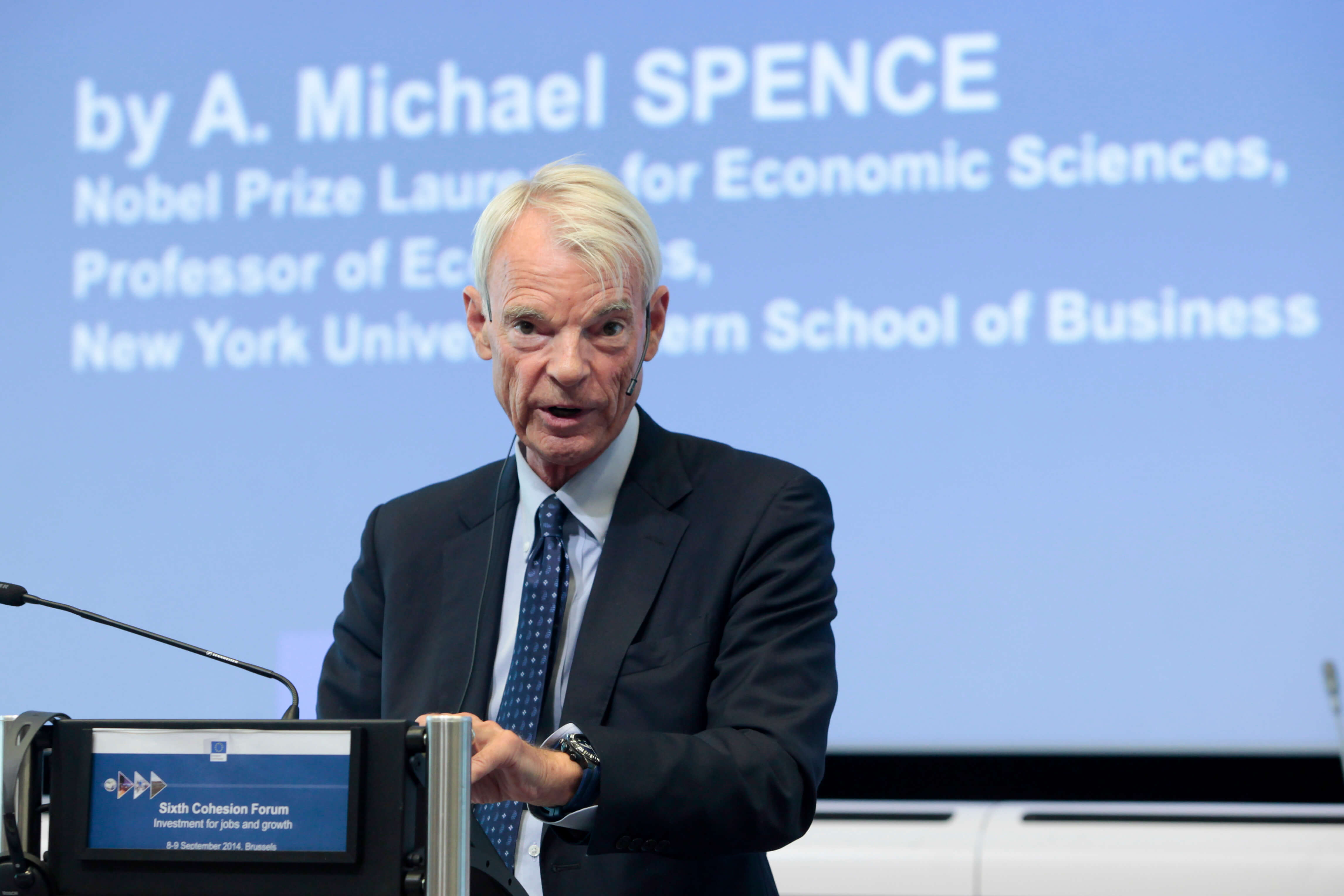 Whatever approach countries choose, eliminating or mitigating points of failure will be expensive - Michael Spence
To this end, they have a few options. They can go it alone, such as by “onshoring” the production of critical goods like semiconductors.
They can increase international cooperation – for example, by forming a coalition to maximize alternative sourcing of rare earths. Or they can pursue some combination of the two.
A crude rule of thumb might be that cooperation is less expensive than onshoring, more effective in principle, and in certain cases, essential – but much harder to achieve.
Whatever approach countries choose, eliminating or mitigating points of failure will be expensive. But, at a time of growing fragmentation and deteriorating cooperative, it is a cost they will have to bear.
Michael Spence, a Nobel laureate in economics, is Professor Emeritus of Economics and a former dean of the Graduate School of Business at Stanford University. He is Senior Fellow at the Hoover Institution, Senior Adviser to General Atlantic, and Chairman of the firm’s Global Growth Institute. He is Chair of the Advisory Board of the Asia Global Institute and serves on the Academic Committee at Luohan Academy.
