When Royal Saudi Air Force Commander Lt. Gen. Prince Turki bin Bandar announced that the establishment of the Royal Saudi Air and Space Force (RSASF) had entered its final phase, the significance was not institutional. It was operational.
The Kingdom is now formalising a military transformation that has been developing since the beginning of the Yemen war in 2015.
The merger of the Royal Saudi Air Force (RSAF) and the Royal Saudi Air Defense Forces (RSADF), along with the incorporation of expanding military space capabilities, reflects a reality already evident on the battlefield.
Air operations, missile defence, intelligence, strategic warning, and space capabilities increasingly function as parts of the same combat system. The new force simply formalises this reality.
Saudi Arabia entered Yemen in 2015 with a large, technologically advanced, and well-equipped air force.
What it lacked was not aircraft, precision weapons, or resources. It continued to conduct warfare in a conventional manner, relying on traditional concepts of air power that were better suited to limited campaigns than to managing a prolonged and highly complex theatre.
A costly learning curve
The early years revealed significant weaknesses in targeting, intelligence fusion, command and control, and shortcomings in integrating military and political objectives.
Yemen became a steep and costly learning curve. Over the following decade, the RSAF progressed from conducting basic air operations to managing the entire battlespace.
By January 2026, that evolution was evident. RSAF operations in South Yemen demonstrated a mature, integrated C6ISR architecture operating at a level very different from the early years of the war.
By 2026, the RSAF was no longer using fighter jets solely to strike targets
The removal of the Abu Dhabi-backed Southern Transitional Council (STC) military position in South Yemen demonstrated the extent of the RSAF’s progress in surveillance, targeting, operational sequencing, and theatre command.
By 2026, the RSAF was no longer using fighter jets solely to strike targets. It was employing an integrated architecture of aircraft, intelligence, surveillance, missile defence, and C2 real-time command systems to control the battle itself.
Opposing forces were responding to Saudi decisions rather than shaping events themselves.
The scale of the Saudi challenge
The scale of the Saudi challenge is often underestimated. Saudi Arabia is the largest country in the Middle East.
It contains the world’s largest continuous concentration of energy infrastructure, sits atop the world’s largest proven conventional oil reserves, and lies astride some of the most important energy and commercial maritime corridors in the global economy.
Defending the Kingdom increasingly required maintaining awareness across all of Yemen
As the conflict evolved, defending the Kingdom increasingly required maintaining awareness across all of Yemen, including Bab al-Mandab, Socotra Island, and the air and maritime routes connecting them.
The mission was no longer limited to defending Saudi national airspace. It became the management of a theatre stretching from the Gulf to the Red Sea, through the Arabian Sea, and the Gulf of Aden.
Retaliatory strikes against Iranian military
The same capability became evident during the Iran war that began in February 2026. By then, the RSAF had developed a standalone fused C6ISR capability able to operate independently across multiple theatres simultaneously.
Separate from American CENTCOM unified military operations, the RSAF demonstrated the ability to identify threats, execute strikes, and assess results within a single command process.
RSAF's retaliatory strikes against Iranian military and security targets were deliberately calibrated to deter attacks on Saudi critical energy infrastructure while maintaining escalation control.
RSAF was no longer operating on a single front. It was managing Yemen, Iraq, and Iran simultaneously
At the same time, RSAF carried out simultaneous operations against Iranian-backed militia networks in southern Iraq responsible for missile and drone attacks on the Kingdom.
RSAF was no longer operating on a single front. It was managing Yemen, Iraq, and Iran simultaneously through an integrated C6ISR command system developed over a decade of war.
What began in 2015 as a large but operationally standard air force had, by 2026, evolved into a force capable of managing interconnected theatres across the region.
That evolution, more than any individual platform, explains the significance of the force now being established.
Strategic effect
The RSAF already has the scale needed to translate operational evolution into strategic effect.
It operates approximately 365 combat aircraft, including about 226 4.5 generation fighters composed of 154 F-15SA (Saudi Advanced) and 72 Eurofighter Tranche 2/3 Typhoons.
They are supported by approximately 59 F-15C/D 4.0+ fighters and around 80 Tornado IDS legacy 4.0 strike aircraft. Saudi Arabia is already the second-largest operator of the F-15 after the United States.
The air-defence architecture supporting this force is equally significant. THAAD (Terminal High Altitude Area Defense) provides the upper tier against higher-altitude ballistic missile threats, while Patriot batteries (PAC-2/PAC-3) form the middle layer, protecting critical infrastructure and population centres.
Beneath them lies a dense SHORAD network, including Shahine and Crotale-derived systems, which repeatedly proved effective against drones and low-flying threats during the Yemen and Iran conflicts.
Only the United States will have a larger layered air- and missile-defence architecture than Saudi Arabia once the Kingdom’s Patriot and THAAD deployments are complete.
Saudi Arabia has invested heavily in indigenous missile and unmanned systems production
One of the most important lessons from the wars in Yemen and Iran was that not every threat requires a strategic interceptor.
Ballistic missiles, cruise missiles, and drones require different defensive layers. Success resulted from integrating these layers rather than relying on a single defensive system.
The transformation extends well beyond combat aviation and missile defence.
Saudi Arabia has invested heavily in indigenous missile and unmanned systems production, with growing emphasis on domestic manufacturing of ballistic missiles, long-range strike systems, reconnaissance platforms, and one-way attack drones.
The objective is a more resilient defence-industrial base capable of sustaining prolonged operations and reducing dependence on external suppliers.
The Royal Saudi Strategic Missile Force (RSSMF) remains outside this restructuring and continues its own modernisation trajectory as Saudi Arabia's distinct strategic forces command.
Space – the next phase
Space is the next phase of the transformation. Saudi Arabia is investing heavily in geospatial intelligence, satellite constellations, secure communications, and strategic warning systems.
Modern military power increasingly depends on seeing further, identifying threats earlier, and responding more quickly.
This is where the transition from C6ISR to C7ISR becomes crucial. Cognition is not simply another sensor; it is the ability to convert information into action more rapidly than an adversary.
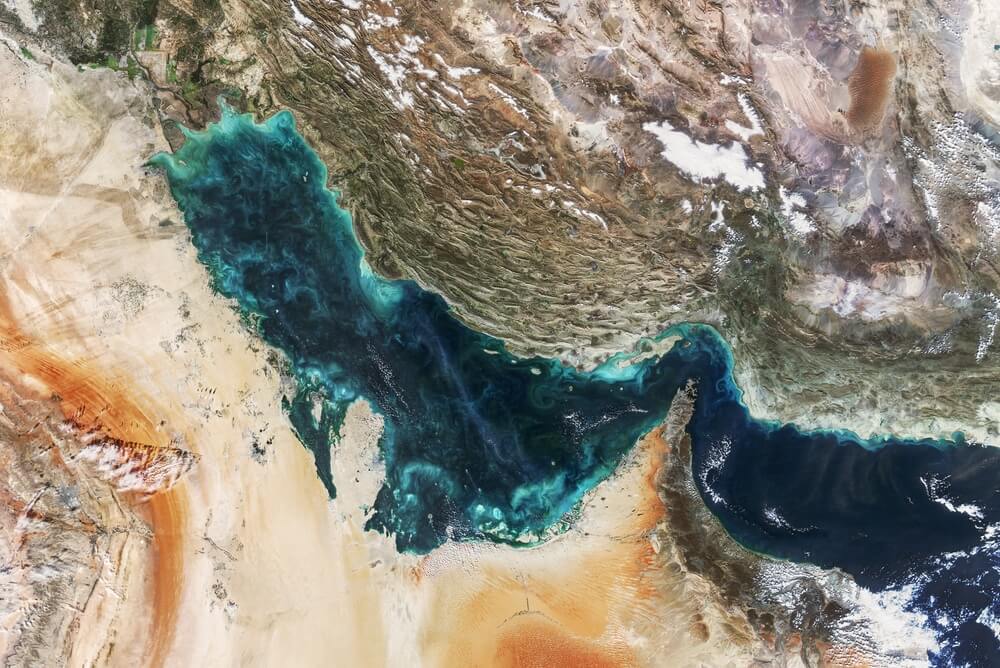 Saudi Arabia is investing heavily in geospatial intelligence, satellite constellations, secure communications, and strategic warning systems
The RSASF is integrating aircraft, missile defences, drones, intelligence systems, and space-based assets under a single command capable of managing the battlespace rather than merely participating in it.
Many programmes for modernising military systems, improving readiness, and strengthening institutional performance are underway. These reforms matter because sophisticated equipment alone does not create military power. Institutions do.
Saudi Arabia entered Yemen in 2015 with a large but operationally standard air force. A decade later, it fields a very different force.
It is supported by a layered missile defence network, increasing indigenous missile and drone production, expanding space capabilities, and an integrated command and control system tested in Yemen, Iraq, and Iran.
What RSASF is now building is the structure designed to preserve, expand, and exploit this over the next generation.
Dr Nawaf Obaid is a Senior Research Fellow at the Department of War Studies, King’s College London.
(The views expressed in this article are those of the author and do not necessarily reflect the editorial position of Tomorrow's Affairs.)
