At a meeting with the Swiss President Guy Parmelin on 30 October in Beijing, the Chinese President Xi Jinping said their upgraded trade agreement could bring greater certainty to China–Europe trade relations.
After the talks, amendments to the 2014 agreement were signed, under which China will gradually abolish tariffs on almost all current Swiss exports.
Xi thus assigned the agreement with Bern a significance that goes beyond trade between the two countries, at a time when relations between Beijing and Brussels are burdened by long-standing disputes over industry, subsidies and market access.
On paper, Beijing has also offered Switzerland part of what the European Union has been demanding for years, including a ban on making investments conditional on technology transfers.
Such commitments cost China little when they apply to an economy that does not threaten its industry, and they provide an example of cooperation with a wealthy European country that Chinese officials can show to other partners.
For Switzerland, better conditions are particularly important after a year of disputes with Washington over tariffs, but its economy remains much more closely tied to the EU and the US than to China.
For Beijing, opening the market to Bern is a minor concession
According to the Swiss State Secretariat for Economic Affairs, the existing agreement grants duty-free access to the Chinese market for 53.6 per cent of Swiss exports.
Once the amended agreement enters into force, that coverage should rise to 77.5 per cent and, after transitional periods of five to ten years, to 99.8 per cent. Estimates for the amended agreement are based on China’s import statistics for the period 2022 to 2024, excluding gold.
Manufacturers of watches, medicines, machinery and chemical products stand to benefit most. Bern puts the potential annual customs savings at approximately 244 million Swiss francs, while sales and earnings growth will depend on Chinese demand.
Experience with the 2014 agreement shows that tariff preferences do not automatically lead to higher sales
At the start of 2024, Switzerland unilaterally abolished tariffs on industrial products from around the world. Chinese industrial goods already enjoy almost complete duty-free access to the Swiss market, so the new agreement largely levels the playing field the two countries offer each other.
Chinese buyers will have cheaper access to some Swiss goods, and Beijing can present the opening of its market as evidence of its readiness for trade agreements.
For an economy the size of China’s, waiving tariffs on relatively limited Swiss exports is an acceptable price for such political success.
Experience with the 2014 agreement shows that tariff preferences do not automatically lead to higher sales. Estimates at the time suggested that Swiss companies would save about 290 million francs annually, but in 2017 approximately 100 million were realised.
Different industry standards, product registration procedures and import permits may still limit use of the new benefits. Senior Swiss trade official Roger Gschwend said that the Chinese offer shows Beijing’s willingness to further open its market.
Brussels seeks far more from China than lower tariffs
In 2025, the European Union imported goods worth 559.5 billion euros from China and exported goods worth 199.5 billion euros, according to the European Commission.
The deficit of almost 360 billion euros is compounded by competition in the automotive industry, batteries, machinery and other major production sectors.
European concerns also include state subsidies to Chinese companies, restrictions on access to public procurement and export controls on critical raw materials.
Reducing tariffs on European products could help some exporters, but it would leave unresolved issues that affect entire industries and millions of jobs.
The agreement also covers investment. China has pledged to treat Swiss investors, including those in manufacturing, on an equal footing with domestic and third-country investors, and not to make their investments conditional on technology transfer, local content or export obligations.
The investment agreement that China and the EU agreed in principle at the end of 2020 has remained frozen following mutual sanctions related to human rights in Xinjiang
Swiss companies will be able to be sole owners of subsidiaries in banking, insurance, technical testing and transport. The EU has been negotiating precisely these topics with Beijing for years.
The difference lies in the price: it is one thing for China when these obligations apply to Swiss banks and manufacturers of precision machinery, and quite another when they apply to the European automotive and chemical industries and battery manufacturers.
In addition, Bern negotiates alone, without having to coordinate the interests of 27 national economies.
The investment agreement that China and the EU agreed in principle at the end of 2020 has remained frozen following mutual sanctions related to human rights in Xinjiang.
Talks are continuing: European Trade Commissioner Maroš Šefčovič met Chinese Minister of Commerce Wang Wentao in Beijing on 8 and 9 October to discuss market access and export controls, and a new ministerial meeting has been agreed for March 2027.
Switzerland is trying to revive research blocked by Chinese laws
Alongside the trade agreement, a special accord with China on data exchange in joint scientific research was signed in Beijing, having been approved by the Swiss government two days earlier.
China’s Data Security Law and Personal Information Protection Law, passed in 2021, have raised questions about which research results can be exported from the country.
In the same year, the Swiss National Science Foundation stopped launching new jointly funded programmes with Chinese partners because of the risk that researchers could lose access to data they had collected themselves.
The same problem has affected the German Research Foundation and the Swedish Research Council.
The two institutions have also not launched new joint calls with China’s National Natural Science Foundation since 2021, as Chinese regulations leave room for differing interpretations of sensitive data and potential legal responsibility for researchers.
The agreement does not remove existing controls on the export of sensitive technologies
The problem affects health and environmental projects, where sharing results is often a prerequisite for the work to make sense.
The Swiss solution requires Chinese partners to check, before the start and throughout the course of a project, whether there are any obstacles to data transfer, with Swiss researchers having the option to withdraw if they cannot obtain the data.
China’s restrictions remain in place, but researchers learn earlier the conditions under which they will be working.
The Swiss government has announced the renewal of joint calls, and the German and Swedish foundations now have an example against which they can test whether similar commitments from Chinese partners would be sufficient for continued cooperation. The agreement does not remove existing controls on the export of sensitive technologies.
Bern caught between US tariffs and a potential referendum
Access to the Chinese market took on added importance for Switzerland after a year of US tariffs. The Trump administration imposed a 39 per cent tariff on Swiss goods in August 2025, the highest in Europe, which was reduced to 15 per cent under a temporary agreement in November.
After the ruling of the US Supreme Court, which in February 2026 annulled the legal basis of those tariffs, Washington introduced a new regime under Section 301 of the Trade Act from 24 July, under which some Swiss goods are subject to tariffs 2.5 percentage points higher than comparable goods from the EU.
Negotiations with China began in September 2024, before these decisions. After the announcement of the agreement with Beijing, US officials requested talks with their Swiss counterparts, and the Swiss State Secretariat for Economic Affairs stated that no specific objections had been raised.
The Swiss government expressed concern about the situation of the Uyghurs and Tibetans, as well as that in Hong Kong
Washington attributes the higher rate to its claim that Switzerland does not prohibit the import of goods produced by forced labour, a view disputed by Bern.
Swiss human rights organisations are also seeking the same ban and are raising the possibility of a referendum against the agreement with China.
The government replies that, with this agreement, China has for the first time in any of its trade agreements committed itself to abolishing forced labour and respecting freedom of association.
Critics point out that no sanctions are envisaged for breaches of these obligations, because disputes can only be considered by a commission of experts that establishes the facts and makes recommendations.
On 20 October, during a regular dialogue with Beijing, the Swiss government expressed concern about the situation of the Uyghurs and Tibetans, as well as that in Hong Kong.
Before it can enter into force, the agreement must be approved by parliament, and if a referendum is launched, the decision will be made by voters.
The Swiss deal could weaken the EU’s common stance
Beijing will cite the Swiss agreement to European governments as proof that it is ready to open its market and accept the commitments Brussels is demanding.
EU member states cannot conclude free trade agreements with China on their own, as that competence lies with the Union, but they can put pressure on European institutions to relax common requirements so that their industries can reach the Chinese market more quickly.
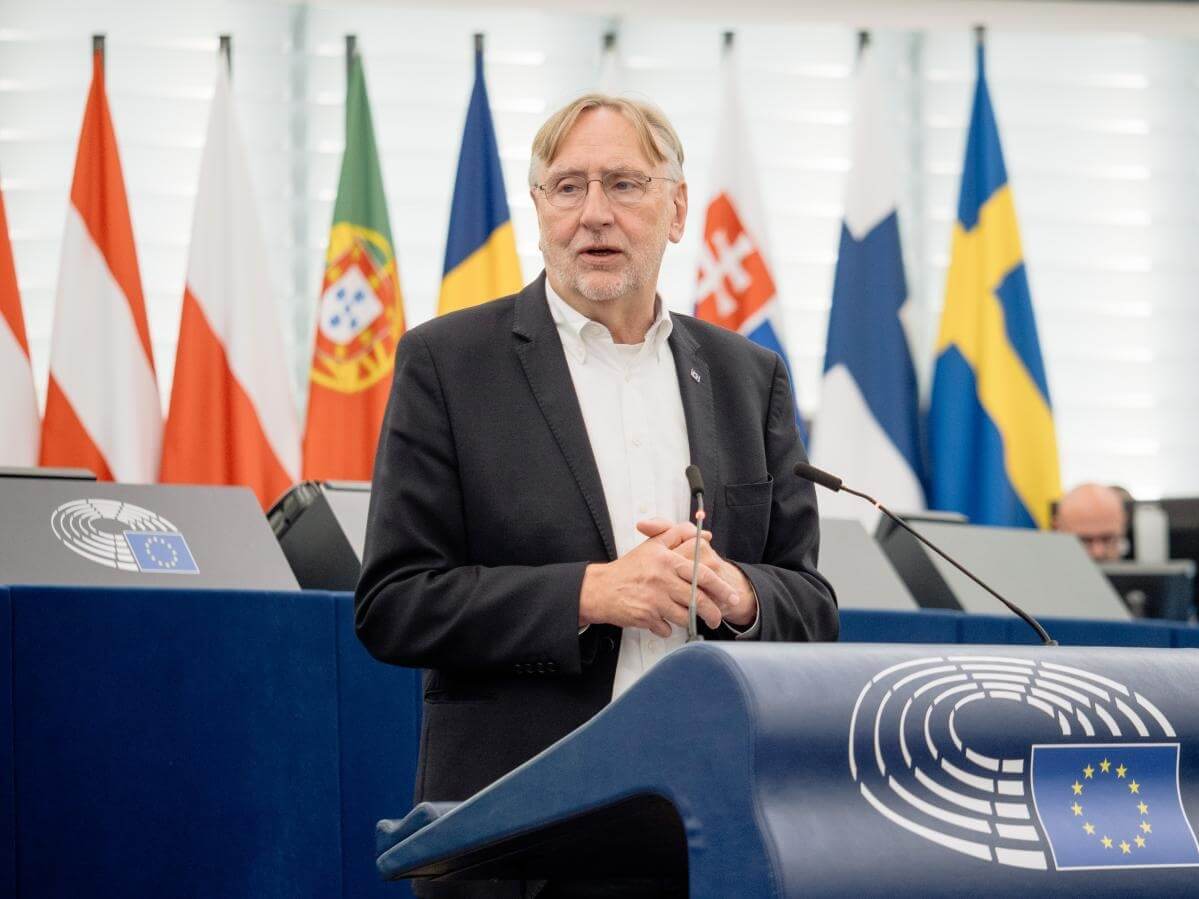 Bernd Lange is calling for a more comprehensive agreement with China
Bernd Lange, chair of the European Parliament’s Committee on International Trade, is already calling for a more comprehensive agreement with China and a reconsideration of the investment component of the frozen 2020 deal, but there is currently no consensus in Brussels.
If the Union opts for a faster deal, the Swiss example shows what the benchmark should be: commitments on technology transfer and market access are only as valuable as the extent to which they can be verified in practice.
An agreement that accepted such commitments without effective oversight would give certain industries quicker access to China, but would weaken the EU’s ability to negotiate rules that apply equally to all its members.
