China looms large in trade-policy discussions everywhere, but the precise concerns vary.
Whereas the United States has long regarded China as a destroyer of American industry and a geopolitical rival whose rise must be contained, Europe has been more concerned about the national-security implications of Chinese dominance in a few strategic sectors, such as rare-earth minerals.
Recently, however, European policymakers have begun sounding more like their American counterparts, arguing that surging Chinese imports threaten domestic industry.
While China’s dominance in sectors like rare earths always had strategic implications for Europe, it did not mean much for European employment or output.
And the competitive pressures European Union firms did feel from China were largely offset by European industry’s strong foothold within China.
This is now changing. European companies find it increasingly difficult to compete in the Chinese market, even if they are heavily invested there, while Chinese exports to Europe are surging.
The EU’s bilateral trade deficit with China reached nearly €360 billion ($419 billion) last year—almost double that of the US—affecting many of Europe’s core industries, such as automobiles.
Chinese exporters are bolstered by vast government subsidies and policies focused on ensuring dominance in high-tech industries, compounding Europe’s frustration.
Now, calls for European leaders to protect domestic industry from Chinese competition are growing louder, with even figures who have criticized US President Donald Trump’s tariffs advocating for Europe to respond to “unfair” Chinese subsidies with levies of its own.
Protection comes at a high cost
It’s a politically potent argument, but it is not based on sound economics. Fairness does not factor into a rational economic policy.
What matters is whether a given action—such as introducing tariffs or even disregarding World Trade Organization rules (because “others are doing it”)—would bring net benefits to the economy. And, in this case, the answer is no.
It might seem obvious that imposing a tariff on imports from China would give European industry a leg up against its strongest competitor.
Tariffs would increase the costs of production throughout the European economy
But this protection comes at a high cost. For starters, intermediate inputs comprise over 40% of total EU imports from China, meaning that tariffs would increase the costs of production throughout the European economy.
A tariff on batteries, for example, would place considerable strain on producers of battery electric vehicles, imperiling the EU’s large trade surplus in the sector.
This surplus is important. Warnings that Chinese imports pose a threat to European automakers usually focus on the number of Chinese vehicles entering Europe, noting that China-made cars now account for 7% of car sales in the EU.
But nearly 40% of the EU’s total car production is for export, and the unit value of European auto exports is twice as high as that of imports from China.
This implies that export markets may account for up to half the value of production.
Europe’s advantage is rapidly being eroded
For the auto industry, like many others, success in export markets is necessary not only to survive, but also to retain technological leadership.
For now, Europe is often exporting high-end differentiated products, which are not interchangeable with the imports China has to offer.
But Europe’s advantage on this front is rapidly being eroded, as Chinese producers climb the quality ladder.
The key problem for Europe is not so much surging imports, but the weakness of extra-EU exports
It is far from clear that tariffs would preserve European competitiveness against Chinese exports that can compete in global markets on price, standards, and innovation.
In fact, recent data show that the key problem for Europe is not so much surging imports, but the weakness of extra-EU exports, which have been declining for four consecutive quarters (until Q1 of this year).
Temporary relief
Tariffs might offer temporary relief to a few sectors, but they cannot restore technological leadership, industrial dynamism, or export competitiveness.
Recent experience in the US reinforces this view: while Chinese exports to the US have fallen, this redirection of trade flows has not been accompanied by an American industrial renaissance.
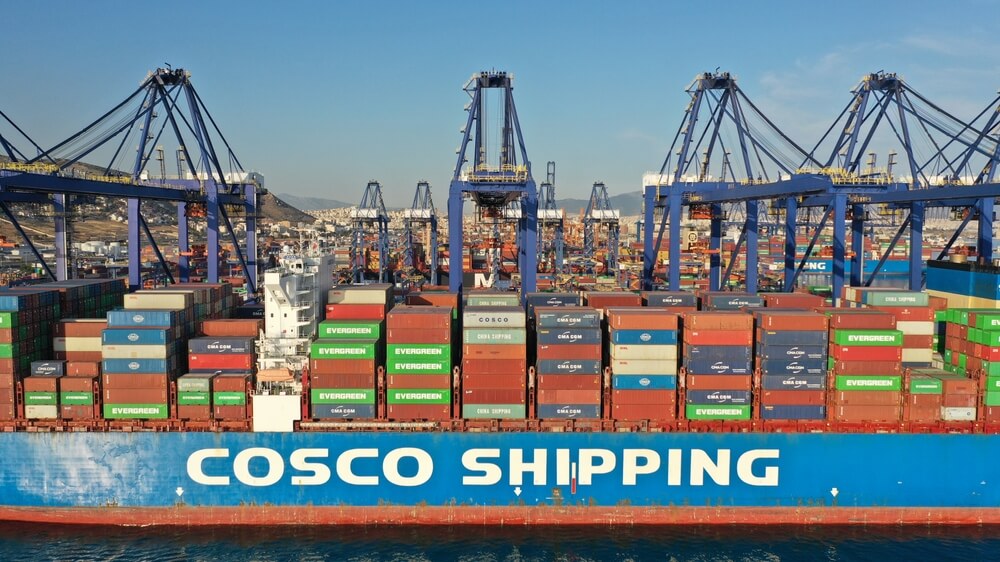 The challenge for Europe today is not to shield itself from Chinese exports, but to remain competitive in spite of them
Production instead shifts to third countries, while higher input costs weigh on downstream industries.
The challenge for Europe today is not to shield itself from Chinese exports, but to remain competitive in spite of them.
To this end, it should increase investment in innovation, pursue greater integration of the Single Market, work to lower energy costs, and pursue policies that strengthen its ability to compete globally.
Where China raises genuine security risks—such as through its dominance in critical minerals or other strategically important products—targeted measures like stockpiling, supply-chain diversification, and expansion of strategic reserves are justified. But these are exceptions.
For the bulk of European industry, success will depend not on keeping Chinese products out, but on ensuring that European products are still in demand globally.
Daniel Gros is Director of the Institute for European Policymaking at Bocconi University.
