Grim as the final month of 2025 has been – with headlines dominated by mass shootings, crises, and polarization – one positive development offers a glimmer of hope for the coming year.
Across the developing world, younger people are demanding jobs, affordable food and fuel, economic opportunity, and action to slow climate change.
From South Asia to Latin America, they are presenting political leaders with a stark choice: listen and respond, or step aside and be replaced.
Nepal is a prime example. In September, the government banned 26 major social-media platforms that had been used to expose the lavish lifestyles of politicians’ children, triggering protests over corruption, nepotism, and the lack of opportunities for young people.
The 73-year-old prime minister, K.P. Sharma Oli, then inflamed tensions further by mocking the thousands of teenagers who took to the streets.
When security forces fired on crowds, killing at least 19 people and injuring hundreds more, demonstrators set fire to parliament and ransacked Oli’s private residence. He resigned the following day.
The wave of unrest
Some trace the current wave of unrest to Sri Lanka in 2022, when economic collapse and severe fuel and electricity shortages sparked a youth-led protest movement.
Activists set up a camp outside the office of then-72-year-old President Gotabaya Rajapaksa, whose family had governed the country for 15 of the previous 18 years, accusing him of corruption and nepotism.
Protesters eventually overran the president’s residence, forcing Gotabaya to flee the country.
Two years later, the Bangladeshi government responded to students protesting discriminatory job quotas with a telecommunications blackout and a brutal police crackdown that killed hundreds of civilians.
Rather than suppressing dissent, the violence spurred thousands to join the movement.
Protesters in Dhaka soon marched on the office and residence of Sheikh Hasina, the then-76-year-old prime minister, who fled to India shortly thereafter.
In Peru, protests over pension reforms exploded into broader demands to address rising economic insecurity and widespread corruption
Around the same time, Kenyan President William Ruto’s proposed tax hikes sparked a country-wide wave of Gen Z protests.
Tensions escalated after security forces killed dozens of protesters, injured hundreds, and arbitrarily detained many more.
After demonstrators stormed the parliament and set part of the complex on fire, Ruto withdrew his tax increases and fired most of his cabinet.
Protests erupted again in June of this year, underscoring the depth and persistence of public anger.
Meanwhile, in Peru, protests over pension reforms exploded into broader demands to address rising economic insecurity and widespread corruption.
Deadly crackdowns fueled the unrest until President Dina Boluarte, who had already been under investigation over bribery allegations, was removed from office.
Youth movements reflect concerns shared by working people
In country after country, Gen Z-led demonstrations quickly gained broad public support.
Protesters used social media to share information, organize, and build networks, and when governments shut down these platforms, activists migrated to encrypted servers and even gaming communities.
When authorities resorted to violence, the protesters responded by escalating rather than submitting.
Far from being confined to a single generation or region, these youth movements reflect concerns shared by working people in rich and poor countries alike.
Wages, job security, and purchasing power have been steadily eroded by a series of global shocks – the 2008 financial crisis, the COVID-19 pandemic, the war in Ukraine, and intensifying migration pressures – making incumbent governments appear increasingly out of step.
Gen Z protesters are not seeking to tear down political systems
Yet Gen Z protesters are not seeking to tear down political systems. Instead, they are demanding governments that provide jobs, fight corruption, and invest in climate action. These are practical demands, and there are clear ways to meet them.
Youth unemployment is a case in point. A decade ago, Portugal, Ireland, Italy, Greece, and Spain – the so-called PIIGS countries – were grappling with a severe sovereign-debt crisis.
Since then, four of the five have dramatically reduced youth unemployment. In Portugal, joblessness among 15-24-year-olds fell from 34.7% in 2014 to 18.3% by October 2025, while Ireland’s rate declined from 24.2% in 2014 to 13.4% in October 2025.
Greece cut youth unemployment from 52.8% in 2014 to 22.4% in 2024, and Spain lowered it from 53.2% to 26.5% over the same period.
This success can be largely attributed to the European Union’s post-crisis Youth Guarantee program, through which governments commit to offering young people a quality job, apprenticeship, training opportunities, or continued education within four months of leaving school or becoming unemployed.
While the program did not solve every problem, it showed what sustained political will and targeted policies can achieve.
Transparency is essential
As the recent experiences of Armenia, Azerbaijan, Moldova, and Ukraine show, fighting corruption can be much harder.
Still, meaningful progress is possible, though it requires professional, adequately paid civil servants, robust monitoring and audit systems, and real political accountability.
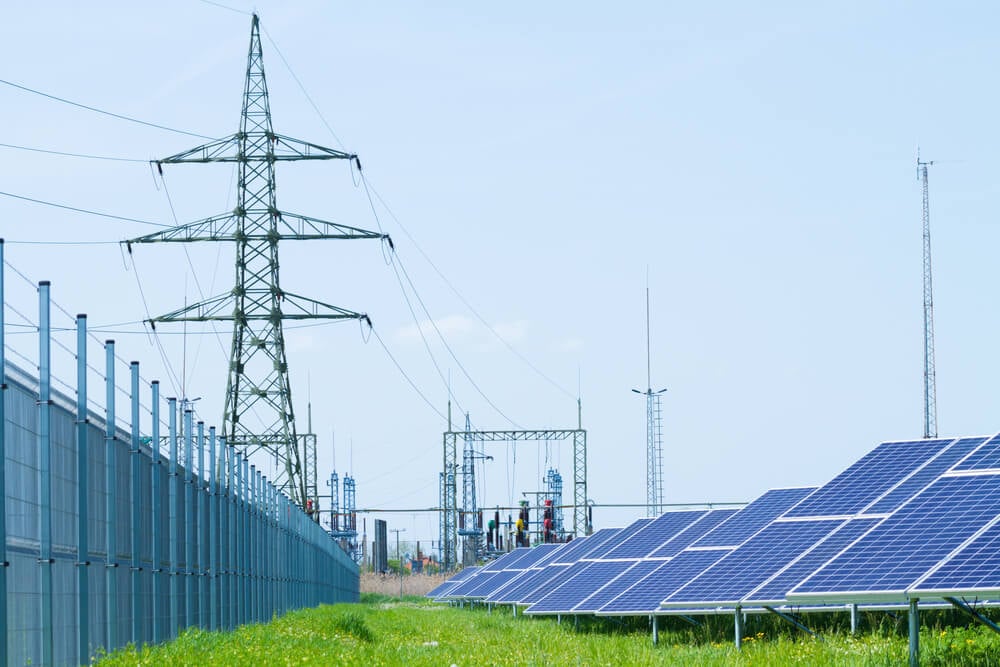 For young people struggling with high living costs and narrowing opportunities, the clean-energy transition is about more than cheaper electricity
E-governance can also help: Rwanda’s digitized public procurement system reduced opportunities for corruption, while Georgia’s move to a fully electronic tender system produced measurable improvements, at least in its early years.
Transparency is essential. When corruption is tolerated and normalized, it spreads; when it is exposed, reputational costs and social norms can discourage misconduct and reinforce accountability.
This is why whistleblower protections and accessible anti-corruption databases matter, and why businesses must be part of the solution.
Climate change also weighs heavily on younger generations. Governments have often undermined public support for climate action by placing disproportionate costs on those least able to pay, but the economics of sustainability are shifting rapidly.
The cost of electricity from utility-scale solar photovoltaics fell by 85% between 2010 and 2020 and continues to decline, while battery storage costs have dropped by more than 90% over the same period.
To be sure, scaling these systems still requires significant investment, including grid upgrades and reliable storage.
But renewables also reduce exposure to fossil-fuel price shocks, sanctions, and trade disruptions that drive up household outlays.
That said, for young people struggling with high living costs and narrowing opportunities, the clean-energy transition is about more than cheaper electricity.
It is about governments offering them a future that is not defined by permanent insecurity.
Ngaire Woods is Dean of the Blavatnik School of Government at the University of Oxford.
