It was an uncomfortable message before the holiday for about 30 US ambassadors and senior diplomats stationed worldwide.
Donald Trump's administration suddenly recalled an unusually large number of top diplomatic representatives from global capitals, directing them to return home with minimal notice, even as early as January.
Such a large-scale recall of diplomats, with a phone notification and extremely short deadlines for return, is unprecedented and has led to many interpretations, most of which suggest it is not a routine matter.
"To remove these senior diplomats without cause or justification sends a dangerous message. It tells our public servants that loyalty to country is no longer enough – that experience and oath to the Constitution take a back seat to political loyalty," was one of the interpretations given by the American Foreign Service Association (AFSA), the union that represents US diplomats.
This decision by the administration is difficult to dispute from a formal, legal perspective, because ambassadors are personal representatives of the US president, so the president has the authority to terminate their service, as announced by the State Department.
Nevertheless, the manner in which this major move was organised reflects the continuity of Trump's management style, in which institutions and non-partisan civil services are subordinate to his policies and management.
New criteria in diplomacy
The recall of ambassadors shows that the US diplomatic service, under Trump, will be shaped not according to professional standards but according to a very specific policy within the US – the one represented by the president and his administration.
"It is the president's right to ensure that he has individuals in these countries who advance the America First agenda," announced the US State Department regarding the decision to withdraw a large number of US ambassadors from around the world.
This is bad for our diplomacy, bad for our national security, and bad for our influence in the world - Eric Rubin
This interpretation effectively means that the main criterion for selecting new American representatives abroad, and especially for the work of those who remain in their posts, will be the implementation of Trump's political and economic agenda.
Such a criterion effectively breaks with the non-partisan tradition of the American diplomatic service, abandoning one of its greatest strengths, which has made it effective and influential worldwide.
"This is bad for our diplomacy, bad for our national security, and bad for our influence in the world," said Eric Rubin, a retired diplomat and former AFSA president.
Friends and business partners
The attitude towards top career diplomats will therefore not be friendly at all during the next three years of Trump's term.
It will generally reflect Trump's approach of removing the management of public services from career professionals as much as possible and handing it over to loyalists, party members, and personal friends.
Trump is certainly not an exception among US presidents in appointing personal and business friends to high diplomatic positions around the world.
However, he will probably be the first whose term sees personal and business connections take precedence over professional qualifications and diplomatic experience.
Mass dismissals of professionals serving ambassadors is a waste of talent and contemptuous of service to country - Daniel Fried
The appointment, for example, of Charles Kushner, the father of Trump’s adviser Jared Kushner, as ambassador to France, will probably not remain an exception arising from the US president's discretion but may become the new rule in the US diplomatic service.
According to the same criteria, long-time Fox News star and former fiancée of Trump's son Donald Jr, Kimberly Guilfoyle (Greece), and Joseph Popolo Jr, a major donor to the Republicans and Trump (the Netherlands), have also been appointed to ambassadorial positions.
The consequences of such a shift in the diplomatic service – from institutional and professional to political and private – could be damaging for the US in the long term.
The government's insistence that diplomats must implement an America First policy will inevitably narrow their scope and create pressures that will make the profession unattractive to non-partisan professionals.
"Mass dismissals of professionals serving ambassadors is a waste of talent and contemptuous of service to country," said Daniel Fried, a former senior diplomat in the George W. Bush administration.
Special envoys instead of diplomats
Second, such a mass recall of diplomats will have a very negative impact on the governments of the countries where they served. Vacant ambassadorial positions inevitably lower the level of political, security, and economic cooperation with the US.
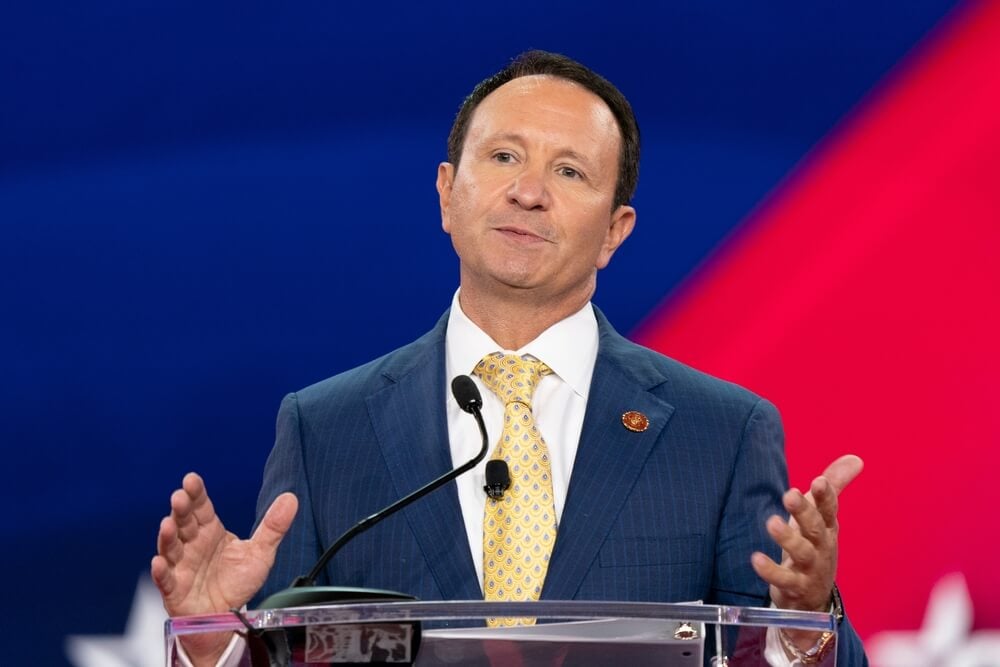 Jeff Landry, the Republican governor of Louisiana, was appointed as special envoy for Greenland
This will be especially evident in Africa, where the American diplomatic network has long been understaffed, coinciding with the decline of American influence on the continent and the significant increase in Chinese and Russian influence.
In the latest move, most ambassadors were recalled from Africa, from as many as 13 countries. Six ambassadors are returning to the US from Asian countries, and four from Europe.
The Trump administration indicates it will attempt to implement this "privatisation" of diplomacy by directly appointing ad hoc super-diplomats, that is, special envoys for specific processes, countries, or regions.
The latest in that series, Jeff Landry, the Republican governor of Louisiana, was appointed as special envoy for Greenland, a semi-autonomous region under the control of Denmark, a member of NATO and the EU.
His appointment provoked strong reactions from Europeans, especially the Danish government, and was seen as confirmation of Trump's further distancing from traditional European allies.
Some of the mandates of Trump's special envoys remain unclear, such as that of Mark Burnett, the UK envoy, TV executive, and producer of Trump's reality show The Apprentice.
"Mark will work to enhance diplomatic relations, focusing on areas of mutual interest, including trade, investment opportunities, and cultural exchanges," Trump said a year ago when he appointed Burnett before taking office as president.
Burnett's job description appears identical to the duties of the US ambassador to the UK, and since his confirmation in the US Senate in April, another Trump associate, billionaire investment banker Warren Stephens, has held the position.
