A quarter-century ago, each of the five biggest European Union banks had a market capitalization larger than that of the biggest US bank.
Now the market capitalization of the biggest US bank, JPMorganChase, is higher than that of the top five EU banks combined. (The EU is coy about names, but we can presume that the EU banks include France’s BNP Paribas, Germany’s Deutsche Bank, and Spain’s Santander).
This striking fact about market capitalization is cited in a European Commission report on banking regulation published in late July.
The Commission is not noted for lauding the achievements of the US financial sector, so the purpose must have been to sound a wake-up call to those EU member states that remain resistant to the reforms recommended in reports on European competitiveness written in recent years by former European Central Bank President Mario Draghi and former Italian prime minister Enrico Letta.
The reasons for this dramatic turnaround in relative values are many and various.
One obvious factor is that the US economy recovered far faster from the 2008 financial crisis than the EU did, outperforming Europe by almost 20 percentage points since 2009.
Another is that US capital markets are deeper and more flexible, giving companies more sources of capital and allowing banks to manage their balance sheets more actively.
Moreover, cost-to-income ratios in EU banks have remained stubbornly high, and many local regulations stand in the way of a genuine single market.
Stability of the graveyard
The convoluted merger dance involving Unicredit and Commerzbank may turn out to have a happy ending, but the time it has taken illustrates how difficult banking consolidation has been to achieve.
We still have no pan-European banks worthy of the name, except perhaps Revolut.
The EU’s legacy banks would also blame excessively conservative prudential regulation by the ECB.
There are signs that the European Commission itself, more directly exposed to political pressures than the ECB, is coming around to that view.
Maybe, as the saying goes, the ECB is achieving the stability of the graveyard, where nothing moves
The Commission is becoming more receptive to the argument that the need to encourage bank lending, especially to small and medium-size enterprises, which are more dependent on bank borrowing in Europe than they are in the US, should be a consideration influencing the setting of capital requirements.
Maybe, as the saying goes, the ECB is achieving the stability of the graveyard, where nothing moves.
Worrying signs of a growing transatlantic divergence
The difficulty is that the evidence on the relationship between bank capital and growth is mixed.
Recent research by the management consultancy Oliver Wyman and financial research firm Autonomous points to a reduction in return on equity of about 1%—significant, but not transformative—arising from the ECB’s more conservative approach by comparison with the US Federal Reserve.
The ECB, no surprise, contests that conclusion, and points to the long-term advantages of a highly resilient banking sector.
But that is a static approach, and there are, from the EU banks’ perspective, worrying signs of a growing transatlantic divergence.
The Fed has clearly abandoned the Basel Endgame proposals which provoked such hostility a couple of years ago.
The Fed’s current proposals, articulated by Vice Chair for Supervision Michelle Bowman, include a reduction in the supplementary leverage ratio, a lower G-SIB (Global Systemically Important Bank) surcharge, and other changes which, together, would reduce required capital for a large US bank by about 5%. That would suit President Donald Trump’s administration.
The ECB continues to argue that banks could do more to help themselves by controlling costs more effectively
The Bank of England is moving cautiously in the same direction, and earlier this year announced a reduction in the benchmark Tier 1 capital requirements from 14% to 13% (down to the equivalent of a CET1 ratio of around 11%).
That is hardly a radical move, and the British banks want more, but it is a step in the direction of a more competitive approach, which the government itself has called for.
But the ECB remains hawkish for now. Its head of supervision, Claudia Buch, argues that tough capital regulation has not constrained credit expansion in practice.
She agrees with the need for simplification (hands up if you oppose simplification) but resists arguments for any overall reduction in capital.
Instead, the ECB continues to argue that banks could do more to help themselves by controlling costs more effectively.
And while the price-to-book ratios of big EU banks remain below those of their US competitors, they have at last been rising.
The ECB is not alone
In fairness, the ECB is not alone. While Canada has modestly relaxed its capital requirements, other significant economies have not. Australia and Japan remain conservative and resistant to change.
China’s regime is hard to compare, but on the face of it, policymakers are sticking to their traditional line—“Basel plus one” percent—on capital requirements.
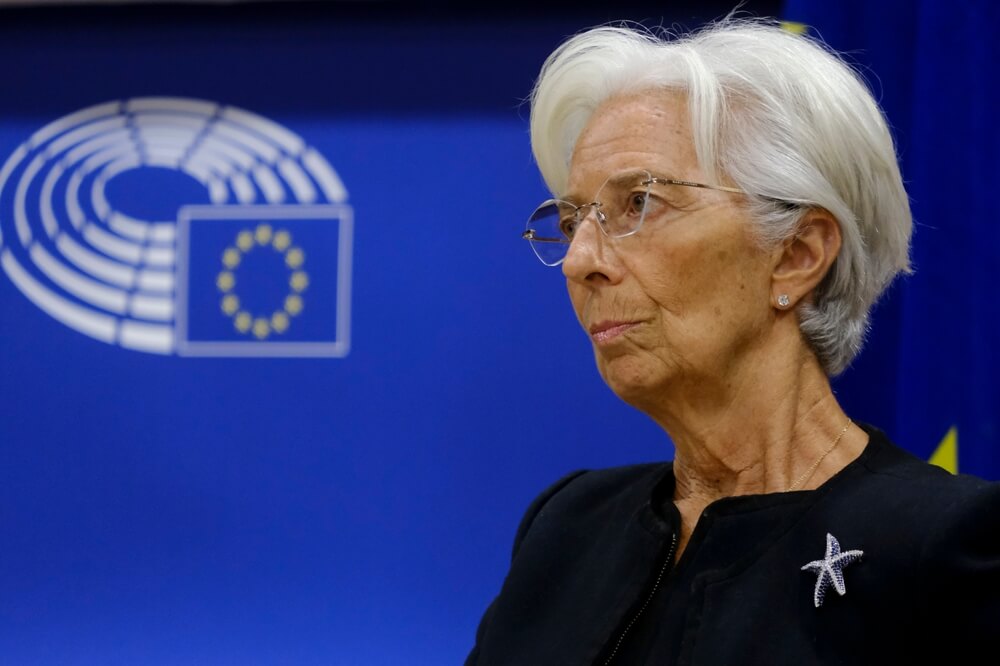 The issue could play into discussions about who succeeds Christine Lagarde as ECB President in 2027
In each case, the political and economic contexts are different. Europe is stuck in a low-growth equilibrium, and its leaders are desperately searching for an escape route.
However weak the argument, cutting capital requirements seems to offer the prospect of some relief. That is clearly driving current thinking at the European Commission.
That could set the stage for an interesting confrontation between the Commission and the ECB this autumn, pitting the Brussels doves against the Frankfurt hawks.
Normally, the outcome of that fight would be easy to handicap: the ECB holds most of the cards.
But there are other considerations to bear in mind. The issue could play into discussions about who succeeds Christine Lagarde as ECB President in 2027.
If the German economy remains stagnant, Chancellor Friedrich Merz might be well-disposed to someone a little less keen on ever-stronger capital buffers than his compatriot Frau Buch.
Howard Davies, the first chairman of the United Kingdom’s Financial Services Authority (1997-2003), is Professor at Sciences Po. He was Director of the London School of Economics (2003-11) and served as Deputy Governor of the Bank of England and Director-General of the Confederation of British Industry.
