On 14 July, Ali al-Zaidi stood next to Donald Trump in the White House and described the United States as Iraq’s most important strategic partner.
He promised that after 30 September there would be no justification for armed formations existing outside full state control, as the Iraqi army and police would be able to protect the country on their own.
Two weeks later, American and Saudi aircraft attacked positions of the Popular Mobilization Forces on Iraqi territory, and Trump publicly claimed that the operation had been carried out in coordination with the government in Baghdad.
The Iraqi authorities replied that they had not been informed about the strikes in advance and had not authorised them.
The Popular Mobilization Forces, known by the Arabic name Hashd al-Shaabi, are an alliance of dozens of predominantly Shia armed groups formed in 2014, after Grand Ayatollah Ali al-Sistani called on Iraqis to join the fight against the Islamic State.
Later, they were incorporated by law into the Iraqi security system, receive funding from the state budget and formally answer to the prime minister as commander-in-chief.
Their ranks, however, also include powerful brigades that are politically, financially and militarily tied to Iran and often conduct their own operations without the government’s actual consent. Thus, the Hashd simultaneously belongs to the Iraqi state and represents one of the main levers of Iranian influence in the country.
Trump’s claim of prior coordination put al-Zaidi in a position from which no response could be politically painless. Accepting the American version would mean that the Iraqi government had authorised foreign countries to bomb a formation that is part of its official security apparatus.
The public denial raises an equally difficult question about the nature of the partnership with Washington, whose president attributes to the Iraqi prime minister consent that Baghdad says he never gave.
In both cases, the decision to use force on Iraqi territory lay outside the control of the institutions that should have made it.
At least 20 Hashd al-Shaabi members were killed and 32 wounded in attacks carried out on the night of 28–29 July. Iranian military advisers were also among the dead, although their exact number has not yet been reliably determined.
US Central Command said warehouses, logistics centres and positions of Iran-linked groups were hit after more than 30 drone strikes over the previous three days.
Saudi Arabia claims that aircraft were launched from Iraqi territory towards oil facilities in the Eastern Province and towards Riyadh. Iraqi factions deny responsibility and describe the Saudi accusations as a pretext for the attack.
Iraq thus once again found itself in the familiar role of a territory from which some wage a regional war, to which others retaliate, and whose government only tries to determine who gave the order after each attack.
The difference is that everything is now happening before the end of the international military mission, at a time when the new prime minister is trying to convince the country and foreign partners that Iraq is ready to take full control of its own security.
The Prime Minister acceptable to both Washington and Tehran
Al-Zaidi took office on 14 May as Iraq’s youngest prime minister and the first businessman without previous government experience to hold the position.
His election followed months of bargaining within the Shia political majority, with strong American pressure blocking the return of Nouri al-Maliki, a former prime minister with close ties to Tehran.
Al-Zaidi was chosen precisely because different parties could see him as an acceptable interlocutor. Iraqi factions linked to Iran did not regard him as an immediate threat, while Washington accepted him as someone prepared to limit the militias’ independence and expand the scope for American energy companies.
His political strength rested on the promise that Iraq could maintain good relations with the United States, Iran and its Arab neighbours without conceding to any side the right to use the country for its own ends.
During a visit to Washington in mid-July, he presented a plan under which, after the end of the international coalition mission on 30 September, security co-operation would continue through bilateral agreements, training for Iraqi forces and economic arrangements. At the same time, he announced that armed groups would be placed under full state command.
Certain factions operating from Iraqi territory apparently still can launch actions that provoke responses from neighbouring states
Within a few hours, the strikes had called into question the credibility of that plan. Certain factions operating from Iraqi territory apparently still can launch actions that provoke responses from neighbouring states, while Washington and Riyadh believe they can intervene without a decision from Baghdad.
The prime minister, who had claimed in the White House that Iraqi institutions were capable of protecting the country, returned home to find that both the attack and the retaliation had been carried out outside those institutions.
His position is further complicated by the fact that disarmament cannot be achieved through a simple administrative decision. Parties linked to the most powerful Hashd brigades have ministers, MPs, influence in the civil service and access to a large share of the budget.
Some commanders control thousands of fighters, their own intelligence structures and economic interests that extend far beyond military activity. Any attempt to disarm them impinges on the distribution of political and economic power on which the post-war Iraqi order rests.
State uniforms and parallel orders
For years, the ambiguous legal status of the Popular Mobilization Forces has allowed Iraqi governments to avoid giving a definitive answer to who in the country has the authority to start a war.
When individual brigades attacked US bases or targets in neighbouring countries, Baghdad claimed it had only limited control over their commanders. When the United States or Israel bombed their positions, the government defended them as members of the official Iraqi forces and spoke of violations of sovereignty.
Such behaviour was sustainable as long as all parties had reason to avoid open conflict. After Saudi Arabia’s direct participation in the strikes, the scope for ambiguity has narrowed considerably.
Riyadh no longer regards Iraq's internal complexity as a sufficient explanation for drone strikes crossing its border. The US administration also expects Baghdad to control units financed from the state budget and using state infrastructure.
Al-Zaidi must demonstrate to the domestic public that decisions are made in Baghdad, yet he depends on Washington
For pro-Iranian brigade commanders, the US-Saudi strikes are proof that handing over their weapons would leave their men exposed to further attacks. They do not see the Hashd as a temporary formation whose purpose ended with the defeat of Islamic State.
Its role is tied to the defence of Iraq, the Shia sanctuaries and the wider alliance that Iran is building with armed groups in Lebanon, Yemen and other parts of the region. After the strike, they can claim that the government did not protect them, and that they are now being asked to disarm under pressure from the very countries that bombed them.
Al-Zaidi’s plan to restore the state’s monopoly on force has thus become even harder to achieve. To the domestic public, he must demonstrate that decisions are made in Baghdad, yet he depends on Washington for training, air support, intelligence, and access to the dollar-based financial system.
He cannot simply distance himself from Tehran, because the parties and movements associated with Iran are an integral part of the government he leads.
Saudi Arabia has changed the rules
Riyadh presented the operation as a response to attempted attacks on oil infrastructure and on the capital. However, the overt involvement of Saudi forces in bombing targets in Iraq marks a significant shift in the way the Kingdom responds to the actions of Iranian allies.
In recent years, Saudi Arabia has invested considerable political and economic effort in improving relations with Baghdad, expanding trade, connecting power grids, and limiting Iranian influence through cooperation with the Iraqi state.
The decision to carry out the strikes alongside US forces indicates that Riyadh has lost confidence in the Iraqi government's ability to prevent attacks originating from its territory.
Just weeks earlier, Iraqi officials had assured Saudi Arabia that the country would not be used as a launch pad for attacks on the Kingdom or other Gulf states. When new drones were discovered over Saudi territory, Riyadh concluded that there was no reason to wait for the results of another Iraqi investigation.
Riyadh will now seek verifiable measures against groups it has linked to the attacks
Al-Zaidi’s decision to cancel a meeting with Crown Prince Mohammed bin Salman was necessary to mitigate the domestic political damage. However, it will not alter the Saudi security assessment.
Riyadh will now seek verifiable measures against groups it has linked to the attacks, including control of warehouses, launch sites, fighter movements and funding for units whose operations extend beyond Iraq.
Particularly concerning is the increasingly close cooperation between Iraqi factions and Yemen's Houthis. Iraq has become more important for such cooperation following the weakening of Lebanese Hezbollah and the loss of part of the Syrian territory that previously connected members of the Iranian alliance.
The long border with Saudi Arabia, the presence of groups loyal to Tehran, and their access to state infrastructure create conditions for the transfer of people, technology, and components used to manufacture drones. The line between Iraqi and Yemeni operations is therefore becoming increasingly blurred.
Trump has weakened the partner he has just endorsed
Baghdad could have condemned the strikes, demanded evidence from Saudi Arabia and launched an investigation into the drone attack.
Trump’s statement about prior coordination made such a policy much more difficult. Instead of focusing public attention on the actions of recalcitrant factions, al-Zaidi had to prove that he had no part in the decision to bomb his own country.
A similar case occurred in February 2024, when the White House initially claimed that the Iraqi government had been notified in advance of the US strikes, then admitted that there had been no prior notification.
In Washington, such a correction can be made with a brief announcement. In Baghdad, it becomes a political weapon for every party and armed group that has for years claimed that the United States treats Iraq as a territory with limited sovereignty.
This time, the consequences are more serious, because just two weeks earlier Trump had praised al-Zaidi as a strong leader and backed his intention to curb the power of the militias.
By claiming that Baghdad took part in preparing the attack, the US president weakened the very partner he expects to carry out the most sensitive part of US policy in Iraq.
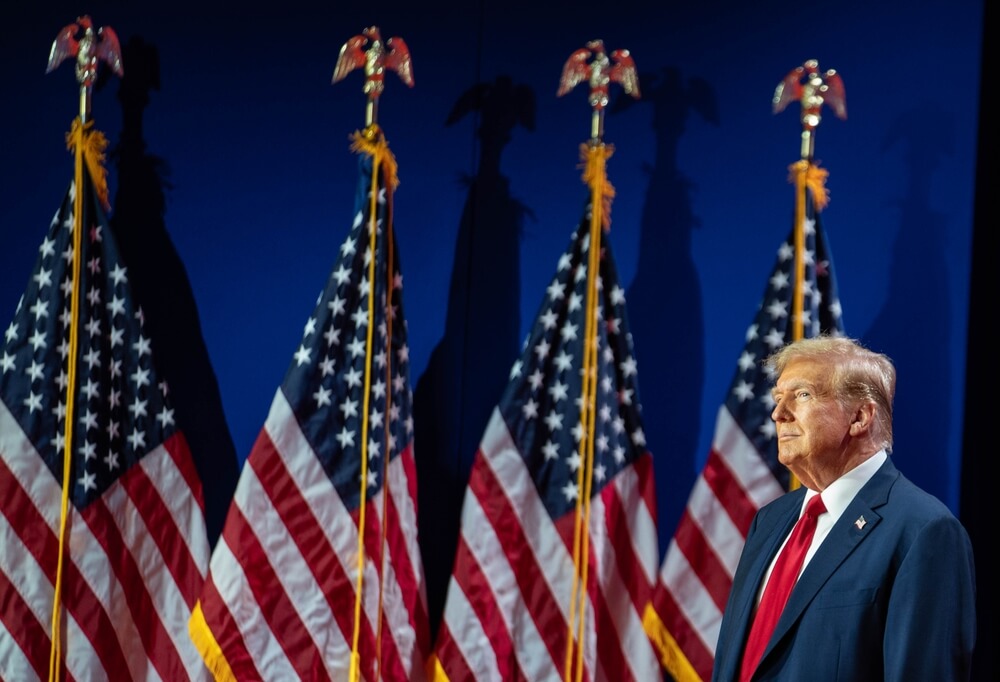 By claiming that Baghdad took part in preparing the attack, the US president weakened the very partner he expects to carry out the most sensitive part of US policy in Iraq
The prime minister, who wants to disarm the pro-Iranian brigades, must now explain to them that he did not authorise the attack in which their members were killed.
Two months remain until the end of the mission of the international coalition on 30 September. Al-Zaidi has linked the start of a new security relationship with the United States, and the final phase of bringing armed factions under state control, to the same date.
After the attack, that deadline works against him. Any accelerated disarmament could be portrayed as meeting a US demand immediately after the bombing, while any delay would confirm Washington’s and Riyadh’s assessment that Baghdad does not control groups operating from its territory.
The government is likely to try to separate brigades that are ready to accept full state command from those that continue independent regional operations. Some fighters could be transferred to the regular forces, while certain political wings might be offered more space in institutions in exchange for giving up their own chain of command.
The most powerful factions will struggle to accept such a deal, as they believe their weapons determine the political weight they carry.
Al-Zaidi came to power promising that Iraq would maintain relations with all major partners while restoring to the state the authority to decide on war and peace. The 28 July strikes revealed just how far the country remains from that goal.
Armed groups can initiate conflict without the prime minister’s decision, foreign powers can respond without his approval, and the US president can announce that Baghdad has agreed even when Baghdad denies it.
If al-Zaidi does not establish at least verifiable control over units using Iraqi territory for regional operations by the end of September, the end of the international mission will not bring full authority to Iraqi institutions.
Foreign troops will change the nature of their presence, while decisions about which Iraqi actors attack and which bomb Iraq will still be made by others.
