On 20 November, Bangladesh announced that over the next 12 to 18 months it would seek to secure the conditions for the return of the Rohingya to Myanmar.
The day before, the International Court of Justice in The Hague found that the Myanmar state had committed genocide against the Muslim minority during military operations in 2017, when about 700,000 people fled to Bangladesh.
For the first time in the court’s history, a state was found responsible for committing genocide. The ruling orders Myanmar to restore the exiles’ rights and property and to allow them to return safely. The question remains as to who can return land over which the Myanmar authorities no longer have control.
The Rohingya were driven out of northern Rakhine State in western Myanmar along the border with Bangladesh, and most of that area is now controlled by the Arakan Army, a rebel force fighting the central government.
The UN has noted that members of other communities are settling on land belonging to the exiles. A family returning from a refugee camp may find another family occupying the site of their home and local authorities contesting their right to return.
The obligation under the judgment lies with Myanmar, but without an agreement with the Arakan Army it cannot be fulfilled.
Judgment against a state that has lost its villages
The decision on responsibility for genocide was adopted by nine votes to six. In a separate decision, by 10 votes to five, the court ordered that the Rohingya be allowed to return voluntarily and with dignity, to reunite with their families, and to receive the return or replacement of property lost by individuals and entire communities.
For damage that cannot be remedied by returning property, compensation is envisaged, with the amount and form to be decided by the court at a later date. Myanmar must also investigate the crimes committed and punish those responsible. These obligations apply to the Myanmar state regardless of who is in power and how much territory they actually control.
Min Aung Hlaing, the general who led a military coup in 2021 and became president on 3 April 2026 after elections organised and controlled by the military, rules from the capital Naypyidaw. Myanmar’s foreign ministry described the verdict as a “great disappointment” and disputed the conclusion that the military intended to destroy the Rohingya.
Entire peoples cannot be held responsible for the crimes of armed groups, and these crimes cannot be used as an excuse to punish civilians
According to a report by the UN Human Rights Office, the army had lost control of 14 out of 17 Rakhine municipalities by the end of May. The Arakan Army, which has taken over most of those municipalities, is the armed movement of the Buddhist majority in Rakhine, among whom the Rohingya are a Muslim minority.
The Arakan Army was not a party to the case brought in 2019 by The Gambia against Myanmar, and its relations with the Rohingya were severely damaged by the fighting in 2024. The Myanmar army then forcibly recruited members of that minority, while some Rohingya armed groups fought alongside the army against the Arakan Army.
Witnesses accused members of the Arakan Army of setting fire to Buthidaung, a Rohingya-majority town in northern Rakhine, in May 2024, and of attacking civilians near Maungdaw, on the border with Bangladesh, in August as they tried to flee across the Naf River to Bangladesh.
The Arakan Army denied the allegations. Entire peoples cannot be held responsible for the crimes of armed groups, and these crimes cannot be used as an excuse to punish civilians.
Others move into the villages of those exiled
For the leadership of the Arakan Army, which is establishing its own administration in northern Rakhine, the return of hundreds of thousands of Rohingya raises questions about who will own the land, who will move freely and which community will hold political supremacy.
In a report published in September, the UN High Commissioner for Human Rights stated that the Arakan Army has not allowed displaced Rohingya to return to their villages and that their land has been occupied by members of other communities.
The UN documented this in 11 former Rohingya villages around Maungdaw. The report estimates that about 810 hectares of land are occupied, and satellite images confirm major changes in land use.
Many Rohingya villages were destroyed even before the Arakan Army took control of northern Rakhine. The court found that Myanmar security forces partially or completely destroyed 392 Rohingya villages during operations in 2017, and that 78 of these were later bulldozed.
Responsibility for subsequent land seizures, which UN reports attribute to the Arakan Army, must be determined separately
The UN’s Independent Investigative Mechanism, a body gathering evidence for future trials, described the case of Myo Thu Gyi, a village with more than 800 houses, shops and religious buildings, which had been burned and levelled by 2018, and on part of which Myanmar authorities had built a border police base. In such places, families have no homes to return to, and return would require rebuilding entire settlements and determining what belonged to each family.
The verdict refers to crimes committed by the Myanmar state in 2017, and responsibility for subsequent land seizures, which UN reports attribute to the Arakan Army, must be determined separately.
Families who have suffered both types of losses must be able to prove when they lost their property, who disposed of it afterwards and what was done with it. If these losses are conflated, it will be more difficult to determine who is responsible and to assess fair compensation.
Who will decide whose plot it is?
The inventory of lost property may begin in refugee camps in Bangladesh. The authorities there and the UN High Commissioner for Refugees jointly register the Rohingya and hold their identity data, including fingerprints and other biometric records.
The UN investigative mechanism, which is collecting evidence for future trials, is already examining evidence of the destruction and confiscation of property.
For a family to prove its right to a specific plot, confirming who they are is not enough. Preserved documents, statements, photographs and satellite images will have to be linked to the exact places where people lived, with their consent and with the protection of personal data.
The biggest problem arises when different families claim the same land. It must be decided who verifies these claims and whose decisions are binding, how to protect the people living on that land today, and how to return to the exiles what was taken from them.
The court ordered Myanmar to protect the Rohingya from discrimination, including in access to citizenship
UN agencies can help document the damage and support states that have joined The Gambia in preparing claims for compensation. None of them has the authority or capacity to return plots controlled by the Arakan Army.
An agreement is needed on a procedure that would include the exiles, provide them with independent protection and be recognised by the government that effectively controls the territory.
Even a return home would not solve the main problem of the Rohingya, because Myanmar systematically denies them citizenship under the 1982 Citizenship Law and through its discriminatory application, and most of them today are not citizens of any country.
In 2019, The UN Human Rights Office noted that Rohingya in Rakhine had to obtain a permit for any movement outside their village, valid for a maximum of 14 days, even to go fishing or to see a doctor in an emergency.
The court ordered Myanmar to protect the Rohingya from discrimination, including in access to citizenship, but the ruling itself does not grant anyone citizenship or identity documents. A returned house means little to a family that needs permission to leave its village.
Judgment without enforcement
The International Court of Justice has no police force or army to enforce its judgments. If a state does not respect the verdict, the other party to the dispute, in this case The Gambia, can refer the matter to the Security Council under Article 94 of the UN Charter.
The Council is not obliged to adopt any measures, and any of the five permanent members can block them with a veto.
On 19 November, the UK, which is preparing draft decisions on Myanmar in the council, announced the expulsion of the Myanmar military attaché from London and requested an urgent council session.
The council adopted its first resolution on Myanmar only in December 2022, almost 75 years after the country’s admission to the UN, with 12 votes in favour and with China, Russia and India abstaining.
Any attempt to secure access to Rohingya villages through the council will depend on the attitude of countries with direct strategic interests in Myanmar, among which China is pre-eminent.
There are no signs that China is ready to use its influence to secure the return of the Rohingya
Beijing maintains relations with the Myanmar authorities and contacts with the Arakan Army, whose forces have captured areas important to Chinese investment.
An oil and gas pipeline runs from Kyaukpyu, a city on the Rakhine coast, to the Chinese province of Yunnan, and China is also planning a deep-water port there.
The Arakan Army has also occupied the municipality of An, through which part of that infrastructure passes. Beijing has reason to talk to both sides because it wants to protect the pipelines and the planned port, but that does not mean it can order them around.
Such contacts could facilitate an agreement on humanitarian access and the protection of property, but there are no signs that China is ready to use its influence to secure the return of the Rohingya.
Bangladesh must also talk to the rebels
At the end of October, Bangladesh was caring for just over 1.2 million Rohingya. According to UN records of humanitarian payments, by 14 November about 69 per cent of the $710.5 million requested for 2026 had been collected, and the burden of the shortfall increasingly falls on the refugees themselves and on the local population hosting them.
Bangladesh’s Minister of State for Foreign Affairs, Humayun Kobir, said that Dhaka wants to create conditions for refugees to return to Myanmar within 12 to 18 months.
In August, the Myanmar authorities confirmed the identity of 308,797 people from Bangladeshi camps as former residents of Rakhine, but made their return conditional on security first being established in Rakhine.
In September, Malaysia repatriated 1,476 Myanmar nationals who had been held in its detention centres for foreigners
That confirmation does not open the way to the villages, because most of them, as well as much of the border with Bangladesh, are now controlled by the Arakan Army.
Shama Obaed Islam, State Minister-2 for Foreign Affairs, said on 8 November that Dhaka was talking to the authorities in Naypyidaw and had established contact with the Arakan Army.
Any agreement must include a safe route to the villages, freedom of movement, the legal status of returnees and the restitution of land, and the decision to return must be made by the Rohingya themselves.
In September, Malaysia repatriated 1,476 Myanmar nationals who had been held in its detention centres for foreigners. The UN Refugee Agency (UNHCR) was not given access to these people and could not verify whether they had agreed to return to the war-torn country. It is not known whether Rohingya were among them, but the case shows how, without independent verification, return can easily become expulsion.
Two years to record confiscated land
By 19 November 2028, Myanmar must submit a report to the court on measures to restore rights and property, and on how it plans to compensate people whose property cannot be returned. That date does not mean that all exiles must have returned by then.
Two years is still sufficient time to create a verifiable inventory of lost property, gather evidence of who is using it now, and establish a process through which families can claim restitution or compensation.
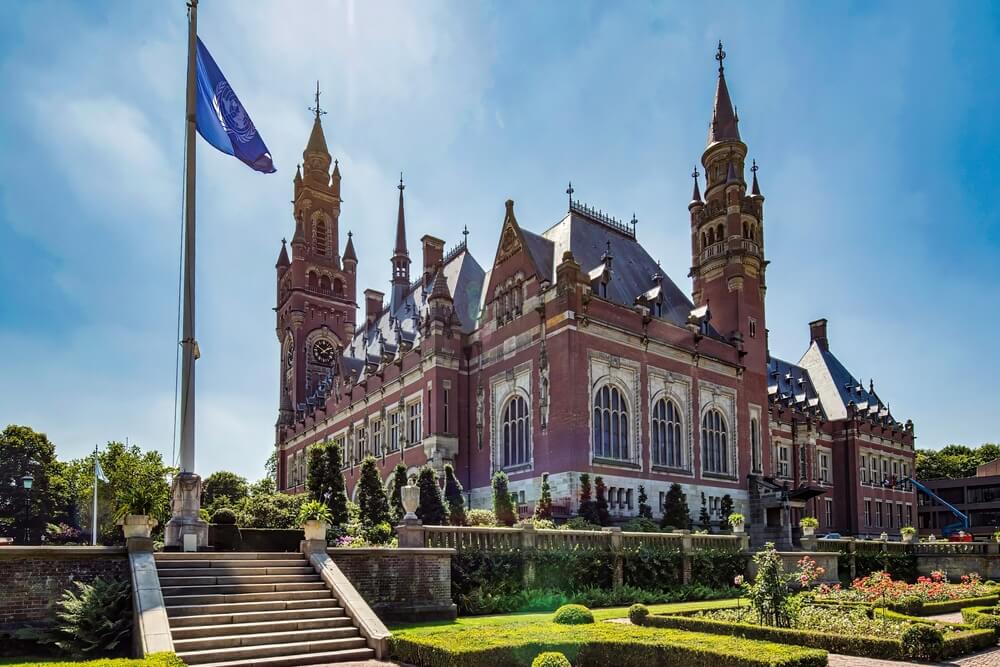 The Hague ruling recognised the Rohingya’s right to the land, and any return of the people before the land is restored to them would amount to acknowledging the crime without correcting its consequences
A mass return is unlikely in the near future, as the Arakan Army controls most of the areas from which the Rohingya were expelled, while the Myanmar government disputes the ruling.
Every year without a resolution of property disputes benefits the Arakan Army, as it entrenches the new distribution of land that it has imposed.
A realistic first step would be a limited agreement under which the Arakan Army would allow international investigators and humanitarian organisations into the villages, with the participation of Rohingya representatives and guarantees that exiles would not be persecuted again.
Without such progress, the court could receive a default report in 2028, and families would be even further from their homes.
Returning refugees to a country where they face persecution or violence is prohibited under international law, and according to UNHCR’s position, that prohibition binds all states, including those that have not signed the 1951 Refugee Convention.
The pressure to empty the camps in Bangladesh increases with every dollar missing from their support, and states that welcomed the ruling must first provide the funding the UN is requesting for the camps.
In addition, they must link any contact with the authorities in Naypyidaw and with the Arakan Army to investigators’ access to the villages and to an end to the division of Rohingya land, and must demand the same from Beijing, which has channels to both sides.
The Hague ruling recognised the Rohingya’s right to the land, and any return of the people before the land is restored to them would amount to acknowledging the crime without correcting its consequences.
