France and Germany agreed a joint proposal on rules for European car factories. Under current regulations, from 2035 manufacturers must cut the average carbon dioxide emissions of new cars by 100 per cent compared with 2021 levels, which in practice means ending sales of new petrol and diesel vehicles.
In December 2025, the European Commission proposed a 90 per cent reduction, with an obligation to offset the remaining emissions by using European low-emission steel and renewable fuels.
Emmanuel Macron and Friedrich Merz now support the 90 per cent target without that additional requirement.
At the same time, they are demanding that subsidies and public procurement be tied more closely to cars produced in Europe.
This agreement also changes the position of the EU’s industrial partners. Benefits would be granted to cars whose production meets future European conditions, and the small group of eligible countries could include Britain, Norway, Iceland and Switzerland, following new agreements with the EU.
According to the criteria presented so far, Turkey, Morocco and Serbia, where factories of European manufacturers operate, would remain outside that group.
The Franco-German document is a political agreement, and its implementation has yet to be decided by EU institutions.
The origin of the car becomes part of its price
On 4 March, the European Commission presented a proposed regulation to accelerate industrial development, which aims to direct certain public procurement and support programmes towards production in the EU.
The Franco-German compromise sets a threshold of 70 per cent European components, excluding the battery from this calculation, together with an initial requirement that at least 10 per cent of battery content must be of European origin. These percentages influence the choice of location for future factories.
The Commission’s March proposal was more lenient towards the EU’s neighbours.
When a member state buys cars or provides subsidies, a product from a country that has a free trade agreement or customs union with the EU, such as Morocco or Turkey, could, under certain conditions, be treated as if it were made in the Union.
The exception is the bonus for small electric cars, for which the Commission requires the vehicle to be assembled within the EU itself.
Paris and Berlin now want automotive industry benefits to apply only to the EU and a narrow circle of European partners
Paris and Berlin now want automotive industry benefits to apply only to the EU and a narrow circle of European partners, meaning that Turkey and Morocco would lose the standing granted in the Commission’s March proposal.
This does not mean that cars from Turkey, Morocco and Serbia would lose access to the European market. They would continue to be imported and sold under current trade agreements.
The change concerns subsidies, advantages in public procurement and a more favourable calculation of emissions, which makes it easier for manufacturers to meet European targets.
When a company decides where to build its next model, these benefits can strongly favour a factory within the EU.
Turkey negotiated closer cooperation
On 13 October, EU Trade Commissioner Maroš Šefčovič and Turkish Trade Minister Ömer Bolat met in Brussels to discuss modernising the customs union, market access and, in particular, the draft regulation on accelerating industrial development.
Their joint statement highlighted trade worth €217.6 billion in 2025 and the importance of integrated supply chains.
Just three days later, Paris and Berlin agreed on a criterion that would place Turkey outside the inner industrial circle.
Turkey has had a customs union with the EU since 1995. Renault manufactures in Bursa, Toyota in Sakarya, and many Turkish suppliers provide parts to European factories.
Toyota proposed adopting the “Made with Europe” concept, which would also recognise reliable partners, including Turkey, Britain and Japan
On 16 October, Toyota proposed adopting the “Made with Europe” concept, which would also recognise reliable partners, including Turkey, Britain and Japan.
The company has factories in France, Britain, the Czech Republic, Poland, Portugal and Turkey, so treating those plants differently would alter the calculations for its existing production network.
Ankara has a strong case for requesting exceptions. Articles 8 and 9 of the Commission’s March proposal already recognise the possibility of more favourable treatment for goods from customs union partners in certain procedures.
However, these articles do not guarantee Turkey access to every benefit intended for the automotive industry. The negotiations will show how much influence the customs union has when manufacturers choose locations for new factories.
Britain joins the privileged circle, Morocco remains outside it
Britain could secure a special position because it was still a member of the EU on 1 January 2020.
For Britain and the other proposed European partners, Paris and Berlin are seeking mutual access to public procurement and state aid, together with safeguards against the circumvention of European rules via third countries.
London would also have to negotiate trade terms with China while preserving its own independent trade policy.
Renault’s interest in the wider European circle is explained by its production in Morocco and Turkey
Renault’s interest in the wider European circle is explained by its production in Morocco and Turkey.
According to an analysis by Le Monde, these two countries together account for roughly a third of the French group’s global output.
Its chief executive, François Provost, has called for Britain to be included and warned that Renault cannot match the costs of Chinese competitors unless imports from China are curbed.
Volkswagen, whose factories are mostly within the EU, has expressed its “full support” for the Franco-German proposal.
Morocco is an important production centre for the French automotive industry. Its factories can export to the EU under existing trade rules, while eligibility for new subsidies will depend on the final definition of European origin.
Renault therefore has a direct interest in the conditions under which forthcoming models are allocated between Morocco and factories in the EU.
One provision could move the production of small electric cars
The impact of this new divide is best illustrated by a single model. At its factory in Kragujevac, Serbia, Stellantis produces the electric Fiat Grande Panda, a small city car measuring 3.99 metres in length.
The EU fines manufacturers that sell too many high-emission cars, and they avoid these penalties by selling enough electric vehicles.
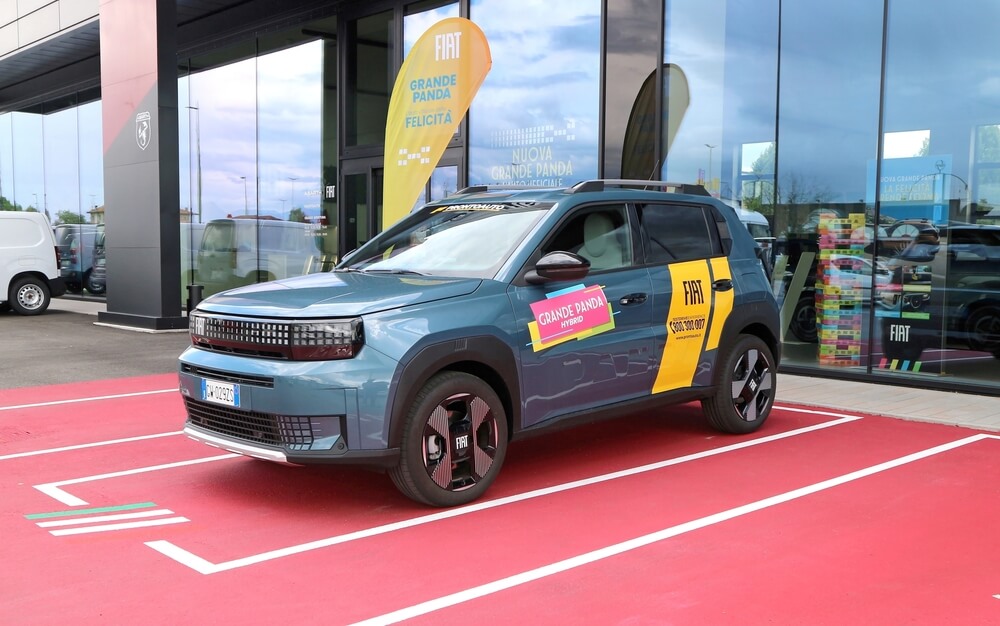 The Grande Panda from Serbia would not receive the bonus because it is not assembled in the EU
In December 2025, the Commission proposed that until 2034 every small electric car shorter than 4.2 metres and assembled in the EU would be counted as 1.3 cars in that calculation, allowing a manufacturer with fewer vehicles sold to reach the European target more easily.
The Grande Panda from Serbia would not receive this bonus because it is not assembled in the EU.
Stellantis builds the electric Citroën ë-C3 on the same technical platform at its factory in Trnava, Slovakia.
A car from Slovakia would help the company avoid fines more effectively than one from Serbia, giving Trnava an advantage when the group decides where to build new electric models.
The Chinese factory has to offer more than assembly
Chinese manufacturers are already adapting their European plans to the new rules.
On 13 October, Reuters reported that Changan, Xpeng, Chery and GAC are preparing to expand production in Europe.
The March draft also sets out special conditions for foreign investments exceeding €100 million in sectors where the investor’s country accounts for more than 40 per cent of global production capacity.
Such an investment would have to meet at least four of six conditions, including limiting foreign ownership to 49 per cent, forming a joint venture with a European partner, transferring technical know-how, investing at least 1 per cent of revenue in EU research, and presenting a plan for at least 30 per cent of parts and materials, where feasible, to come from EU suppliers. Employing at least 50 per cent of workers from the EU would be mandatory.
A Chinese manufacturer with sufficient production and procurement in the EU can secure a more favourable position than a European manufacturer assembling cars in Turkey
Joint investment with a European partner is one way for a Chinese investor to meet those conditions, and other projects may rely on different combinations.
For industrial benefits, the origin of the car and its parts will be assessed separately.
A Chinese manufacturer with sufficient production and procurement in the EU can therefore secure a more favourable position than a European manufacturer assembling cars in Turkey.
Such a model already exists. Leapmotor International, a joint venture between Stellantis, which holds 51 per cent, and China’s Leapmotor, which holds 49 per cent, began production of the B10 electric model in Zaragoza on the same day that Macron and Merz reached an agreement.
After Paris and Berlin, the European Parliament and other member states have their say
The agreement has already provoked sharply opposing reactions. Volkswagen supports it as a boost to European manufacturing, while the campaign group Transport & Environment has said Paris and Berlin are making a “historic mistake”, arguing that loosening emissions rules could undermine investment in electric vehicles and European battery production.
The European Parliament is due to vote on the proposed changes to the emissions rules at a plenary session starting on 23 November.
This will be followed by negotiations to harmonise the text with member states, while separate talks on industrial rules will determine who meets the rules of origin.
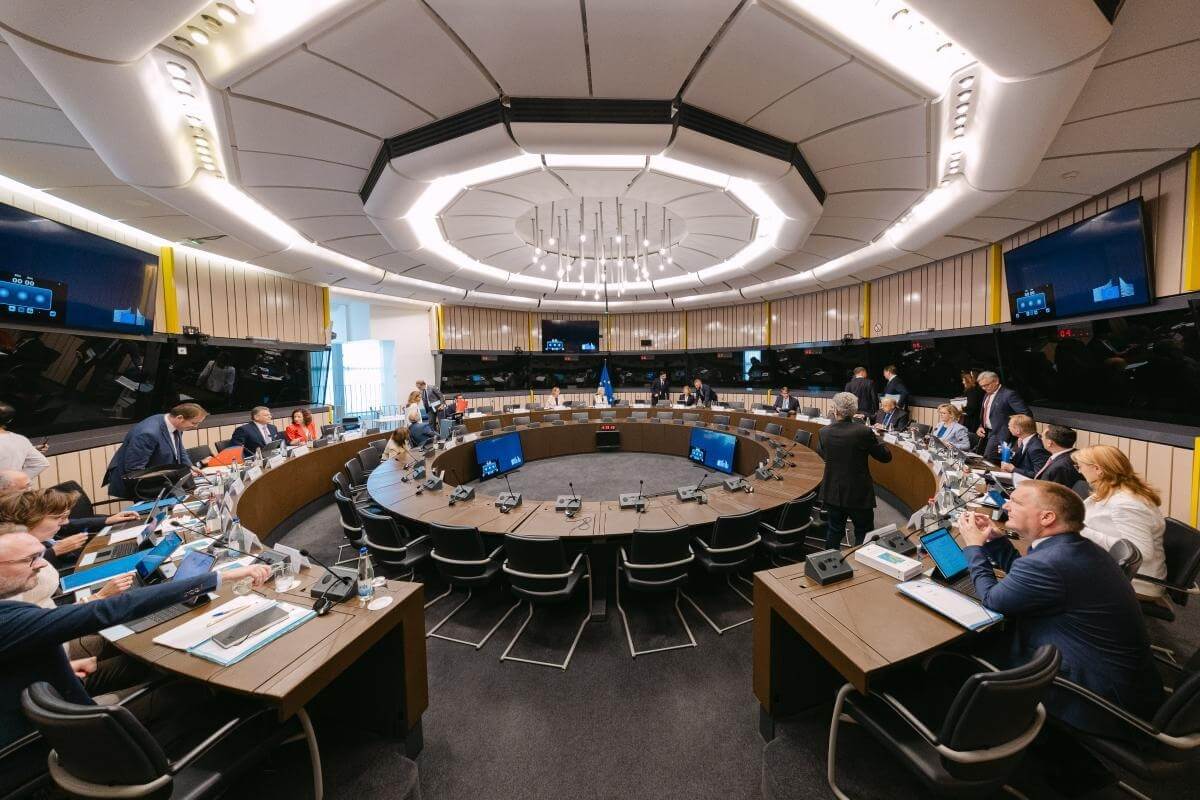 Eligibility for European benefits will depend more on where a car is assembled and where its parts originate than on the badge it bears - European Commission
Interests diverge even within the EU. The Chinese company CATL, the world’s largest manufacturer of electric vehicle batteries, began trial production in September at a new factory in eastern Hungary.
China’s BYD, one of the world’s leading makers of electric cars, is building its first European car plant in southern Hungary, where mass production is expected to begin in 2027.
In Barcelona, the Spanish firm Ebro and China’s Chery are producing cars together, and in Zaragoza, in north-east Spain, Stellantis and Leapmotor are now assembling the B10 model.
Hungary and Spain therefore have their own reasons to seek conditions that preserve scope for Chinese investment in the Council of the EU, where member state governments decide on new regulations.
The EU is most likely to retain the target of cutting emissions by 90%, which means some petrol and diesel cars will still be sold after 2035.
The dispute will centre on the conditions for their sale. The Commission wants manufacturers to offset residual emissions by making savings elsewhere, for instance by using European steel produced with lower emissions or by using synthetic fuels and biofuels, which can run in existing engines instead of petrol and diesel. Paris and Berlin want those vehicles to be sold without such requirements.
Turkey will invoke the customs union to ensure its factories retain access to European subsidies and public procurement.
Factories in Morocco and Serbia, which lack a customs union with the EU, will find themselves in a weaker position wherever the regulation requires assembly within the Union.
Chinese manufacturers will procure more parts in Europe and enter into joint ventures with European partners.
The true scope of the agreement will depend on where Renault, Stellantis and Chinese firms build their next models.
If the proposal is adopted, eligibility for European benefits will depend more on where a car is assembled and where its parts originate than on the badge it bears.
