There is a simple question I would ask anyone who still confuses Donald Trump’s aggression with competence: who pays when he gets it wrong?
The president delivers a speech, announces a tariff, threatens another country or dismisses a warning. Then someone else receives the bill.
A manufacturer postpones investment. A household pays more for essentials. An ally rearranges its security policy. A patient loses access to medicine. A family buries someone who might otherwise have lived.
Across his first presidency and his current second term, the recurring problem has been a profound failure to understand responsibility. The United States has the capacity to impose costs on almost everyone. That makes judgment more necessary, not less.
Yet Trump repeatedly treats the ability to create a crisis as evidence that he knows how to resolve one. The world has become an unwilling participant in an experiment whose costs are public and whose political rewards are claimed personally.
The human consequences
The human consequences deserve particular care. There is no credible, comprehensive figure counting everyone worldwide who has died specifically because of Trump’s decisions.
Pandemic comparisons, recorded war casualties and projections of future deaths answer different questions. Adding them together would produce a dramatic number and a dishonest argument. His record is serious enough without inventing a total.
Consider the pandemic. The 2021 Lancet Commission estimated that approximately 40% of American COVID-19 deaths could have been avoided if the country matched peer nation death rates. The American Public Health Association summarised that gap as at least 180,000 lives.
This comparison reflected both longstanding American weaknesses and failures during Trump’s presidency; it was not a claim that he personally caused every death in that gap.
Nevertheless, the commission identified his misinformation, his undermining of public health, and his mishandling of the response as contributors to unnecessary deaths.
A president cannot cure a virus by speaking, but he can make its containment harder by teaching people to distrust those trying to contain it
A president cannot cure a virus by speaking, but he can make its containment harder by teaching people to distrust those trying to contain it.
The second term has brought another, internationally distributed danger. A 2025 study published in The Lancet projected more than 14 million additional deaths by 2030, including more than 4.5 million children under five, if the drastic USAID reductions modelled by the researchers continued.
These are conditional projections, not deaths already recorded, and subsequent funding decisions and replacement assistance can change the outcome.
But the warning is devastating: dismantling systems that deliver treatment, nutrition and basic services can reverse years of progress. Calling this efficiency does not make it efficient. A cheaper budget line can produce a far more expensive human catastrophe.
An economist should recognise the absurdity immediately. Prevention is often cheaper than emergency response. A functioning clinic helps prevent a local crisis from becoming a regional one.
When governments weaken such infrastructure, they may later spend much larger sums on instability, displacement and emergency intervention. The apparent saving belongs to today’s announcement; the liability falls on tomorrow’s taxpayers and vulnerable communities.
How foreign policy becomes another country’s internal crisis
The same inability to account for consequences runs through his Middle East policy. In May 2018, Trump withdrew the United States from the Iran nuclear agreement and restored sanctions, promising a better outcome through greater pressure.
The relevant question was always whether the replacement strategy would deliver more security at an acceptable cost. Declaring an agreement inadequate was the easy part. Building something better required sustained diplomacy and a credible understanding of the alternatives.
By early September 2026, the war with Iran had provided a grim test of that judgment. Reporting on 4 September put Iranian deaths at least 3,000; Associated Press reported 18 American service members dead and American costs exceeding $37.5 billion.
These are reported conflict losses, not a tally of civilians personally killed by Trump, and responsibility for individual attacks must be established separately.
But presidential responsibility for entering and managing a war cannot simply be waved away. His description of the conflict as “small potatoes” revealed how casually he measures suffering from a safe distance.
The bill also reaches far beyond the battlefield. Save the Children reported that war-related increases in operating costs had consumed an additional $13 million, resources that could have helped 1.5 million children.
Those children are not a death count; they illustrate how lost purchasing power reduces humanitarian reach. Higher transport and supply costs can turn the same aid budget into fewer deliveries and fewer services.
A military decision in Washington can therefore shrink a child’s access to assistance thousands of kilometres away.
A government uncertain about American security commitments must revisit military spending, borrowing and other priorities
Gaza exposed a related failure of judgment. Trump’s 2025 proposal for American control of the territory and the relocation of Palestinians provoked rejection across the region.
Egypt, Jordan and other Arab governments were confronted with proposals affecting their own security, domestic legitimacy and the Palestinian right to remain in their homeland.
My objection is straightforward: people cannot be treated as an inconvenient feature of a redevelopment project.
An approach that ignores their consent also places neighbouring governments under pressure to choose between Washington and deeply held public convictions.
This is how foreign policy becomes another country’s internal crisis. A government threatened with tariffs faces exporters demanding accommodation and voters demanding resistance.
A government pressured over displaced populations faces humanitarian obligations, fiscal constraints and fears about permanent resettlement.
A government uncertain about American security commitments must revisit military spending, borrowing and other priorities.
The pressure does not disappear after a presidential phone call. It moves into national budgets, coalition negotiations and public anger.
When protection becomes conditional
Ukraine provides another example. In March 2025, the administration suspended military assistance and intelligence sharing, then restored them after talks in which Ukraine accepted a proposed 30-day ceasefire, conditional on Russian agreement. Russia remains responsible for its invasion.
Nevertheless, using a threatened country’s access to essential support as negotiating pressure raises a separate question about American judgment.
My concern is the precedent: partners are encouraged to fear that protection may become conditional on their ability to satisfy the president politically.
Even longstanding allies have had to defend basic assumptions about sovereignty.
Once allies start preparing for American pressure, Washington has already lost something valuable
Trump’s threats concerning Greenland and the Panama Canal, together with his suggestion that Canada should become an American state, forced friendly governments to respond to ideas that should never have become a source of coercion between partners.
The consequences persisted: in September 2026, European leaders were still offering Greenland public reassurance and additional support in response to Trump’s assertions.
Trust takes years to build and very little time to damage. Once allies start preparing for American pressure, Washington has already lost something valuable.
Uncertainty itself becomes a cost
His trade policy carries the same defect into economic life. Federal Reserve researchers examining the first-term tariffs found that manufacturing industries more exposed to them experienced relative employment declines: protection was outweighed by higher input costs and retaliation. Producer prices also increased relatively in more exposed industries.
This was a sectoral research finding, not an estimate of every effect across the economy, but it challenged the promise that tariffs would straightforwardly strengthen manufacturing.
Protecting one supplier while raising costs for its customers is hardly an industrial strategy
Protecting one supplier while raising costs for its customers is hardly an industrial strategy.
Then comes the second-term habit of switching measures on, pausing them, threatening to restore them and celebrating the relief that follows. A business making a five-year investment needs some confidence in the rules.
When policy becomes a succession of abrupt reversals, uncertainty itself becomes a cost. Companies delay orders, hold additional inventory and reconsider hiring. Smaller firms have less money to absorb those adjustments. The president may enjoy the attention; businesses have to finance it.
Public office, private profit
The events of 9 April 2025 deserve particular scrutiny. Trump publicly encouraged buying before announcing a pause on most of the new tariffs. The S&P 500 rose approximately 9.5% that day.
Democratic senators subsequently requested an investigation into possible market manipulation and insider trading. That request establishes that serious allegations were made; it does not establish that a crime occurred. The White House denied misconduct.
How much did Trump personally earn by trading on those reversals? The public evidence reviewed for this article does not establish a verified amount.
A rise in the quoted value of his holdings is not automatically cash received, and gains in a family business do not prove insider trading. Answering these questions requires transaction records, beneficial ownership information and evidence about who knew what, and when.
An independent investigation should establish those facts. Suspicion is a reason to investigate, not a substitute for the result.
 Jared Kushner’s Affinity Partners had received as much as $157 million in fees from foreign clients
There are, however, substantial documented financial interests that require no speculation. A Democratic House Oversight staff report identified at least $7.8 million in payments from foreign governments and government-controlled entities to Trump businesses during his first term.
Those were business receipts, not an established total of personal net profit or a judicial finding of bribery. Yet the underlying governance problem is obvious: a president should not leave other governments wondering whether spending at his properties might improve their access to his administration.
The family’s post-presidential business relationships deepened these concerns before his return to office.
In September 2024, Senate Finance Committee chairman Ron Wyden reported that Jared Kushner’s Affinity Partners had received as much as $157 million in fees from foreign clients, including $87 million from the Saudi government.
The Saudi fund’s $2 billion commitment was investment capital under management, not $2 billion handed to Kushner as personal earnings.
Wyden’s allegations about improper influence were allegations, not a court verdict. Even with those distinctions, the combination of former public office, family connections and foreign sovereign money warrants rigorous scrutiny.
Cryptocurrency has expanded the issue further. The Associated Press reported that Trump’s 2026 financial disclosure showed approximately $1.2 billion taken in from crypto businesses during the previous year.
That is a reported disclosure figure, not a calculation of profit from tariff manipulation, and it should not be added indiscriminately to estimates of family wealth or token valuations.
The political concern is that a sitting president has substantial commercial exposure to an industry whose rules his administration helps shape.
The dinner for 220 leading holders of his meme coin made that concern tangible. A commercial product offered a route to proximity to the president.
The White House described the occasion as personal time, but that explanation cannot erase the importance of the public office that makes such access valuable. Citizens are entitled to know who benefits, who pays and whether official decisions remain independent.
Taken together, these arrangements invite a disturbing conclusion about priorities: ordinary people are asked to tolerate instability in the national interest while the presidential family preserves opportunities to profit from its extraordinary visibility and connections.
That is my political judgment, not a claim that every transaction is illegal. Democratic standards must reach beyond the narrow question of whether prosecutors can prove a particular offence.
The costs of inadequate preparation
Nor can the domestic human damage be ignored. The Justice Department’s inspector general found that officials failed to prepare adequately for the first-term family-separation policy; more than 3,000 children were separated before the practice was largely curtailed in June 2018.
Officials pursued prosecutions without giving proper consideration to the consequences for children and to the ability to reunite families.
Here, administrative incompetence and deliberate harshness reinforced one another. Children bore the consequences of a government that had not thought through its own policy.
Climate policy adds a longer liability. America’s renewed withdrawal from the Paris Agreement took effect on 27 January 2026.
No serious analysis can attribute every subsequent flood, fire or heat-related death to that decision. But withdrawing from collective action weakens efforts to manage risks that cross every border.
Future households, farmers, insurers and governments will bear the costs of inadequate preparation, regardless of whether the politicians responsible remain in office.
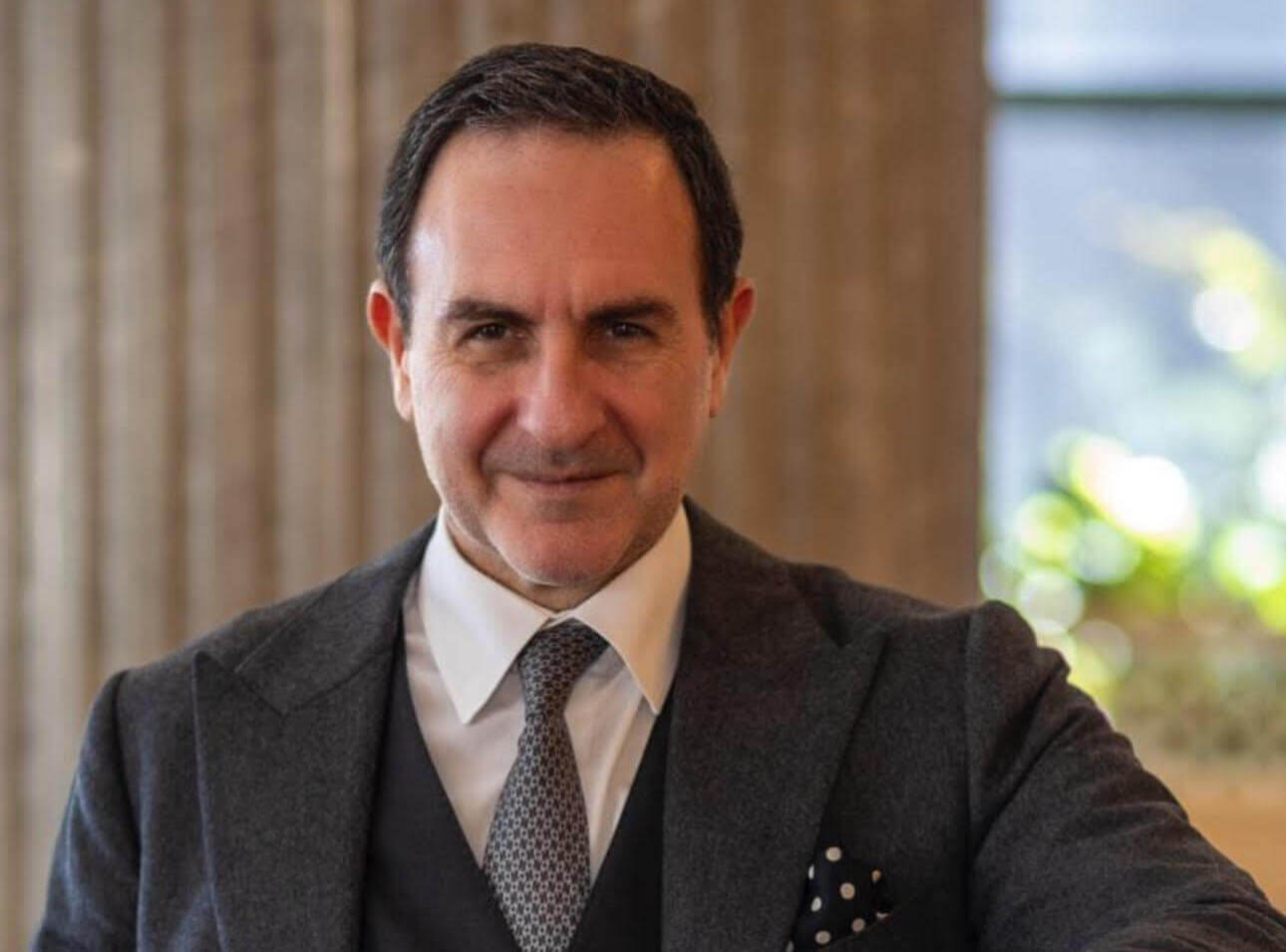 American voters should exercise the judgment their president has so often failed to show and punish the Republican Party at the ballot box for elevating and enabling him - Emre Alkin
The record therefore contains several distinct forms of damage: preventable mortality linked to failed public policy, deaths and expenditure in war, threatened losses from dismantled assistance, disrupted commerce, weakened alliances and conflicts between public authority and private financial interests.
They cannot honestly be compressed into a single death toll or a single dollar figure. Their common feature is a presidency remarkably willing to impose risks on others and remarkably reluctant to accept responsibility for the results.
The Republican Party cannot plausibly present itself as an innocent bystander. It nominated him repeatedly and must answer for its own decisions to support, defend or restrain him.
A political party has a responsibility to judge the character and competence of the person it offers the country. When it treats personal loyalty as more important than that responsibility, electoral consequences become necessary.
The congressional elections on 3 November 2026 offer an opportunity to impose those consequences. Trump himself will not be on the presidential ballot, but the party that nominated him, and the candidates seeking power alongside his administration, will face the electorate.
American voters should exercise the judgment their president has so often failed to show and punish the Republican Party at the ballot box for elevating and enabling him.
They should demand representatives willing to investigate conflicts of interest, scrutinise war-making, protect essential services and insist on competent government. Too many people, inside and outside the United States, have already paid for this recklessness. In November, the party that made it possible should finally pay a political price.
