British Prime Minister Andy Burnham said that, on arriving in Downing Street, he had received a clear affirmative answer to the question of whether Russia had interfered in the 2016 Brexit referendum.
The very next day, his government qualified that admission by asserting that Russian activities had not changed the result.
A Downing Street spokesperson said it was ‘inconceivable’ that Russia had not tried to exploit the referendum, but that the government did not believe it had succeeded.
Stephen Doughty, Minister of State at the Foreign Office, declined to say what form the interference had taken, but then said he did not think the Russian efforts had succeeded.
Burnham did not explain on what basis he confirmed the Russian interference, what activities by Moscow the British services uncovered, or when they obtained this knowledge.
His government is therefore claiming two things at the same time: that there was interference and that it did not work, without presenting to the public the analysis on which it bases either claim. Parliament requested such an analysis six years ago.
A report that waited for the election
The Intelligence and Security Committee of Parliament submitted a report on Russia to Prime Minister Boris Johnson on 17 October 2019.
Johnson authorised its publication only after the general election on 12 December, and the document was made public on 21 July 2020, more than nine months after the Prime Minister received it.
The committee sought to determine whether British services held classified information that corroborated public research into Russian influence on the referendum.
Those investigations pointed to numerous contributions in favour of leaving the European Union on the Russian state media outlets RT and Sputnik, and to suspicious accounts on social networks.
The internal security service MI5 responded to the committee’s first written request with only six lines of text.
The content of that response is redacted in the published version of the report, but it is known that the service referred to previously published academic research.
The committee also found that institutions passed responsibility for protecting democratic processes between themselves like a “hot potato”.
The Electoral Commission had no power to investigate foreign intelligence operations, and the security services did not assume that responsibility
The Electoral Commission had no power to investigate foreign intelligence operations, and the security services did not assume that responsibility.
The committee recommended that the intelligence services subsequently investigate Russian activities during the referendum and present their findings to the public in a form that did not reveal classified sources. Johnson’s government rejected this recommendation on the very day the report was published.
In its written response, it stated that it had not seen evidence of successful interference in the referendum and that ‘there is no need for a subsequent assessment’. In the same report, the committee found that the government ‘neither saw nor sought’ such evidence.
Committee member Stewart Hosie told reporters that day that the government had actively avoided seeking evidence of Russian interference, so its claim that it had not seen any was without merit.
The decision was made by the Prime Minister, who in 2016 had been one of the leaders of the campaign to leave the European Union.
When the report was held back until after the election and its assessment rejected, his chief adviser in Downing Street was Dominic Cummings, who had led the Vote Leave campaign to victory in the referendum.
Whether the state would investigate Russian interference in the referendum was determined by the very people who had led the winning Brexit campaign in that same referendum.
There were warnings even before Brexit
British institutions had reason to monitor Russian activities from the time of the referendum on Scottish independence, held on 18 September 2014.
Among the observers was a four-member delegation from the Moscow-based Russian Public Institute of Electoral Law, an organisation that presents itself as non-governmental but had received contracts from the Russian state.
The leader of the delegation, Igor Borisov, said after the vote that the referendum did not meet international standards and that the ballot boxes were not secure.
Adrian Browarczyk, who led the observation mission of the European Students’ Forum, said that his team had not recorded anything similar.
The committee later cited credible public analyses of Russian influence campaigns during the Scottish referendum in the Russia report.
The warning reached the public before the Brexit vote. On 19 June 2016, four days before the referendum, the OCCRP reporting network published an analysis of how Russian influence undermined trust in referendums, using the Scottish case as an example.
The British government recognised the seriousness of the threat only after emails stolen from the US Democratic Party by Russian military intelligence were published in July 2016
According to the committee’s findings, the British government recognised the seriousness of the threat only after emails stolen from the US Democratic Party by Russian military intelligence were published in July 2016, a month after the referendum.
The government later described the operation as a turning point in its understanding of the Russian threat.
The Joint Intelligence Committee, which prepares assessments for senior government officials, formally assessed the threat to Britain’s democratic processes only in May 2017.
The committee found it ‘inconceivable’ that a similar assessment carried out before the referendum would not have identified the same Russian intentions. The same word was used six years later by Downing Street, but without the assessment the committee had sought at the time.
In the United States, the intelligence community completed a joint assessment of Russian interference in the presidential election within two months of the vote and released a public summary.
The committee also stated in the report that the British services have the technical and intelligence capability to determine who manages suspicious accounts and who organises influence campaigns.
That part of the report was redacted, so it remains unclear from the published text whether this capability was used to examine the referendum.
The government described the 2019 operation, but not the 2016 one
In response to developments around the 2019 general election, Johnson’s government acted differently.
Foreign Secretary Dominic Raab told Parliament on 16 July 2020 that Russian actors had almost certainly tried to influence that election.
For the 2016 referendum, the British public had still not received a comparable explanation ten years later
Stolen government documents on UK–US trade talks were first posted on the social networking site Reddit and, when they failed to attract attention, were then circulated again in new attempts to spread them ahead of the vote.
This was how London publicly described the specific Russian operation and how it was carried out.
For the 2016 referendum, the British public had still not received a comparable explanation ten years later.
What confirms interference, and what would prove it decisive?
In the referendum on 23 June 2016, 17,410,742 voters, or 51.9 per cent, chose to leave the European Union, and 16,141,241 voted to remain. The difference was approximately 1.27 million votes.
Brexit had deep domestic causes, ranging from sovereignty and immigration to distrust of European institutions, and the divisions were clearly visible on the electoral map.
In Scotland, 62 per cent of voters opted to remain, while in England 53.4 per cent supported leaving.
The committee found that the voting process itself was relatively well protected, as the decentralised system of voting and counting paper ballots makes serious interference much more difficult.
Influence on the political mood occurs earlier and by other means, through media, fake accounts and the constant repetition of messages on sensitive topics
No evidence has been published that anyone altered the number of votes. Influence on the political mood occurs earlier and by other means, through media, fake accounts and the constant repetition of messages on sensitive topics.
The number and reach of such posts do not in themselves show how many voters changed their minds.
The committee therefore warned that the actual impact of such operations is extremely difficult, and perhaps impossible, to measure reliably.
A serious assessment could still determine which campaigns were run from Russia, who ran them, which groups of voters they targeted and how long they lasted.
Such a picture would reveal a great deal about the extent of interference, even without a precise calculation of its effect on the result.
Doughty’s claim that the Russian attempts failed leaves open the question of what the government means by failure and what findings that conclusion rests on.
Moscow had a clear strategic interest in deepening the rift between Britain and its European partners, as weaker Western cooperation makes joint decisions on sanctions and European security more difficult.
Berlin and Paris are listening to Burnham’s message
On The Rest Is Politics podcast, Burnham explained why he is now discussing Russia.
He said that, for too long, Britain has failed to warn the public adequately about foreign attempts to influence democratic processes, and that he wants voters in Germany and France to understand that some political campaigns in their countries are instigated by adversaries, primarily Russia.
The French will elect a president on 18 April 2027, with a second round scheduled for 2 May.
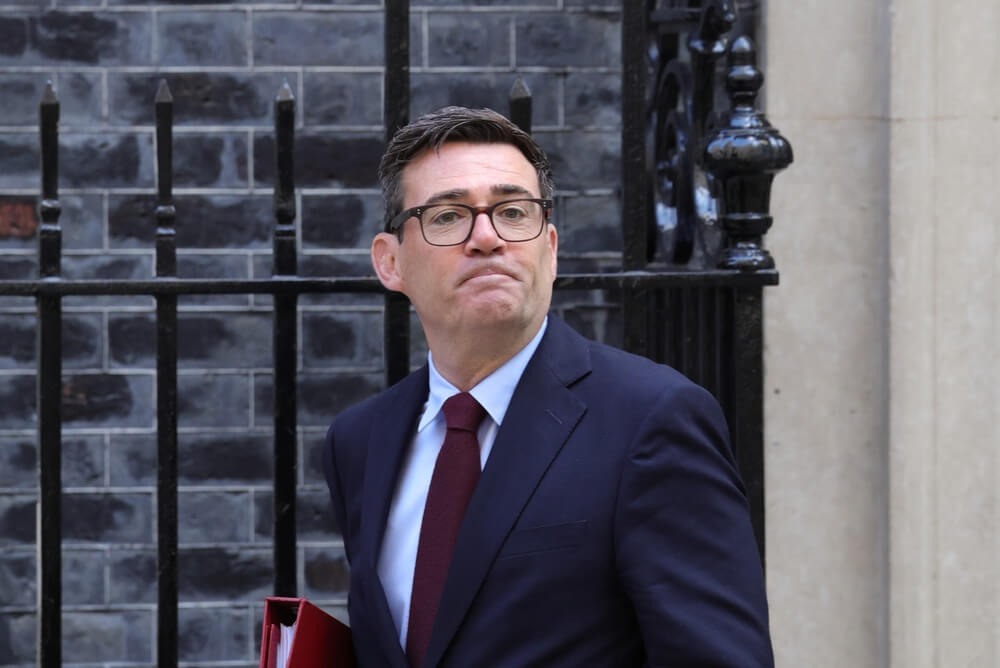 Andy Burnham presents Russian interference in Brexit as part of a broader European security threat
On 8 October, Burnham discussed Russian sabotage, cyberattacks and disinformation, as well as the strengthening of security cooperation between the two countries, with Chancellor Friedrich Merz in Berlin.
He then said that they had also talked about Alternative for Germany’s ties with Moscow.
The British Prime Minister thus presents Russian interference in Brexit as part of a broader European security threat.
At home, his statement immediately became part of the Brexit controversy. Nigel Farage, leader of Reform UK and one of the most prominent advocates of leaving, called the Prime Minister a liar and rejected claims of Russian interference.
On 12 October, Downing Street confirmed that the government recognised the legitimacy of the referendum result, and on the same day Burnham advocated much closer relations with the European Union in the House of Commons.
Liberal Democrat leader Ed Davey has called on the government to drop restrictions on the customs union and the single market.
Linking Russian interference to a new approach to Brussels carries risks for the Prime Minister himself.
Until the government presents more concrete intelligence findings, Brexit advocates will be able to portray the admission about Russia as a campaign to return to Europe.
That would make it difficult to hold the European debate on foreign interference that Burnham wanted to initiate.
Neither Strasbourg nor the new rules addressed the question raised in 2016
Former MPs Ben Bradshaw, Caroline Lucas and Alyn Smith brought proceedings against Britain at the European Court of Human Rights, claiming that the country had failed to investigate Russian attempts to influence the 2014 and 2016 referendums and the 2019 general election.
On 22 July 2025 the court ruled that the right to free elections had not been violated.
It acknowledged flaws in the UK authorities’ initial response but took into account two parliamentary inquiries and subsequent legislation on elections, national security and online safety.
On 8 December 2025 the Grand Chamber refused to reconsider the case. The court examined whether the state had fulfilled its obligations to protect the electoral process, so the judgment did not determine what actually happened during the referendums.
A few weeks earlier, on 21 November 2025, Nathan Gill, former UKIP and Brexit Party MEP and later leader of Reform UK in Wales, was sentenced to ten and a half years in prison.
He admitted that during 2018 and 2019 he had received around £40,000 from people connected to pro-Russian interests to give speeches in the European Parliament, propose initiatives and organise media appearances for their benefit.
He took bribes for years after the referendum, so his case does not speak to the 2016 campaign. However, it showed how vulnerable the British system was to foreign money.
The government made it clear that it would not examine earlier allegations of interference in the Brexit referendum
It was precisely this ruling that prompted the government, on 16 December 2025, to launch an independent review into protecting politics from foreign financial influence.
Philip Rycroft, permanent secretary at the Department for Exiting the European Union from 2017 to 2019, was appointed to lead it.
When announcing the review, the government made it clear that it would not examine earlier allegations of interference in the Brexit referendum.
The most senior official in the department that implemented the exit from the EU was thus given the task of examining foreign influence on British politics, with the explicit exception of the vote that decided that exit.
On 25 March 2026, Rycroft proposed 17 measures, including stricter checks on the origin of donations, an annual cap of £100,000 on donations from British voters living abroad and a temporary ban on donations in cryptocurrencies.
In July, the government accepted all the recommendations, some only in principle.
The Representation of the People Bill passed the House of Commons on 2 September and is now before the House of Lords.
These measures may close some avenues of future influence, but they do not answer the question of what happened in 2016.
The answer is once again in the hands of Parliament
The government’s most likely next move will be to allow the Intelligence and Security Committee access to some of the classified information Burnham referred to, while the public will receive only a brief summary, justified on the grounds that sources must be protected.
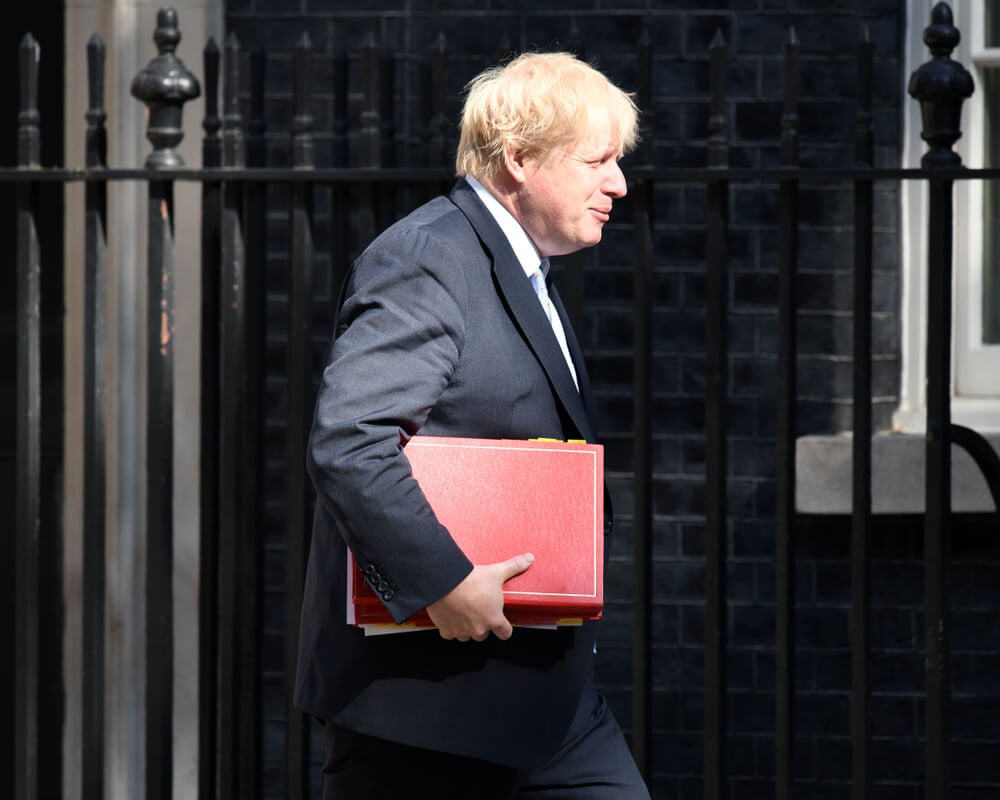 Johnson’s government decided in 2020 that an assessment of Russian influence on the referendum was not required
The committee would then be able to determine when the services first gathered reliable information about Russian activities during the referendum, to whom they provided it, and whether any political official restricted further scrutiny.
In particular, it remains an open question whether the services, during the past decade, have carried out the assessment that the Johnson government, in 2020, publicly declared unnecessary.
Johnson’s government decided in 2020 that an assessment of Russian influence on the referendum was not required, although it did not even ask for evidence.
Burnham’s government now admits there was interference while simultaneously claiming that it failed, without stating the basis for either claim.
The answers to the questions of what the services knew, when they found out, who decided not to look further and why remain locked in Downing Street and the intelligence agencies, held by the same institutions that took those decisions.
