Israeli Defence Minister Israel Katz today accused Recep Tayyip Erdoğan of dragging Turkey into “dangerous adventures” in Syria. Two days earlier, Israeli aircraft struck the runway and storage facilities at Abu al-Duhur military airport in Idlib province, about 70 kilometres from the Turkish border.
Several hours before the strike, a Turkish military delegation visited the airport. Israel claims that Damascus intended to allow the deployment of Turkish forces and that such a move would cross a boundary already set by Jerusalem.
Syrian Foreign Minister Asaad al-Shaibani responded that the airport was being renovated for the Syrian Air Force, that a permanent Turkish base was not planned, and that Turkish officers were present for training and military cooperation.
Abu al-Duhur shifted the dispute from the issue of Turkish bases to Syrian military recovery. Damascus is trying to regain the military airport, trained personnel, radars, and command and control of its airspace, and Ankara is helping it to do so.
Israel estimates that, over time, some of these capabilities may limit its freedom of action in relation to Syria and bring Turkish military infrastructure closer to an area it regards as crucial to its security.
The limits of what Israel considers acceptable are therefore increasingly determining how quickly, and to what extent, Syria can rebuild its armed forces.
The army inherited by the new government
After the fall of Bashar al-Assad in December 2024, Israel carried out more than 350 air strikes against Syrian military targets over a few days.
The IDF said it had destroyed most of the former regime’s strategic weapons stockpile. The targets included air defence systems, airports, radars, aeroplanes, helicopters, missiles, warehouses, production plants and part of the naval capacity.
Israel’s goal was to ensure that the new government in Damascus did not immediately gain access to a large part of Assad’s military arsenal.
In Jerusalem at that time, there was no confidence in the new government, in its ability to control its own forces, or in the direction it would take in its relations with Israel.
Ahmed al-Sharaa led Hayat Tahrir al-Sham, an organisation that grew out of the al-Nusra Front, the former branch of al-Qaeda in Syria.
The US goal is a Syrian government that can control territory, suppress ISIS, secure borders, integrate armed formations and rebuild institutions
Since 7 October, the Israeli security leadership has assessed almost every new military capability in the immediate environment according to its possible future use, regardless of the current intentions of the government that controls it.
Twenty months later, the situation in Damascus looks different. Al-Sharaa has established close relations with Washington and with several Arab states. In 2025, the Trump administration lifted a broad US sanctions programme against Syria to make way for reconstruction and investment.
On 8 July this year, President Donald Trump informed Congress that he intended to revoke Syria’s status as a state sponsor of terrorism. The mandatory 45-day congressional deadline is still running.
The US goal is a Syrian government that can control territory, suppress ISIS, secure borders, integrate armed formations and rebuild institutions.
Ankara builds influence through Damascus
Ankara has become the most important external partner in this process. In August 2025, Turkey and Syria signed a memorandum on joint training and counselling.
The Turkish Ministry of Defence later stated that it was helping to modernise, organise and train the Syrian army. The cooperation covers military expertise, logistics and equipment, while Syrian soldiers have been sent to Turkey for training.
At the same time, Turkey is investing in civilian infrastructure. Leading Turkish defence electronics company ASELSAN installed an air traffic control system at Damascus International Airport at the beginning of the year. The Syrian Civil Aviation Authority emphasised that the radar is intended solely for civil aviation.
Separate from the civilian system in Damascus, restoring Syrian airspace surveillance and air defence has become one of the most sensitive areas of Turkish assistance.
For Israeli planners, any future military radar, sensor or air defence system will have immediate operational significance.
Turkey is changing the balance of power by helping Damascus rebuild the state
Turkish interests extend beyond military cooperation. Ankara wants a central government that controls the border with Turkey, restricts Kurdish military autonomy in the north-east, accommodates some of the millions of Syrian refugees who have lived in Turkey for years, and remains politically and economically dependent on Ankara.
A functional Syrian state serves those goals far better than a country divided between local armies, foreign bases and autonomous zones.
The difference between Iranian and Turkish influence in Syria is crucial for what follows. Over the years, Iran has built power through the IRGC, Hezbollah, foreign militias, arms depots and corridors to Lebanon, exploiting the weakness of state institutions and parallel chains of command.
Today’s Turkish model relies primarily on the government in Damascus, along with its army, ministries, borders and infrastructure. Iran has threatened Israel’s security by exploiting the weakness of the Syrian state. Today, Turkey is changing the balance of power by helping Damascus rebuild the state.
Syrian air defences change Israel's calculations
Israel's concerns have a clear military logic. For years, Syria has been an area where the Israeli Air Force could attack Iranian positions, weapons transports and other targets with very limited risk from significant air defences.
After Assad's fall, that space became even more open. Each longer-range radar, rebuilt command centre, modernised anti-aircraft battery or airfield capable of supporting more advanced fighter aircraft gradually changes those conditions.
As early as 2025, Israel showed how seriously it takes the prospect of a more permanent Turkish military presence. Ankara considered using several Syrian military airfields as part of broader defence cooperation, among them the Tiyas Air Base, known as T4, west of Palmyra.
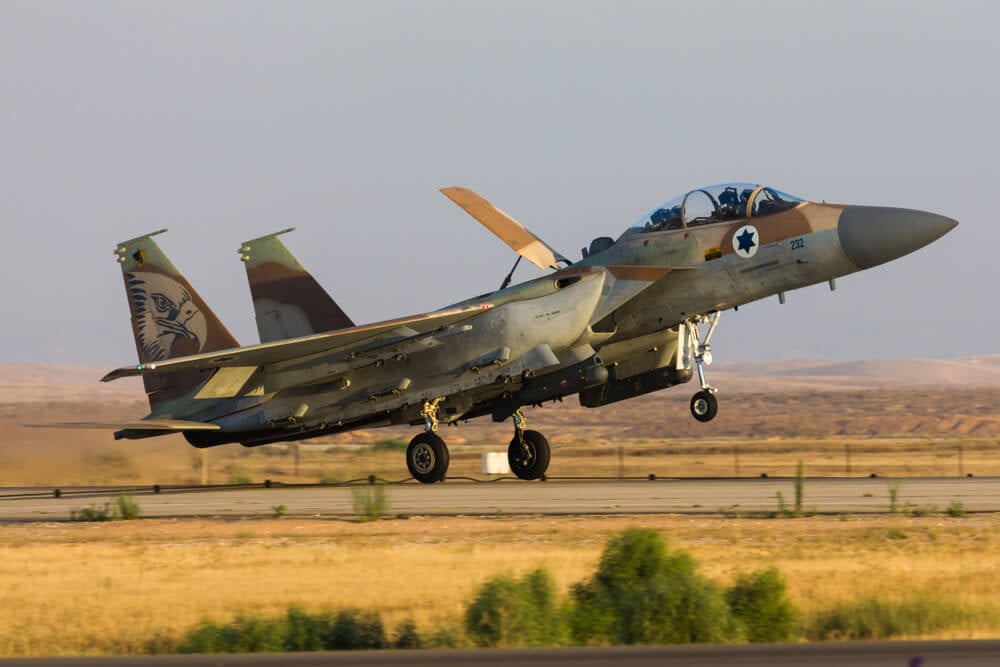 The Israeli strikes and warnings showed that Jerusalem regards Turkish bases and advanced air defence systems in central Syria as unacceptable
The Israeli strikes and warnings showed that Jerusalem regards Turkish bases and advanced air defence systems in central Syria as unacceptable. Turkey and Israel then opened a direct channel to prevent an accidental military conflict.
Abu al-Duhur showed how difficult it will be in future to draw a clear line between the renewal of Syrian military capabilities and the expansion of Turkish influence.
A permanent Turkish base is relatively easy to identify, but the situation is far more complex when a Syrian airport remains under Damascus's control while Turkish instructors train Syrian pilots, maintain equipment or take part in infrastructure modernisation.
The boundary becomes even less clear when it comes to radars and other systems that belong to Syria, are manufactured in Turkey, and may eventually form part of a wider military network.
As cooperation between Ankara and Damascus deepens, it will become increasingly difficult for Israeli planners to judge where the legitimate strengthening of the Syrian state ends and where Turkey's military presence, which can limit Israel's freedom of action, begins.
Washington between Syrian reconstruction and Israeli security
US policy towards Syria depends on the restoration of central government authority. Damascus is expected to control the territory, prevent the return of ISIS, integrate former opposing armed formations, protect minorities, guard the borders and enable economic recovery. None of these goals can be sustained in the long term without effective security institutions.
At the same time, Washington remains committed to Israel's security and does not want Syria to become a space from which Israel can once again be threatened. The two policies can be reconciled relatively easily, as Syrian reconstruction concerns policing, administration, roads, energy and other civilian capacities.
A far more serious dispute begins when Damascus starts to rebuild what no country can, in the long term, control its own airspace without: radars, military airfields, command systems and air defences.
If every significant step in that direction is regarded by Israel as a potential threat and possible target, Washington will find it increasingly difficult to pursue a policy that simultaneously encourages the restoration of a functional Syrian state and supports Israel's strategy of permanently limiting Syria’s military capabilities.
Tom Barrack is now trying to establish a stronger channel of communication between Israel, Turkey and Syria to reduce the risk that the next Israeli strike will trigger an immediate Turkish military response.
Israel wants to maintain the widest possible freedom of action in Syrian airspace and the ability to destroy capabilities it assesses as a future threat
Ankara was not informed in advance about the attack on Abu al-Duhur, and Turkish forces tracked the Israeli planes as they flew towards northern Syria. This is why Barak judged that, in such a situation, Turkey could reasonably conclude that an attack on its forces was imminent and begin preparing a response.
In an area where Israeli aircraft, Turkish radar systems and Syrian units operate simultaneously, a few miscalculations or delays in information could be enough for a local incident to escalate into a direct military confrontation between Israel and Turkey.
Such a channel may reduce the risk of accidental conflict, but it does not resolve the underlying dispute between the two countries. Israel wants to maintain the widest possible freedom of action in Syrian airspace and the ability to destroy capabilities it assesses as a future threat, while Turkey is trying to strengthen the state in Damascus, and its own influence over its security sector, specifically through the reconstruction of the Syrian army, airports, radars and command systems.
Yair Golan, a retired major general, former deputy chief of the IDF General Staff and leader of the opposition Democrats, warned of the same risk. After the attack on Abu al-Duhur, he argued that with such moves Israel is bringing itself closer to conflict with Turkey and deepening its rift with the United States. His assessment comes from the opposition, but also from an officer who ended his career as the second-in-command of the Israeli army.
The next strike could begin with a single radar
A direct war between Israel and Turkey remains unlikely. Both countries understand the costs involved, and Washington has sufficient influence and interest to prevent such a development from getting out of control. Far more likely is a series of limited crises over specific Syrian military capabilities.
Turkey is likely to be wary of large, clearly marked bases that Israel can declare unacceptable in advance. There is much greater scope for training, advising, overhauling, supplying equipment and building systems that remain under the Syrian flag.
Such an approach gives Ankara long-term influence without needing to station Turkish troops at every important airport.
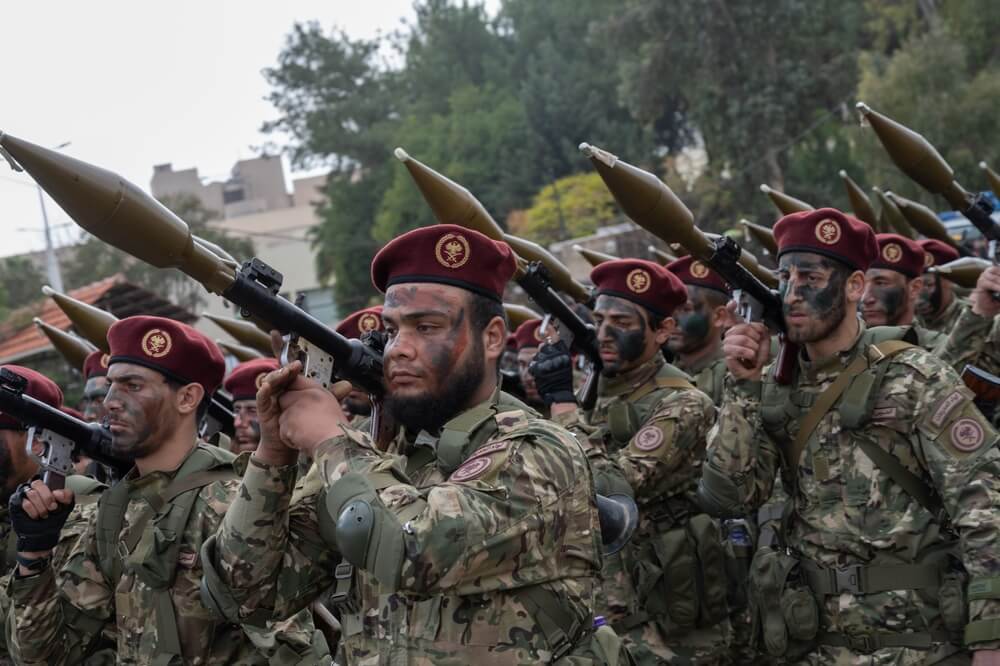 The next phase of Israeli-Turkish competition in Syria will concern where Syrian military reconstruction ends, and Turkish military presence begins
Israel will therefore monitor anything that alters the balance of power in the air. A long-range radar, an air defence battery, a command centre linking multiple sensors, a new fleet of drones or a revamped squadron could trigger the next crisis.
If Israel assesses that any of these capabilities will soon limit the operational freedom of the Israeli Air Force, past behaviour suggests that a strike will remain a realistic option.
For Ankara, the threshold will become more serious only when Israeli fire directly threatens Turkish soldiers or systems operated by Turkish crews.
As long as Syrian assets are targeted without Turkish casualties, Erdoğan can escalate his rhetoric while continuing the same policy in a different form. The death of Turkish soldiers would instantly change the political and military calculus.
The next phase of Israeli-Turkish competition in Syria will concern where Syrian military reconstruction ends, and Turkish military presence begins. Ankara has an interest in making that boundary as invisible as possible. Israel has an interest in pushing it back as soon as possible, and as far as possible from its borders.
Abu al-Duhur showed how little space there is between Syrian military reconstruction and an Israeli pre-emptive strike. Damascus wants to rebuild the country's army after fourteen years of war, Ankara wants to be its main partner, and Israel wants to preserve the freedom of action it gained with the collapse of Assad’s military system.
After the strike on Abu al-Duhur, the dispute came down to an issue that will define every subsequent phase of rebuilding the Syrian army: who determines the upper limit of military sovereignty that Syria can regain?
