A year after the fall of Bashar al-Assad's regime, Syria stands at a crossroads that could determine not only its own future but also the broader balance of power in the Middle East.
On 8 December 2024, a lightning offensive by rebels led by the Hayat Tahrir al-Sham group (HTS, a former branch of al-Qaeda that severed ties with the network) ended the decades-long rule of the Assad family. Assad fled to Russia, and Ahmed al-Sharaa (also known as Abu Mohammad al-Jolani) became interim president.
Today, while mass celebrations with fireworks and the new Syrian flag take place in Damascus and other cities, the country shows signs of hope but also bears deep wounds that have yet to heal.
The celebrations are especially emotional in places that suffered most under the Assad regime.
In Hama, a city that was massacred under Hafez al-Assad in 1982, thousands of people took to the streets on 5 and 6 December to express their joy at the end of an era of repression.
A similar atmosphere prevails in Damascus, where children wave flags from car windows and citizens speak of the return of freedom.
According to data from the United Nations High Commissioner for Refugees (UNHCR), since the fall of the regime, more than one million refugees have returned from neighbouring countries, and almost two million internally displaced persons have returned to their regions.
This is a sign of great optimism – UNHCR surveys show that more than eighty per cent of refugees now wish to return one day, compared to less than sixty per cent a year ago.
A geopolitical vacuum in post-Assad Syria
However, euphoria cannot conceal serious challenges. The most severe is the sectarian violence that escalated in March of this year in the coastal areas, traditionally inhabited by Alawites, the religious minority from which the Assad family originates.
Attacks by loyalists of the former regime provoked retaliation in which, according to the Syrian Observatory for Human Rights and United Nations reports, between 1,500 and 1,700 people, mostly civilians, died.
Similar incidents occurred among the Druze in the south of the country during the summer.
The new government established commissions to investigate the events and promised public trials, but the process has been slow.
For example, Syria has only one laboratory for DNA analysis, and many perpetrators remain at large.
Fear among minorities is widespread. Alawites, Druze and Christians fear that HTS's Islamist roots could marginalise them.
The geopolitical situation is equally complex. Russia and Iran, once the main allies of the Assad regime, have lost most of their influence.
Russia retains three military bases, but its power has been weakened by the war in Ukraine.
Iran suffered a strategic defeat: the corridor to Hezbollah was cut off, and the militias were disbanded or integrated into new forces.
Israel used the vacuum to expand its control in the south
Meanwhile, Israel used the vacuum to expand its control in the south. As of December 2024, Israeli forces have occupied an additional four hundred square kilometres in the Golan Heights, including the summit of Mount Hermon, and established nine military checkpoints inside Syrian territory.
Tel Aviv justifies this on security grounds and demands a demilitarised zone, but Damascus sees it as a permanent occupation.
Despite American mediation, negotiations on normalisation have reached a stalemate.
Within the country, the interim government of Ahmed al-Sharaa is achieving solid results in some areas.
HTS was officially disbanded in January of this year, and its forces were integrated into the Ministry of Defence.
In March, the Provisional Constitutional Declaration for a five-year transition period was adopted, and in October, the first parliamentary elections since the fall of the regime were held.
The US and the UK removed HTS from their list of terrorist organisations, paving the way for the lifting of sanctions and the provision of aid for reconstruction.
The salaries of civil servants have increased; electricity is gradually stabilising; and international flights from Damascus have been restored.
Pragmatism in Damascus
Most analysts view Syria as a country on the brink of renewed conflict, focusing on the risks of Islamist authoritarianism, Israeli expansion, and possible disintegration.
However, a closer examination may reveal a less dramatic and potentially more promising picture.
The real turning point is not that HTS came to power, but that Syria has finally broken the cycle of dependence on external powers that used it as a proxy battleground.
The Assad regime did not fall solely because of a rebel offensive; it collapsed after losing support even among former allies.
The new government, despite its roots in HTS, demonstrates a surprising pragmatism
Conflicts with Israel weakened Iran, Russia became preoccupied with Ukraine, and the West no longer wished to finance a corrupt regime.
The new government, despite its roots in HTS, demonstrates a surprising pragmatism. Al-Sharaa abandoned global jihad and focused on nation-building, from rebuilding infrastructure to engaging in dialogue with minorities.
The integration of the Kurds from the northeast was agreed in March, and negotiations with the Druze indicate a willingness to compromise.
The establishment of the National Commission for Transitional Justice and the National Commission for the Missing in May represents an attempt to address the legacy of torture and mass graves, although the commissions' mandates so far cover mainly crimes of the former regime.
Syria’s narrow path to stability
The outlook, which contrasts with the usual pessimistic narratives, is as follows: Syria has a genuine chance to become a stable, neutral state, modelled after post-war examples in the region but with its own specificities.
Instead of becoming a new Iranian proxy or a Turkish protectorate, Damascus can use the competition between powers – Russia, Iran, Israel, Turkey, and the West – to preserve its independence.
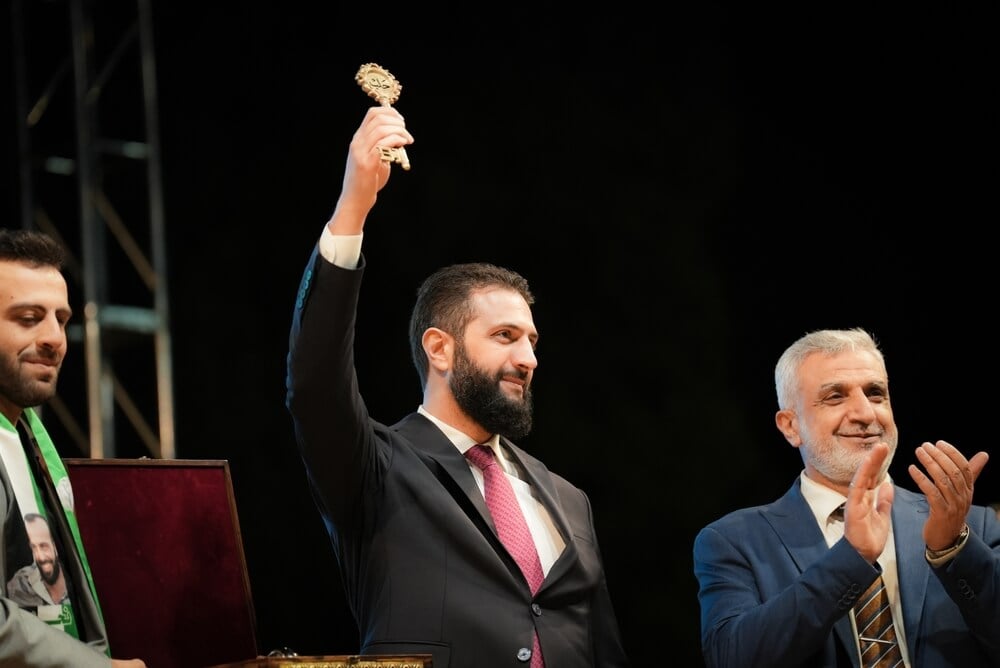 The key will be whether Ahmed al-Sharaa can transform HTS from a war machine into a genuine political party capable of inclusive governance
The return of refugees and an opening to investment from the Gulf and Europe could trigger an economic recovery sooner than expected.
The key will be whether al-Sharaa can transform HTS from a war machine into a genuine political party capable of inclusive governance.
The risks remain very high. If sectarian violence escalates or if Israel continues to expand, the country could slide into renewed division.
Yet, after a decade of destruction, Syrians are showing war-weariness and a desire for normality.
The anniversary of Assad's fall is not just a commemoration of victory; it is a reminder that Syria can no longer afford the old patterns.
If the new government seizes this moment for genuine national reconciliation and economic reconstruction, the country could become an example of how something new can emerge from the ashes of war, rather than simply a new variant of old chaos.
The road ahead is uncertain, but for the first time in a long while, Syrians are also steering the course of their country.
