Immigration has become the central fault line in contemporary politics. Nowhere is this more evident than in the United States and the United Kingdom, where the rhetoric is becoming increasingly absurd.
The underlying economics, however, are remarkably straightforward. Most advanced economies are rapidly aging, and with demographic decline comes a shrinking workforce.
While automation and AI may ease some of these pressures, neither can meet the rapidly growing need for health-care and elder-care workers or substitute for the educators, plumbers, and countless others whose jobs still depend on an irreplaceably human touch.
By contrast, the developing world has an enormous labor supply but not enough good jobs to absorb it.
In Africa alone, more than 600 million people are projected to join the working-age population in the next quarter-century. Globally, the figure is closer to one billion.
The result is chronic youth unemployment that is all but certain to fuel political instability and civil conflict in many low-income countries.
These strains are compounded by climate change, which is expected to hit developing economies the hardest and accelerate migration flows to richer countries.
Easing restrictions on cross-border mobility
Economists have long argued that easing restrictions on cross-border mobility brings enormous benefits to both destination and origin countries.
Yet one would never know it from the fierce anti-immigration backlash now sweeping the developed world.
In Germany, Angela Merkel’s decision to admit a million Syrian refugees in 2015 is perhaps the most unpopular decision of her 16-year tenure as chancellor, however morally courageous it may have seemed at the time.
Frustration over rising migrant populations was one of the main forces behind the UK’s 2016 decision to leave the European Union
Frustration over rising migrant populations was one of the main forces behind the UK’s 2016 decision to leave the European Union.
And in Hungary, Prime Minister Viktor Orbán has built his political brand on a hardline anti-immigration platform, becoming a lodestar for far-right provocateurs such as Tucker Carlson.
America’s trajectory over the past decade is particularly troubling. Historically, the country’s ability to attract ambitious people from around the world has been one of its greatest strengths, fueling economic growth, innovation, and cultural vitality.
American universities, in particular, have been magnets for global talent, attracting bright students who come not only to receive a high-quality – albeit very expensive – education, but also to build a life and career in the US.
That approach has paid off handsomely, as nearly half of all Fortune 500 companies were founded by immigrants or their children.
Theater of cruelty
But that pillar of American dynamism is now at risk of unraveling. US President Donald Trump’s administration has effectively shut the border and made a public spectacle of Immigration and Customs Enforcement (ICE) raids and deportations, ostensibly to reverse former President Joe Biden’s so-called “open borders” policy.
The shocking images of Venezuelan migrants accused of gang ties being deported to El Salvador’s infamous Terrorism Confinement Center – where they reportedly endured brutal and inhumane treatment – may have contributed to the subsequent drop in illegal border crossings.
But this theater of cruelty has also chilled legal immigration, discouraging many of the skilled and ambitious people who have long underpinned US innovation and growth.
The Trump administration’s crackdown on international students has been especially destructive
The Trump administration’s crackdown on international students has been especially destructive.
In one widely reported case, a 19-year-old Babson College student who had arrived in the US from Honduras at age seven was whisked out of a security line at Boston’s Logan Airport.
Instead of flying home to Texas as planned, she was detained, sent to an ICE facility, and then, despite a federal court order that she not be removed from Massachusetts, deported to Honduras – separating her from her parents, who remain in the US.
The costs of Trump’s anti-immigration policies
To be sure, Biden-era policies triggered a surge in illegal immigration while narrowing legal avenues for economically beneficial entry.
Between 2020 and 2024, roughly 11 million immigrants entered the US – and given the large numbers who crossed unmonitored stretches of the southern border, the actual figure may be much higher.
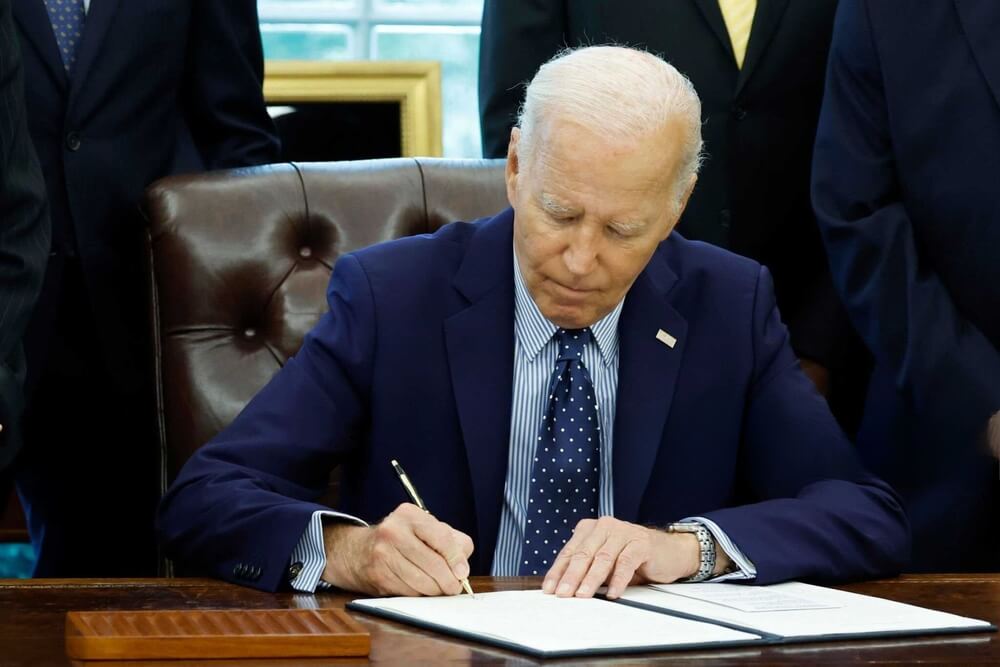 Biden-era policies triggered a surge in illegal immigration while narrowing legal avenues for economically beneficial entry
Of course, Biden’s approach was itself a reaction to Trump’s restrictions during his first term, illustrating how US immigration policy has swung wildly between extremes rather than converging on a coherent strategy.
Given the entrenched divisions and dysfunction in Washington, the chances of Congress passing a bipartisan immigration reform bill are vanishingly small.
Similar dynamics are playing out across much of the developed world, as Germany, France, and the UK all struggle to integrate far smaller immigrant populations whose cultural traditions differ markedly from those of most native-born citizens.
Against this bleak backdrop, the economic case for immigration is as compelling as ever.
In fact, recent research suggests that the growth costs of Trump’s anti-immigration policies will, over time, dwarf those associated with his tariffs and other trade barriers.
If current political trends persist, the gap between economic fundamentals and policy choices is only likely to widen, leaving developed countries woefully unprepared for the challenges that lie ahead.
Kenneth Rogoff, a former chief economist of the International Monetary Fund, is Professor of Economics and Public Policy at Harvard University and the recipient of the 2011 Deutsche Bank Prize in Financial Economics.
