With a dictator in the Kremlin and an authoritarian in the White House, it’s no wonder that the language of international diplomacy is becoming less about what’s really going on than about what weaker countries think that the two rulers would like to hear.
Ukraine, being forced to go along with the heinous Putin-Trump attempt to impose an unfavourable peace on the country, can do little more than emit grateful squawks while Europe is twisting itself in knots to phrase its opposition obsequiously.
The Trump peace plan is, of course, anything but that. It’s only a way station towards the further dismantling of Ukraine and a potential further expansion of Russia into Europe.
Along the way, it could deliver huge personal benefits to the coterie around the American president and his family. Yes, Trump does have a longer vision, but it’s about extracting maximum profit, rather than peace.
If this feels like a stitch up, it’s because it is. The rest of the world, except for China and other assorted strongman-led countries, know full well what’s going on but are glad that these extortionist behemoths’ attention is focused elsewhere momentarily.
Another warning sign
Apart from the initial ‘plan’ itself, another warning sign came this week when Trump’s envoy, Steve Witkoff, and his son-in-law, Jared Kushner, met Putin for some five hours in the Kremlin. Both sides were tight-lipped about the outcome, although it was said that there had been no breakthrough.
What did they discuss in those five hours? Or in previous meetings between Witkoff and Putin stretching from three to four hours? What can such unusual high-level and private discussions have delivered that could not be covered in lower-level preparatory meetings?
Incredibly, for an instigator of the war the USSR managed to extend its territory and its control well westward into Europe at the conflict’s end
As a European, forgive me for having flashbacks to the Molotov-Ribbentrop Pact of 1939 that effectively led to Russia, in the guise of the USSR, co-launching WWII when it carved up Poland together with Germany.
Incredibly, for an instigator of the war – although it suffered horribly during the subsequent German onslaught – the USSR managed to extend its territory and its control well westward into Europe at the conflict’s end. Yet, it somehow managed to sell this to the world as a natural reaction to having been threatened from Europe over the centuries.
A larger geopolitical churn
Seen from that vantage point, Russia’s current behaviour is but the continuation of an ever expansionist entity that has, over time, been very successful in absorbing border regions or exerting control beyond its frontiers through a combination of force and subversion.
Europe and much of the rest of the world, for obvious reasons, would like that not to be true. Even now, it’s proving incredibly difficult to get the EU and its allies to face up to the reality that they will have to be able to defend themselves if they want to avoid war.
A Trump-Putin pact with secret clauses could pave the way for another, albeit different, carve-up of a country bordering Russia
Yet, Putin has been clear about his intentions, stating that he aims to restore the entire sphere of influence of the former Soviet Union. Then, for those who doubted him, he launched a full-scale invasion of Ukraine.
No, the lessons of the past cannot be directly applied to the present. But a Trump-Putin pact with secret clauses could pave the way for another, albeit different, carve-up of a country bordering Russia. It would also put the EU in its place and saddle it with a prohibitive defence burden.
The current push towards this outcome is taking place amid both time pressures and a larger geopolitical churn.
The moment has not yet arrived
Trump and Putin have less than a year until the US Congressional midterm elections in 2026 that could well see at least control of the House of Representatives pass to the Democrats.
This would severely constrain any Trump threats to cut off aid to Ukraine or recognise Russian territorial claims.
As it is, Congress was not wowed by Trump’s plan for Ukraine but could probably be browbeaten into accepting many unfavourable points if push comes to shove. Especially if Ukraine sees itself forced to accept them.
Geopolitically, and this is not Trump’s doing, the US has to take into account an ever-rising China that is doubling down on keeping open the option of occupying Taiwan by force.
There’s much discussion on whether allowing Russia to subjugate Ukraine will encourage China to do the same to Taiwan
The war in Ukraine is a continuous drain on US military resources and attention. It’s a manifestation of almost every 21st century US president’s failure to “pivot to Asia”.
There’s much discussion on whether allowing Russia to subjugate Ukraine will encourage China to do the same to Taiwan. This is countered by a weaker narrative that has Russia being freer to oppose China once the Ukraine issue is settled.
Both are probably largely beside the point; China marches to the pace of its own drum. Although it might well seize an opportunity should one present itself, most analysts agree that the moment has not yet arrived.
A world that Trump has helped to create
Still, the Ukraine conflict and other breakdowns of the international system, including fights over trade, climate and other conflicts, could help shape a world in which China too would more readily employ force against Taiwan.
This is the world that Trump has helped to create, for example, with his threatening statements towards Greenland and Canada. It is a world where such acquisitions by force that were long held taboo by the overwhelming majority of countries, become acceptable – and cost-free – again.
China re-acquired Hong Kong and Macau peacefully, and Russia was initially able to bind former Soviet states to it
Such violent and disruptive policies were also largely unnecessary and unproductive for many years, especially for the world’s major powers.
The US, for example, has already attained almost all its legitimate goals in both Canada and Greenland through peaceful and cooperative means and could easily expand on that.
Both Russia and China have done quite well out of a relatively peaceful world order. China re-acquired Hong Kong and Macau peacefully, and Russia was initially able to bind former Soviet states to it through the Commonwealth of Independent States before it started alienating some of them through its hegemonic actions.
Return to a more democratic and human rights-oriented path
China’s threats towards Taiwan and Russia’s invasion of Ukraine are acts of aggression, regardless of supposed historical territorial claims. Forced ‘reunification’ of established separate entities is usually not an acceptable option in international affairs.
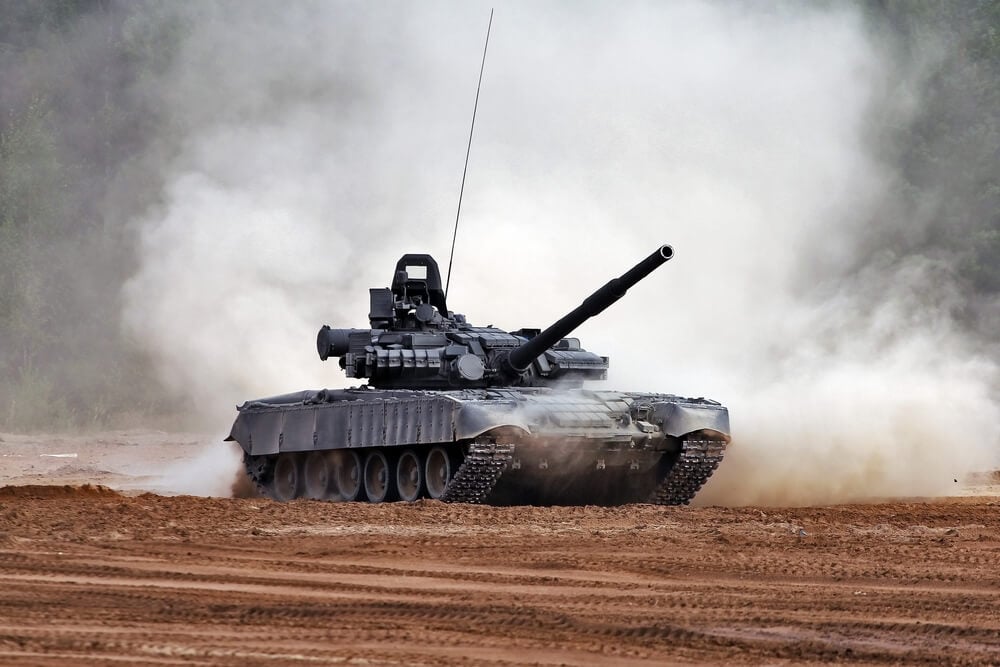 China’s threats towards Taiwan and Russia’s invasion of Ukraine are acts of aggression, regardless of supposed historical territorial claims
It is not as if Russia and China could not achieve results with a more peaceful approach, at least furthering integration and cooperation. But for that both imperial powers would need to fundamentally change their attitudes and probably also their leadership.
Russia would need to return to a more democratic and human rights-oriented path and let go of its meddling in and intimidation of its neighbours.
China actively sabotaged its own chances with Taiwan by clamping down in Hong Kong. Who will ever again believe the ‘One Country, Two Systems’ slogan? It too would have to reform its way of governance radically.
It is because these internal changes are unlikely in the short-to-medium turn that these countries are likely to resort to the use of force, as is already happening in Ukraine.
A Trump-led US now appears to be looking for ways to safeguard its interests, and those of its leaders, in a world that it sees as being transactional and trending towards the use of force rather than cooperation.
This is what makes opaque personal meetings such as Trump with Putin and Xi or Trump’s envoys with Putin so dangerous. This is where the world risks getting carved up along lines of narrow self-interest.
