At first glance, India and China seem to be taking almost identical positions on the Ukraine war: maintain close ties with the Kremlin, buy Russian oil, and refuse to join the West’s campaign to isolate Russia.
But scratch the surface, and a fundamental divergence appears: whereas India wants the war to end, China has no problem with letting the fighting continue.
These positions have less to do with how China and India each feel about Russia, and more to do with how they feel about each other.
For decades, Russia has been one of the few major powers that India could count on to help counterbalance China.
The bilateral relationship amounted to a buffer and a hedge, ensuring that instead of being squeezed by its larger neighbor, India retained some geopolitical room to maneuver.
But this system cannot work if Russia is hollowed out and dependent on China. And that is precisely the outcome the Ukraine war has produced.
After its full-scale invasion of Ukraine in 2022, Russia faced unprecedented Western sanctions, which severed its access to Western goods and markets. After Europe, once its largest source of energy demand, largely stopped purchasing Russian oil and gas, China took over as Russia’s top energy buyer, benefiting from discounted rates.
China also became Russia’s biggest trading partner and an increasingly important source of the machinery, electronics, and industrial goods Russia could no longer buy from the West.
This outcome diverges sharply from the “no limits” partnership of equals that Chinese President Xi Jinping and Russian President Vladimir Putin touted just before the war started.
Russia is becoming a junior partner of China, which is just fine with Xi—and explains why he is in no hurry to force Putin to negotiate with Ukraine.
While Xi pays lip service to a “political settlement,” he avoids putting any public pressure on Putin to seek peace.
The Power of Siberia 2 pipeline
The calculation is not mysterious. A prolonged war keeps Russia boxed in, and a boxed-in Russia has fewer alternatives—which means more leverage for China.
And, as the stalled talks over the Power of Siberia 2 pipeline show, China is not shying away from using that leverage to advance its own interests.
Russia badly wants to build this pipeline, which would carry natural gas from its Yamal Peninsula in the Arctic through Mongolia into northern China.
Having lost the European gas market, Russia needs a new long-term outlet for its massive gas reserves
Having lost the European gas market, Russia needs a new long-term outlet for its massive gas reserves.
But China does not share the Kremlin’s sense of urgency. Negotiations have dragged on for years, owing to disagreements over price, volume, and delivery terms.
Recent reporting suggests that China is demanding rates of around $50 per thousand cubic meters—far below the roughly $250 the Kremlin wants, and close to Russia’s heavily subsidized domestic gas price.
China seems to think that Russia will have to agree eventually. What other option does it have?
A worst-case scenario for India
The impact extends beyond gas. The longer the war drags on, the more Russia will have to reorient its economy toward China, and the more openings China will have to advance its economic and strategic interests.
China gains resources, a captive market, technological leverage, and political clout.
The more leverage China accumulates over the Kremlin, the worse India’s regional position becomes
All Russia gets is a chance to offset some of the economic damage from its rupture with the West, while it continues to pour its limited resources into a war of attrition of its own making.
This is, in a sense, a worst-case scenario for India: its Russian partner, once a strategic asset, is severely weakened, and its Chinese antagonist is strengthened and emboldened.
The more leverage China accumulates over the Kremlin, the worse India’s regional position becomes.
Compassion and leadership
Small wonder that India keeps nudging the Kremlin toward peace. Last week in India, ahead of this year’s BRICS summit, Prime Minister Narendra Modi gave Putin a 2,000-year-old Indian poetry and philosophy treatise, Tirukkuṟaḷ, translated into Russian, noting that the book is “about compassion and leadership.”
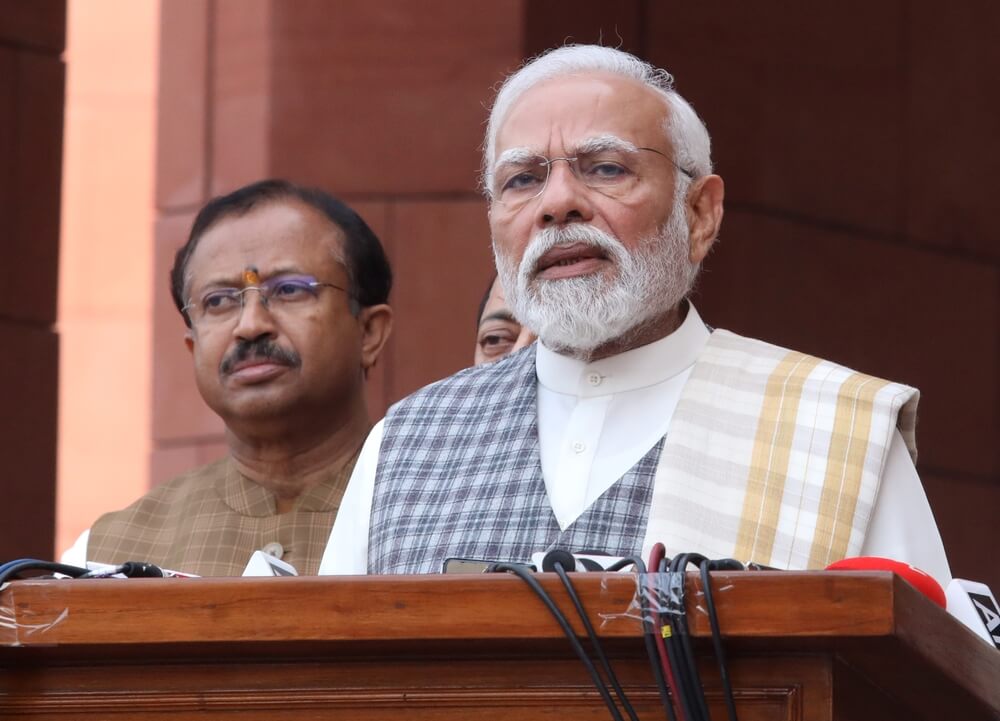 Every day that the war continues, humanity takes a step backwards - Narendra Modi
It was a pointed gift, especially following Modi’s plea last month at the Shanghai Cooperation Organization summit for the world to move from “endless war” to “end of war.”
While Modi’s calls for an end to the Ukraine war often highlight the humanitarian angle—“Every day that the war continues, humanity takes a step backwards”—preserving the regional balance of power is undoubtedly a major factor.
That requires a Russia that exists as an independent center of power, whereas China wants a Russia that is strong enough to be useful, but weak enough to remain dependent.
This is not a disagreement about Russia so much as a contest over which regional order in Asia will prevail: one with a more stable balance of power or one dominated by China.
Nina L. Khrushcheva is a Professor of International Affairs at The New School.
