Ursula von der Leyen proposed to the European Parliament that the European Union should start considering the possibility of Canada becoming its first ‘associate member’.
Such a status does not exist in EU treaties today, Canada is not seeking full membership, and the European Commission has not yet presented a legal model for implementing this idea.
Her statement is therefore not an institutional offer for now, but a political signal that Brussels and Ottawa want a relationship deeper than the usual partnership with a third country.
Canadian Prime Minister Mark Carney will address the European Parliament on 17 September, while the next EU–Canada summit is scheduled for 29–30 October.
By then, it should be clearer whether the term ‘associate member’ signals the start of a new formal status or serves as a political label for a series of agreements that would tie Canada much more closely to the European market, security policy, defence industry and technology programmes.
From CETA to a broader relationship
The basis for such a development already exists. CETA has been provisionally in force since 2017 and has significantly increased trade between Canada and the European Union, even though the agreement has not yet been ratified by all member states.
In 2024, Canada became associated with the Horizon Europe programme in its largest research component, and in June 2025 the Strategic Partnership for the Future and the Security and Defence Partnership were signed.
In February this year, Canada became the first non-European country to be included in SAFE, the European mechanism for joint defence procurement. Negotiations on a separate agreement on digital trade also began in March.
Von der Leyen did not introduce an entirely new topic
Von der Leyen therefore did not introduce an entirely new topic. She sought to give political definition to a process that already exists through several separate agreements.
A day earlier, Carney said that Canada and the EU want to work on a ‘unique security and economic alliance’, which would cover defence, artificial intelligence, payment systems, space, critical minerals and clean energy.
These areas overlap almost exactly with the sectors in which both Canada and the EU are seeking to reduce external dependencies and ensure more reliable supply chains.
That is more important than the wording on associate membership alone. If negotiations progress, Canada’s relationship with the EU could become a test case for a model in which a country outside Europe gains very broad access to European programmes and industrial policies without being a member of the Union.
Europe cannot replace the United States
These developments do not mean that Canada is leaving the US economic space. That would run contrary to both the geography and the structure of the Canadian economy.
More than two-thirds of Canada’s merchandise exports still go to the United States, and automotive, energy, rail, pipeline and other supply chains are deeply integrated across the US–Canada border.
Carney’s policy has another goal. Canada is trying to reduce the risk that arises when its economy is too dependent on a single market and on the decisions of a single partner.
At a time when Brussels is trying to reduce its dependence on suppliers that could become a political or security risk, Canada meets a large part of those needs
Following new US trade measures and difficult negotiations with Washington, the Canadian government is speaking more openly about the need for greater strategic autonomy.
This does not mean breaking with the US, but seeking additional economic, technological and security support.
The European Union is valuable for Canada precisely because it is not a substitute for the US market, but another large political and economic space with which there is already a high level of regulatory trust.
For the EU, the interest is equally tangible. Canada has large reserves of critical minerals, a developed energy industry, significant technological capabilities and a defence sector that can be included in European procurement programmes.
At a time when Brussels is trying to reduce its dependence on suppliers that could become a political or security risk, Canada meets a large part of those needs.
The biggest problem is not politics, but legal construction
The political logic of this rapprochement is clear; the institutional logic is not. The European Union does not have an ‘associate member’ category.
There are member states, candidates for membership, members of the European Economic Area, and various agreements with third countries, but there is no model that gives Canada a predefined package of rights and obligations between partnership and full membership.
This is why it is now particularly important to follow not political declarations but concrete negotiations.
If Canada were to gain wider access to the single market, European funds, defence programmes or regulatory systems, it would have to be defined precisely which European norms it accepts, which institutions it is subject to and in which areas it has the right to participate without the decision-making powers of member states.
Instead of one large associate membership agreement, Canada and the EU can build a relationship that in practice goes deeper than a standard partnership
This is where the limitation of the whole idea becomes apparent. CETA, signed ten years ago, is still being applied provisionally because ratification has not been completed in all EU member states.
If a traditional trade agreement requires so much time, a new status covering defence, technology, energy and regulatory cooperation will be even more complex.
It is therefore more likely that the new relationship will emerge gradually, by connecting existing instruments.
The defence industry already has SAFE, science and research have Horizon Europe, trade has CETA, and critical minerals have a special partnership. Digital trade is under negotiation, while security and defence already have their own bilateral framework.
Instead of one large associate membership agreement, Canada and the EU can build a relationship that in practice goes deeper than a standard partnership, although legally it will not resemble membership.
Canada as a test case
If that model develops, its significance will not be limited to Canada. The European Union has long had various arrangements with non-member states, but most of these apply to European countries that are geographically and economically part of the European space.
Canada would be a different case: a major North American country engaging more deeply in Europe’s economic, technological and security infrastructure to reduce strategic dependence and expand access to reliable markets and partners.
This does not mean that the same model could automatically be applied to the United Kingdom, Japan or Australia, whose relations with the EU have a different legal and political history.
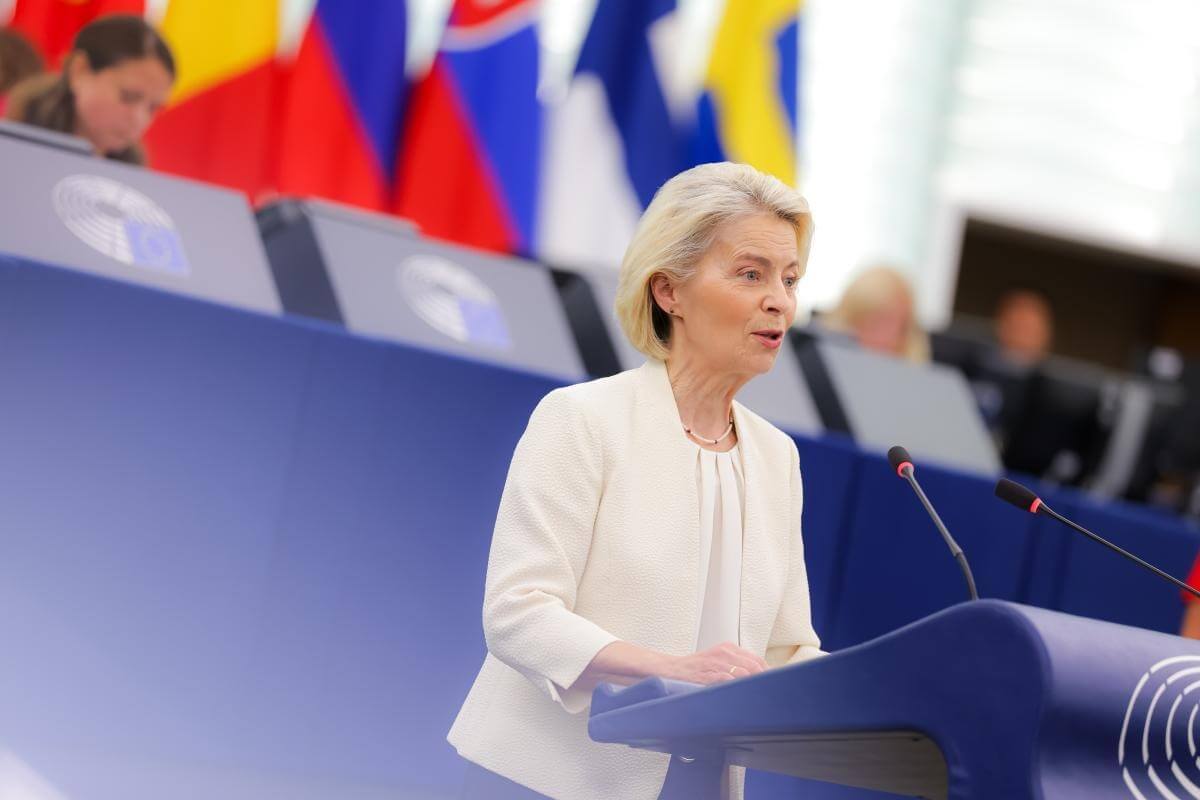 A successful Canadian model would show that the Union can build very close relations with countries that do not have a membership perspective - Ursula von der Leyen
However, a successful Canadian model would show that the Union can build very close relations with countries that do not have a membership perspective.
The next step is unlikely to be the formal creation of a new category in European treaties. It is more realistic to expect the summit at the end of October to define a political framework with specific deadlines and areas of cooperation, probably in defence, critical minerals, energy, artificial intelligence, cybersecurity, digital trade, research and Arctic policy.
Existing agreements allow most of these areas to be deepened without immediate changes to European treaties.
The most likely development after the October summit will be a further deepening of Canada’s sectoral integration with the European Union, primarily through defence procurement, critical minerals, digital trade, research programmes and regulatory cooperation.
Politically agreed directions and functional mechanisms are already in place, so the real value of the now-floated idea of an ‘associate member’ will depend on how much concrete access Canada gains to European programmes, joint projects and parts of the EU’s market and security infrastructure.
The October summit should therefore show whether Brussels and Ottawa will turn this idea into a new, deeper model of relations with clearly defined rights and obligations.
This is where the most significant potential consequence of this process lies: the European Union could start regulating relations with its closest partners less through a binary division into members and non-members, and more through varying degrees of functional integration.
Canada is currently the most suitable candidate to test how far such a model can go without full membership and without altering the EU’s basic institutional structure.
