On 15 September, the Foreign Ministers of Cambodia and Thailand presented their initial positions in Singapore before a five-member commission established to resolve their dispute in the Gulf of Thailand.
Prak Sokhonn spoke on behalf of Cambodia, which initiated the proceedings in June, while Sihasak Phuangketkeow represented Thailand, which in May shut down the only bilateral framework for negotiations on the maritime border and the shared use of potential oil and gas deposits.
The meeting began behind closed doors on 14 September, and public statements issued the following morning revealed disagreement even before the delimitation line itself was discussed.
Phnom Penh is seeking a single maritime border, with the possibility of joint development and revenue sharing until a final agreement is reached.
Bangkok insists that the commission’s remit be limited to delimitation and opposes Cambodia’s attempt to broaden the proceedings to include resource sharing.
The United Nations Convention on the Law of the Sea obliges Thailand to participate in the proceedings, while leaving the decision on the border to the two governments.
The commission can examine legal positions, hold talks and propose a compromise, which would take effect only with the agreement of both Phnom Penh and Bangkok.
Following the collapse of the memorandum, the only shared framework for 25 years, success will be measured by the commission’s ability to forge a new path to negotiations.
Mandatory participation, free decision
The dispute is being addressed through compulsory conciliation before a commission established under the United Nations Convention on the Law of the Sea (UNCLOS).
The obligation concerns Thailand’s participation in the work of the commission. The proposal produced at the conclusion of that process remains non-binding, and Bangkok may reject it.
When UNCLOS was ratified in 2011, Thailand declared that it did not accept the jurisdiction of international courts or arbitral tribunals for maritime boundary disputes.
Article 298 allows states to exclude maritime delimitation disputes from compulsory judicial proceedings but, if negotiations do not produce results within a reasonable period, it refers them to conciliation before a commission.
The commission consists of two experts nominated by Cambodia and two nominated by Thailand, and is chaired by Katrina Cooper, an Australian diplomat and lawyer
The commission hears both sides and proposes a solution. If no agreement is reached, it issues a report setting out its conclusions and recommendations, but does not deliver a binding judgment.
If Bangkok disputes its competence or claims that Cambodia has made too broad a request, the commission itself rules on that objection.
Under UNCLOS rules, the report must be submitted within 12 months of the commission’s establishment, unless the parties agree a different deadline. Article 298 then requires the two governments to negotiate on the basis of that report.
The Convention thus prevents Thailand from simply ignoring the proceedings, but does not remove its right to reject the proposed border or resource arrangements.
The Permanent Court of Arbitration in The Hague provides administrative support for the commission’s work and maintains its registry, but does not determine the dispute.
The commission consists of two experts nominated by Cambodia and two nominated by Thailand, and is chaired by Katrina Cooper, an Australian diplomat and lawyer chosen by the four members after consultation with the parties.
The commission must keep the two governments in dialogue without giving either the impression that a territorial concession is being imposed from outside.
The agreement that linked the border to gas
Cambodian and Thai claims overlap across approximately 26,000 square kilometres of the Gulf of Thailand. The area is presented in political discussions as a major oil and gas deposit, although publicly available estimates neither confirm proven reserves nor provide a reliable calculation of future income.
The two countries therefore dispute an area whose economic value they cannot yet reliably assess.
A memorandum signed on 18 June 2001 linked delimitation and resource exploitation in a single package.
The northern part of the zone, covering about 10,000 square kilometres, was to be delimited, while joint development of hydrocarbons was to be agreed over approximately 16,000 square kilometres to the south.
The two agreements had to be reached simultaneously, and a joint technical committee was to prepare a delimitation line and rules for sharing costs and benefits.
Both governments thereby ensured that any concession in one part of the negotiations would be matched by a counter-concession in another.
Cambodia linked acceptance of the border to a share in resource development, while Thailand retained the option of making joint exploitation conditional on progress in delimitation
Cambodia linked acceptance of the border to a share in resource development, while Thailand retained the option of making joint exploitation conditional on progress in delimitation.
The indivisible package meant that any disagreement could veto the entire process, which is why the protection of each party’s interests ultimately became a mechanism of permanent deadlock.
Negotiations over the next two and a half decades produced neither a border agreement nor a deal on joint development.
On 5 May 2026, the Thai government decided to terminate the memorandum, arguing that it had not produced concrete results and that a fresh start was needed.
The decision also fulfilled an election pledge by Prime Minister Anutin Charnvirakul, made in a political climate in which compromise with Cambodia is readily portrayed as a surrender of sovereignty.
Conflict on land complicates agreement at sea
The memorandum was terminated after armed clashes along the land border in July and December 2025, large-scale population displacement, and the establishment of a fragile ceasefire.
The commission in Singapore has no remit to determine matters concerning temples, border crossings, troop deployments, or responsibility for the fighting.
The same political leaders, however, negotiate both land security and maritime rights, so the loss of trust along the border has also undermined prospects for an agreement in the Gulf of Thailand.
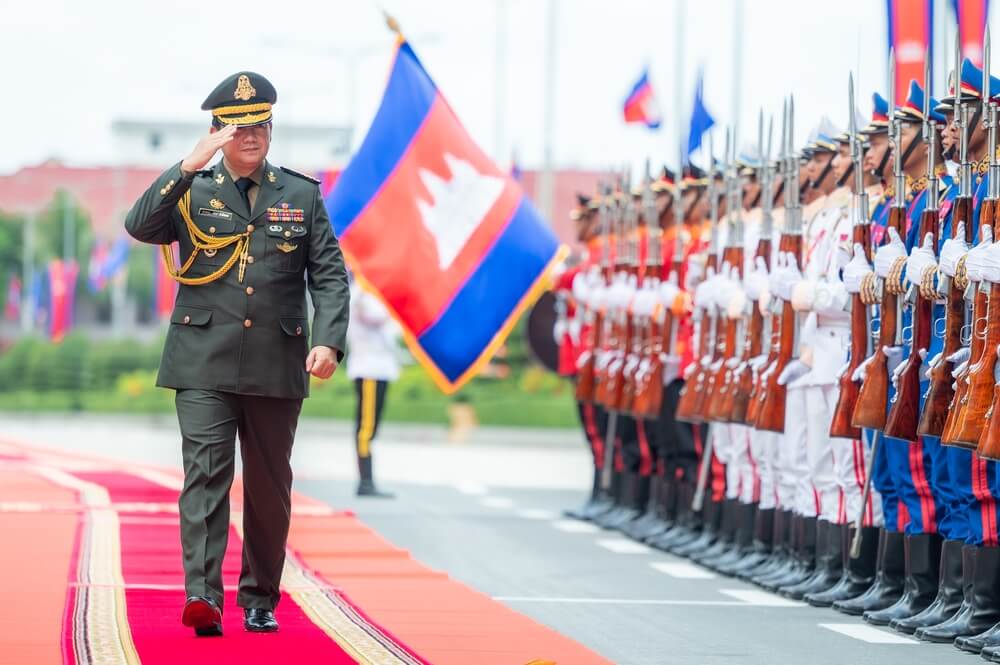 Cambodia returned the question of joint development to an international forum barely a month after Thailand had excised it from the bilateral framework - PM Hun Manet
In Thailand, the memorandum became part of a nationalist dispute with Cambodia and the legacy of Thaksin Shinawatra’s administration, under which it had been signed.
Its termination allowed Anutin to demonstrate a tougher stance towards Phnom Penh, but left Bangkok without the mechanism it had previously used to defend its insistence on addressing maritime issues bilaterally.
The government of the Cambodian Prime Minister, Hun Manet, took advantage of that omission on 2 June, when it notified Thailand and the UN Secretary-General that it was initiating compulsory conciliation – a procedure in which an independent commission hears both parties and recommends a solution, but issues no binding decision.
Bangkok initially criticised the manner of Cambodia’s announcement, before appointing its own commissioners and entering the proceedings.
It is now seeking to ensure that the scope of the proceedings remains tightly circumscribed and to prevent conciliation from facilitating resource sharing without a prior decision by the Thai government.
Cambodia, by contrast, returned the question of joint development to an international forum barely a month after Thailand had excised it from the bilateral framework.
Boundary before gas or gas before boundary
Cambodia’s proposal begins with a request for a treaty establishing a single maritime boundary delimiting the territorial sea and the maritime zones in which coastal states exercise rights over water and seabed resources.
If full agreement is not reached, Phnom Penh proposes interim joint exploitation and equitable sharing of benefits. If that agreement is likewise not attained, it asks the commission to formulate recommendations to guide subsequent negotiations.
Thailand is seeking to dismantle what the 2001 memorandum established, insisting that the boundary be settled before any discussion of resources.
Such sequencing precludes interim arrangements and immediately brings the most intractable legal and political issue to the fore.
The maritime boundary must be determined in accordance with the provisions of UNCLOS, taking into account the coastal configuration and the position of islands; each government would then be obliged to justify to its domestic public the agreed division of the disputed area.
Joint exploitation would allow determination of the final boundary to be deferred without prejudice to either party’s underlying legal claims
Joint exploitation would allow determination of the final boundary to be deferred without prejudice to either party’s underlying legal claims. Any such agreement could expressly state that exploration, licensing and revenue sharing do not prejudice the final delimitation positions of the two states. Thailand has operated a comparable arrangement with Malaysia elsewhere in the gulf for decades.
With Cambodia, the principal obstacle remains the domestic political cost of any agreement bearing a resemblance to the framework publicly rejected in May.
A proposal from the independent commission could offer Bangkok a way to adjust its stance. A phased agreement that begins boundary negotiations while simultaneously introducing an interim resource regime could be presented within Thailand as a novel, internationally mediated settlement.
Cambodia would gain the ability to commence offshore exploration before definitive delimitation, while fully preserving its sovereign claims.
If it wishes to conclude an agreement, Anutin’s administration will need to base it on a new legal instrument and convince the public that it is not reviving the memorandum it has already terminated.
The Timor precedent under more difficult conditions
Compulsory conciliation under UNCLOS has so far been concluded only in the Timor-Leste v Australia dispute. Timor-Leste initiated proceedings in 2016, Australia contested the commission’s competence, and on 6 March 2018 the two countries signed a treaty on permanent maritime boundaries and revenue-sharing from the Greater Sunrise gas field.
Over several months of structured discussions, the commission proposed compromises and helped translate contentious issues into a text acceptable to both governments.
The situation is further complicated by recent clashes along the land border and the domestic political climate in both countries
That precedent provides the commission with an established working method, but the political conditions in the Gulf of Thailand are far more challenging.
Australia and Timor-Leste agreed to negotiate through conciliation on all disputed questions. Cambodia and Thailand, however, diverge from the outset on both the scope of discussions and the sequencing of issues to be determined.
The situation is further complicated by recent clashes along the land border and the domestic political climate in both countries, where accepting the commission’s recommendations could easily be portrayed as an unacceptable concession.
A new negotiation framework is the most realistic outcome
Agreement on the final maritime boundary within the commission’s timeframe seems unlikely. Twenty-five years of failed talks, disagreement over whether to determine a maritime boundary first or agree on joint exploitation, and the political benefit both governments have derived from adopting robust positions will not dissipate after a single meeting in Singapore.
Exploration can begin only once the area, regulatory authority, fiscal rules, division of costs and revenues, choice of operator, and dispute resolution mechanisms have been settled.
The commission is likely to attempt to revive the framework that lapsed on 5 May. An acceptable formula could separate work on the northern sector of the boundary from the interim management of the southern zone, establish deadlines, and confirm that joint activities do not prejudice the final delimitation.
Such a solution would not resolve all the issues that Cambodia seeks to address in a single treaty, but it would provide both governments with a tangible outcome they could present domestically as a success.
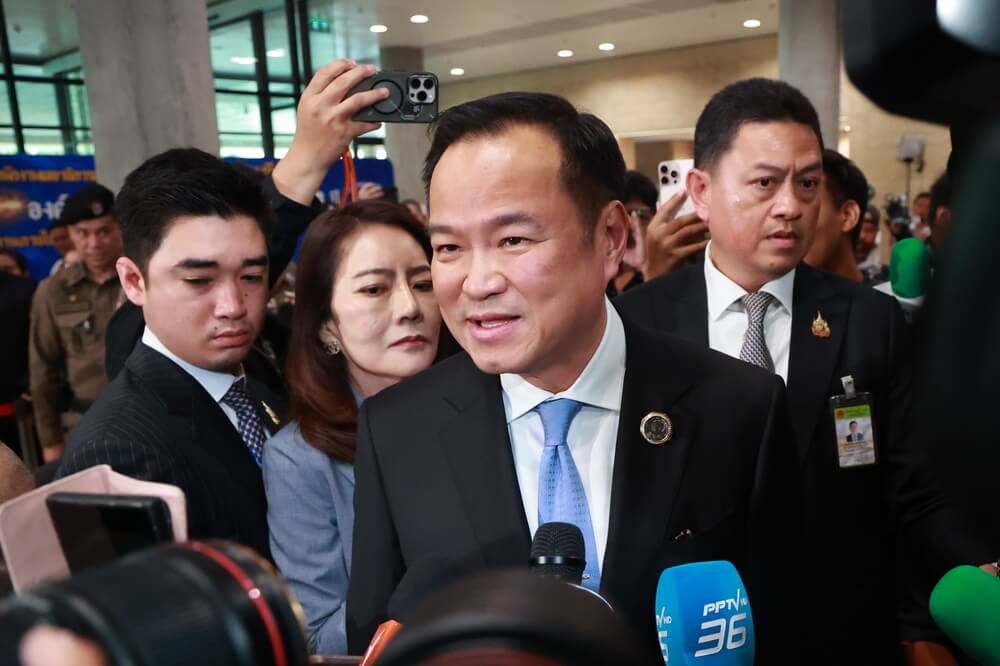 Bangkok has preserved its primary legal safeguards, as the commission has no authority to impose a boundary on it - PM Anutin Charnvirakul
A report from the commission that merely records a failure to reach agreement would carry no such political utility. If Bangkok maintains its position that resource talks cannot precede delimitation, the commission will most likely conclude by issuing reasoned recommendations, after which the two governments would return to the negotiating table without any obligation to accept the findings.
A phased approach would create the conditions for a practical result: an agreement setting out who negotiates, in what sequence, to what deadlines and under what terms of reference, long before extraction infrastructure is deployed.
By initiating the procedure, Cambodia has already secured a limited political advantage, compelling Thailand, following its termination of the bilateral memorandum, to return to an internationally convened process.
Bangkok has preserved its primary legal safeguards, as the commission has no authority to impose a boundary on it.
These respective positions leave sufficient scope for a procedural compromise, provided the commission can structure it so that Phnom Penh can claim to have broken the deadlock, while Bangkok can point to an entirely new process that does not reinstate the terminated memorandum.
Over the coming year, the commission will focus on agreeing a roadmap for ongoing dialogue, including the sequencing of agenda items and procedural timetables.
The principal achievable outcome would be a formal commitment to sustained negotiations, while substantive decisions on the maritime boundary and commercial exploration are deferred.
Negotiations would thereby regain momentum without either party being seen to abandon its established position.
A comprehensive settlement will require considerable time; without such an interim framework, even a meticulously reasoned report would leave the dispute trapped in the very impasse from which Cambodia has sought to extricate itself.
