The European Group of Five (E5) defence ministers' meeting, held in Krakow on 20 February, focused on how to turn the political agreement on strengthening European security into an operational capability that is measurable, sustainable, and fully aligned with NATO structures.
The discussion focused on capacities, industries, and obligations arising from the current security environment.
The European Group of Five consists of France, Germany, Italy, Poland, and the United Kingdom.
Together, these countries account for the largest share of the European military budget, industrial production in the defence sector, and combat capabilities.
NATO's presence at the meeting, through the participation of Deputy Secretary General Radmila Shekerinska, as well as the European Union, represented by High Representative Kaja Kallas, gave the talks an institutional framework that extends beyond the informal nature of the E5 format.
In its official statements after the meeting, NATO reaffirmed that the Alliance remains the fundamental framework for collective defence, with the expectation that European members will contribute more significantly through their own capacities.
In Krakow, Ms Shekerinska spoke about strengthening deterrence, increasing defence investments, and accelerating support for Ukraine.
The message was that strengthening European capabilities is part of the same security system, not an alternative approach.
The European Union added a political dimension to this framework. Kaja Kallas emphasised that the goal is to strengthen Europe within NATO while assuming a greater share of responsibility for the continent's security.
This position reflects the recognition that Europe is expected to take greater responsibility in areas requiring continuous military, industrial, and institutional involvement.
Lessons from Ukraine
The E5 joint statement, adopted in Krakow, affirms NATO as the basis of collective defence while also insisting on greater European responsibility.
This responsibility is defined in the document through increasing the readiness of forces, strengthening military capabilities, enhancing the resilience of societies and institutions, and the industrial dimension of defence.
In accordance with NATO capability requirements, special emphasis was placed on increasing the production capacity of the European defence industry, shortening delivery times, and reducing the cost of certain categories of weapons.
This approach stems from recent experience. The war in Ukraine has shown that modern conflicts depend not only on the technological level of systems but also on the ability to provide sufficient quantities of equipment and ammunition over a prolonged period.
The massive use of drones and missiles creates continuous pressure on defence systems, especially air defence.
The current model of air defence is barely sustainable when expensive interceptors are used against large numbers of cheap targets
The launch of the LEAP (Low-Cost Effectors and Autonomous Platforms) initiative should be seen in this context.
The E5 joint statement notes that the aim of this initiative is to cooperate on the development and joint procurement of systems that can deliver military effect at a lower cost while contributing to NATO deterrence and collective security.
The focus is on air defences and autonomous systems capable of responding to mass threats, particularly drones and missiles.
The UK government specified in its announcement that LEAP includes the development of a new land-to-air system that is simple, financially accessible, and rapidly deployable.
It was emphasised that the programme draws on experiences from the Ukrainian battlefield and that its goal is accelerated development and introduction into service. The first joint projects are planned for delivery by 2027.
It was made clear in Krakow that the current model of air defence is barely sustainable when expensive interceptors are used against large numbers of cheap targets, raising the question of how to organise the joint production and procurement of systems adapted to such threats.
Logistics, hubs, and support for Ukraine
The political significance of the LEAP initiative lies in its attempt to reduce the disparity between the low-cost means of attack, such as drones and missiles, and the significantly higher cost of their defence, especially in anti-aircraft systems.
During the meeting, Poland highlighted the operational dimension of this approach.
Official statements underlined the role of logistics infrastructure and key hubs for allied support to Ukraine.
In this context, Polish Minister of Defence Władysław Kosiniak-Kamysz pointed to the role of Rzeszów, a city in south-east Poland, as a key logistical hub for the delivery of military aid to Ukraine.
Another important aspect of the discussion concerned hybrid threats. This topic was addressed considering increased activities involving cyber-attacks, sabotage, and other forms of action below the threshold of open conflict.
Such activities aim to weaken social resilience and the functioning of key systems, as noted by Kaja Kallas.
The E5 joint statement stresses the need to strengthen early warning mechanisms and coordination between NATO and the EU.
NATO remains the framework for collective defence and military planning
The document does not envisage the establishment of new structures, but rather a more efficient use of existing instruments.
NATO remains the framework for collective defence and military planning, while the European Union is expected to contribute through its instruments to strengthening resilience and removing regulatory obstacles in the field of defence.
Ukraine was a constant topic of discussion. The E5 joint statement affirms that Ukraine's ability to defend its sovereignty is crucial for Euro-Atlantic security and that strong Ukrainian armed forces are a fundamental security guarantee in times of peace.
According to documents from Krakow, support for Ukraine continues through coordination within the Ukraine Defence Contact Group, with the participation of NATO and the EU, with a particular emphasis on air defence and the urgent delivery of systems from existing stocks.
The E5 joint statement also referenced the Western Balkans, emphasising the coordination of efforts and support for the region's Euro-Atlantic integration in conjunction with NATO and EU initiatives.
This wording highlights the security significance of the region within the broader European context.
From industrial capacity to strategic deterrence
The meeting in Krakow signalled a shift in European security discussions towards issues of industrial production, availability, and resilience.
LEAP will be the first programme to test whether European states can turn shared political objectives into functional and sustainable defence capabilities.
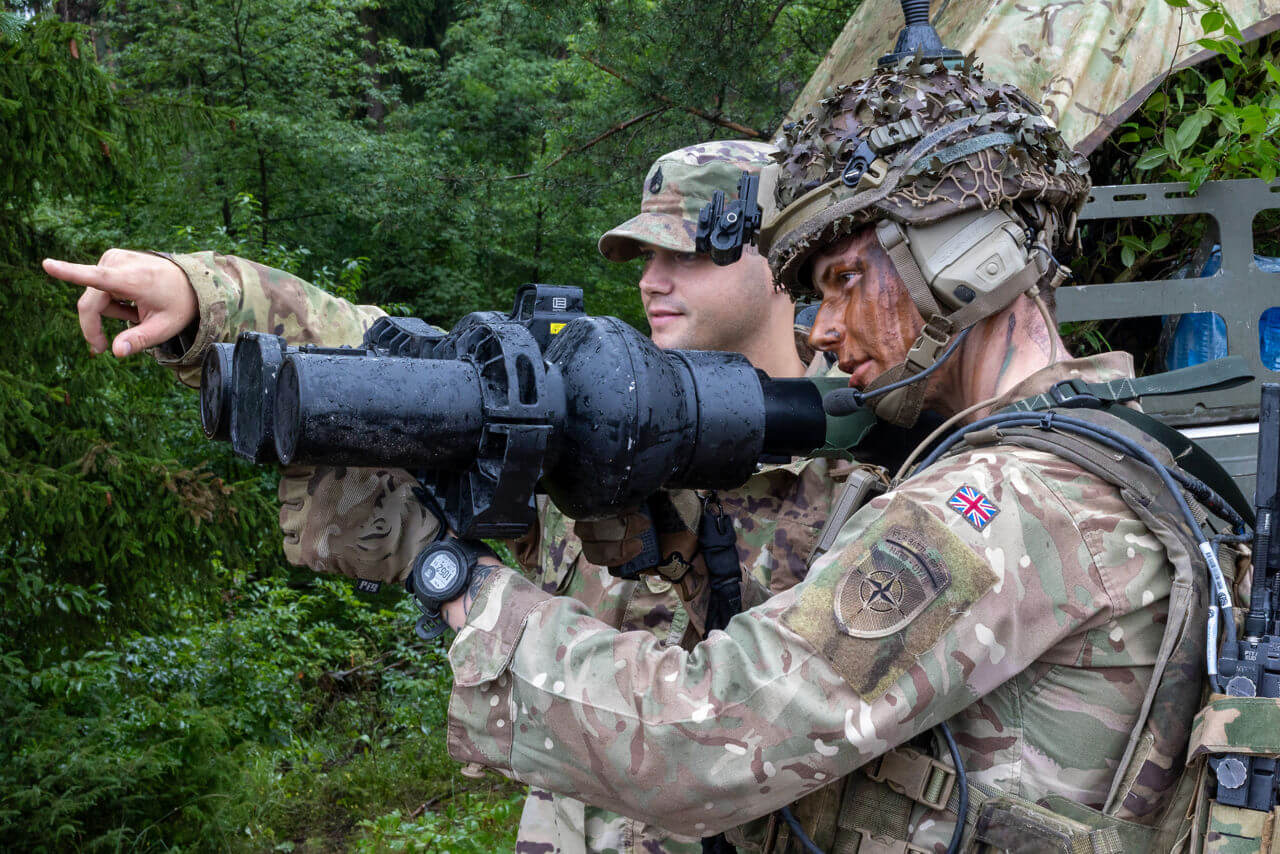 LEAP will be the first programme to test whether European states can turn shared political objectives into functional and sustainable defence capabilities
If this programme leads to standardised systems that are deployed in significant quantities, Europe will, for the first time since the Cold War, possess an instrument that directly enhances the sustainability of NATO deterrence without relying on American industrial bases.
For NATO, the outcome of this process has a clear strategic dimension. The alliance faces a security environment in which adversaries rely on attrition rather than rapid escalation.
In such circumstances, deterrence is measured not only by the ability to respond to an initial strike but also by the capacity to sustain that response over days and months.
If European members fail to provide sufficient quantities of affordable air defence systems and autonomous platforms, the burden will inevitably shift back to the US, with political consequences already evident in Washington.
The EU has financial and regulatory tools, but without clear political prioritisation, they remain slow and fragmented.
If Brussels does not use LEAP as a lever to remove regulatory barriers, accelerate joint procurement, and genuinely connect national industries, European security policy will remain reliant on ad hoc solutions.
The alternative would be that, for the first time, the EU uses its economic weight as a security multiplier, not merely as a political framework.
Finally, the implications of the Krakow talks extend beyond Ukraine. They concern Europe’s long-term positioning in a world where wars are fought on a massive scale, are technologically adaptive, and are economically draining.
If Europe emerges from this process with real capabilities, rather than just improved coordination, it will strengthen its position within NATO and reduce its strategic vulnerability.
