Nickolay Mladenov, the former Minister of Foreign Affairs of Bulgaria and former UN Special Coordinator for the Middle East Peace Process, now the High Representative of the Board of Peace for Gaza, confirmed that the Board remains committed to the phased plan to disarm Hamas and withdraw the Israeli army, a day after Benjamin Netanyahu rejected the 15-point document at a session of the Israeli government.
Under that model, disarmament is verified in parts of Gaza, and the IDF then withdraws from any area where the process is confirmed to be complete.
Netanyahu wants the opposite sequence and insists that Hamas must be completely disarmed before the IDF begins its withdrawal.
Whether Trump’s plan can move from political agreement to actual implementation now depends on that sequence.
Israel does not dispute the goal of leaving Hamas without military infrastructure and without the ability to re-establish armed rule in Gaza. The dispute concerns when Israel must fulfil its part of the deal.
Hamas has accepted a framework that links disarmament and Israeli withdrawal through successive, verifiable steps. Netanyahu wants each commitment completed before the next begins.
The Board of Peace must now prove that it can implement the agreement even in the face of Israeli opposition.
The dispute concerns the sequence of disarmament and withdrawal
The 15-point document was not assembled in a few days at the end of July. Its preparation took months, through talks with Hamas and other Palestinian factions in Cairo and Istanbul, alongside parallel consultations with the Israeli side.
The plan sets out the framework that the UN Security Council endorsed at the end of 2025.
Hamas and other armed groups must relinquish their military and police roles, their military infrastructure must be dismantled, and their weapons permanently decommissioned under international verification.
Civilian administration is to be taken over by a Palestinian technocratic committee, while the International Stabilization Force would enter areas from which the IDF is withdrawing.
The phased model emerged from a problem that has blocked negotiations for months, as neither Hamas nor Israel is prepared to be the first to surrender major leverage without immediate reciprocity.
Once disarmament is verified in a particular sector, Israeli units are to leave that area, after which the international force and the new Palestinian police assume security responsibilities. The same procedure would then be repeated in the next section of Gaza.
The Security Council has now written the link between demilitarisation and Israeli withdrawal into the mandate governing the new administration in Gaza
The Security Council has now written the link between demilitarisation and Israeli withdrawal into the mandate governing the new administration in Gaza.
Netanyahu is now calling for that relationship to change. His demand covers both heavy and light weapons and entails the complete disarmament of Hamas before any substantial IDF withdrawal.
For Hamas, this would mean relinquishing its remaining military leverage while the Israeli army remains in place.
The mediators designed the phased system precisely to avoid such a scenario. If that part changes, it will require a new Palestinian agreement to terms significantly stricter than those to which Hamas has already responded positively.
Hamas accepted the framework, not every detail
In late July, Trump announced that Hamas and other Palestinian armed groups had accepted complete disarmament. Hamas’s own wording is more cautious.
Its representatives speak instead of storing weapons, decommissioning them and dismantling military infrastructure under Palestinian and international supervision.
They avoid agreeing to hand over their arsenal to Israel or any other non-Palestinian party and insist that Israel’s obligations be fulfilled alongside their own.
There is agreement on what Gaza should look like after the war, but the method of implementation is still being negotiated
The difference became sharper when the Board of Peace subsequently announced that the obligation also covered small arms, and when an interpretation emerged that Israeli withdrawal would only follow the completion of disarmament.
Hamas responded that it was bound only by the text it had accepted, and Mladenov again outlined a phased model in which verified disarmament in a given area would pave the way for Israeli withdrawal from that same area.
Hamas’s acceptance therefore did not conclude negotiations on the details of implementation. There is still no final agreement on the volume of small arms that must be surrendered or deactivated, on the detailed timetable for the IDF’s withdrawal, on the composition of the verification teams, or on the procedure to follow if one side accuses the other of failing to meet its commitments.
There is agreement on what Gaza should look like after the war, but the method of implementation is still being negotiated.
Israel is challenging the plans of the institution it joined
The Board of Peace carries more weight than an ordinary group of US mediators. Trump formalised its structure at the beginning of the year, Israel joined as a founding member, and the Security Council had previously accepted the Board as an interim framework for managing the transition in Gaza.
Resolution 2803 authorised the International Stabilisation Force (ISF) and linked Israeli withdrawal to progress on demilitarisation. The mandate of this system lasts until the end of 2027.
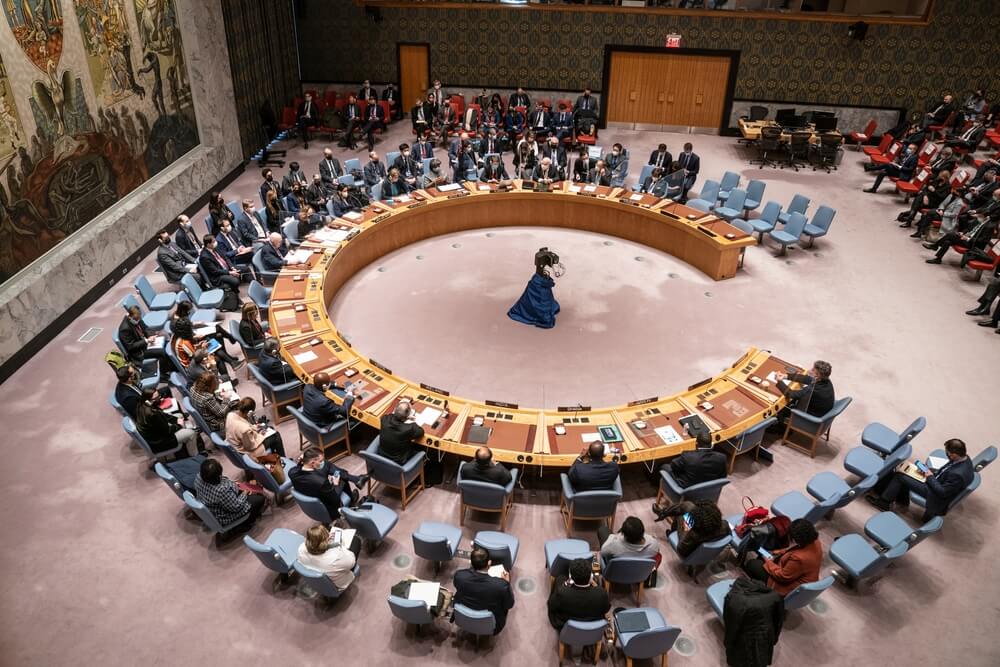 Resolution 2803 authorised the International Stabilisation Force (ISF) and linked Israeli withdrawal to progress on demilitarisation - UN Security Council
Membership, of course, does not deprive the Israeli government of its right to reject an operational document it considers unfavourable. The problem for the Board arises if, whenever one party rejects the agreement, the basic procedure is changed at that party’s request.
In that case, it can hardly act as a body that implements the agreement. It remains a US-sponsored negotiating forum, while the most difficult decisions still depend on how much pressure Washington is willing to exert on parties that refuse to make commitments.
This is especially awkward for Trump because of the way the Board is presented. The body is meant to turn the political power of the United States, reconstruction funding and the support of regional states into an enforceable arrangement.
The dispute with Netanyahu now shows how far Trump is truly willing to pressure Israel when the Israeli government judges that the US plan calls for withdrawal before Hamas is completely disarmed.
An international force is not yet ready
Netanyahu’s request also has a practical basis that exists independently of the election campaign. The International Stabilization Force, which is supposed to enter areas from which the IDF is withdrawing, does not yet have the capacity to deploy rapidly throughout Gaza.
The Board is preparing a logistics base near Kerem Shalom, and some countries have offered soldiers, planners, or medical personnel, but a more substantial deployment will still take time.
For Israel, it is crucial who controls the area the day after its troops depart
For Israel, it is therefore crucial who controls the area the day after its troops depart. Someone has to prevent the return of armed Hamas members, secure warehouses, protect the new civilian administration, and oversee the local police.
If an international force is not ready to take on those tasks immediately, a phased withdrawal appears, for the Israeli government, to mean accepting a concrete risk in exchange for a system that is not yet fully operational.
Negotiations are likely to focus on that issue. The Board can increase the number and powers of verifiers, require the physical presence of international forces before any Israeli move, and lengthen the interval between confirmed disarmament and IDF withdrawal.
Such changes would provide Israel additional security guarantees, while preserving the principle that Israeli withdrawal occurs in parallel with progress on disarmament.
The election makes compromise harder
Israel will hold parliamentary elections on 27 October, the first national elections since the Hamas attack of 7 October 2023. According to current surveys, Netanyahu’s coalition does not have a secure majority, and right-wing partners can use any concession in Gaza against him.
Bezalel Smotrich, Israel’s finance minister and leader of the far-right Religious Zionism party, has already supported the rejection of the roadmap and is demanding that the Israeli army not withdraw until Hamas is fully disarmed.
Netanyahu can hardly accept images of Israeli units leaving their positions while Hamas still possesses light weapons
In such a campaign, Netanyahu can hardly accept images of Israeli units leaving their positions while Hamas still possesses light weapons. Opponents to his right would present this as a withdrawal under American pressure before the war’s objective had been achieved.
The election therefore increases the cost of any compromise and encourages Netanyahu to set publicly stricter conditions than might be necessary for a technical deal with the Board.
Even after the elections on 27 October, Israel’s attitude towards the disarmament of Hamas will not change significantly. After the 2023 attack, there is little political scope for a deal that would leave Hamas with the possibility of rearming.
That is why the demand for a permanently demilitarised Gaza goes far beyond Netanyahu’s pre-election calculations. The campaign is now further narrowing his scope for concessions, but the basic security requirement remains the same regardless of who forms the next government.
Washington must now protect its own agenda
Negotiations are likely to continue in the coming weeks on the terms of implementation and on how to incorporate Israeli security requirements into the phased system.
Fully accepting Netanyahu’s condition would create a serious problem for the mediators, as Hamas would have to fulfil most of its commitments before seeing a corresponding Israeli move.
By contrast, the demand that the IDF withdraw without a credible international presence in the areas it leaves is unlikely to gain support from the Israeli government.
The mediators are most likely to propose stricter verification, the physical arrival of international forces before any withdrawal, and clear rules in the event of a breach of the agreement.
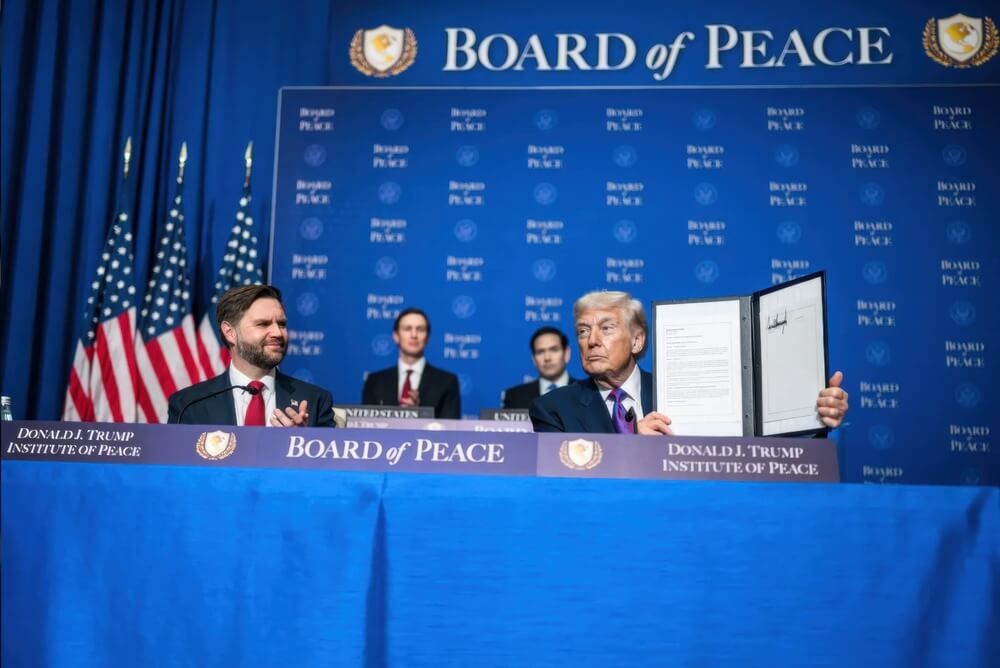 If Washington provides a credible international force and preserves the link between verified disarmament and Israeli withdrawal, the roadmap can still be implemented
Such a formula would allow Netanyahu to claim that the IDF is not leaving any area without a firm security replacement, while Hamas would preserve the basic principle that Israeli withdrawals take place while the disarmament process is ongoing. Much will depend on how quickly the Board can make the ISF operational on the ground.
If that does not happen, Trump will have to choose between changing his own roadmap and openly pressuring Netanyahu.
Amending the document would show Hamas and Arab mediators that US acceptance of the agreed text does not guarantee its terms will remain unchanged, while pressuring Netanyahu would risk a direct conflict with the Israeli prime minister in the middle of the election campaign.
Delay also comes at a cost, because a phased plan can work only as long as both parties believe that each fulfilled commitment will immediately produce a corresponding move by the other.
The Board of Peace was established to translate commitments from negotiations into action on the ground.
If Washington provides a credible international force and preserves the link between verified disarmament and Israeli withdrawal, the roadmap can still be implemented.
If Netanyahu succeeds in securing full disarmament before withdrawing, the plan will have to return to negotiations with Hamas.
If months pass without agreement on the sequence and without an operational international force, the Board may retain its members, mandate and political support, but without evidence that it can implement the agreement it brokered.
