The pro-European President of Moldova, Maia Sandu, provoked a wave of reactions from conservative politicians at home when she recently stated that she would vote for her country to join neighbouring Romania in a possible referendum.
Furthermore, President Sandu focused on an option that was until recently unthinkable in Europe – changing the borders of sovereign states.
However, this topic has already been raised by much larger and more influential countries than the small Eastern European state situated between Romania and Ukraine.
Russia’s aggression against Ukraine is precisely such an attempt, as are Donald Trump’s aspirations to annex Greenland to the US, even though the island is part of Denmark, a member of the EU and NATO.
Moldova, a former republic within the Soviet Union, has been a politically troubled area for years. Russia sees it as part of its sphere of influence, like other ex-Soviet republics in the region.
Since the start of the aggression against Ukraine, Moscow has not hidden its aspirations to militarily subjugate Moldova or at least to draw it into its own political orbit through a proxy government in the capital, Chisinau, which it has been persistently trying to establish.
In this endeavour, Moscow benefits from the unresolved status of the Transnistria region, a narrow strip between Ukraine and Moldova, where about 30% of the population is Russian and seeks state independence and separation from Moldova.
The dispute over Transnistria is a typical frozen conflict, of which there are many around Russia. These always give Moscow the opportunity to keep the area in question—either in Georgia, Ukraine, Armenia, or Moldova—in a state of extreme instability and under constant threat of military intervention.
A constant political topic
Maia Sandu is aware that her ambition, which she expressed in a British podcast, is not particularly achievable at present, admitting that she’s aware that the majority of Moldovans do not support unification with Romania.
This issue has remained on the political agenda ever since Moldova gained independence in 1991, sometimes less, sometimes more pronounced. In fact, a significant number of Moldovans support the idea – never less than 30% – but most remain uncertain.
The idea of unification with Romania has strong historical roots
The idea of unification with Romania has strong historical roots. Moldova was part of Romania from 1918 to 1940, and its citizens speak the same language as Romanians, although, unlike them, they use the Cyrillic alphabet rather than the Latin alphabet.
The pro-Russian opposition in Moldova has attacked the president for "national treason" and violation of the constitution, claiming she wants to undermine the country's sovereignty with this idea.
However, no matter how distant the idea President Sandu mentioned may seem, it serves to warn both Europeans and Moldovans of the still high risk of external Russian aggression.
Desperate defensive move
Hence, the decision to join Romania would likely be a last resort and a desperate move if possible Russian intervention becomes certain.
Moldova, with great difficulty, escaped the grip of a powerful Russian hybrid operation aimed at replacing the pro-European government and president with Moscow loyalists.
A narrow majority of 50.4% decided in 2024 that the country should pursue EU membership. This pro-European momentum was subsequently confirmed by the new presidential mandate of Ms Sandu, and shortly afterwards by the victory of pro-European forces in the parliamentary elections.
The European Union itself acknowledged that Moldova is under Russian pressure
The European Union itself acknowledged that Moldova is under Russian pressure and, in June 2022, granted it candidate status and opened accession negotiations two years later.
Although EU membership is currently the only realistic framework for Moldova’s progress, the prospect of possible unification with Romania takes on new significance in the context shaped by the decisions of major players, primarily Russia and the US.
When changing borders becomes permissible
Although the aggression against Ukraine has seriously violated the international order based on the inviolability of the borders of sovereign states, Russia has reason to hope that its four-year invasion will still bring territorial gains at Ukraine’s expense. Washington is inclined to allow Russia to receive four eastern Ukrainian regions in the peace negotiations.
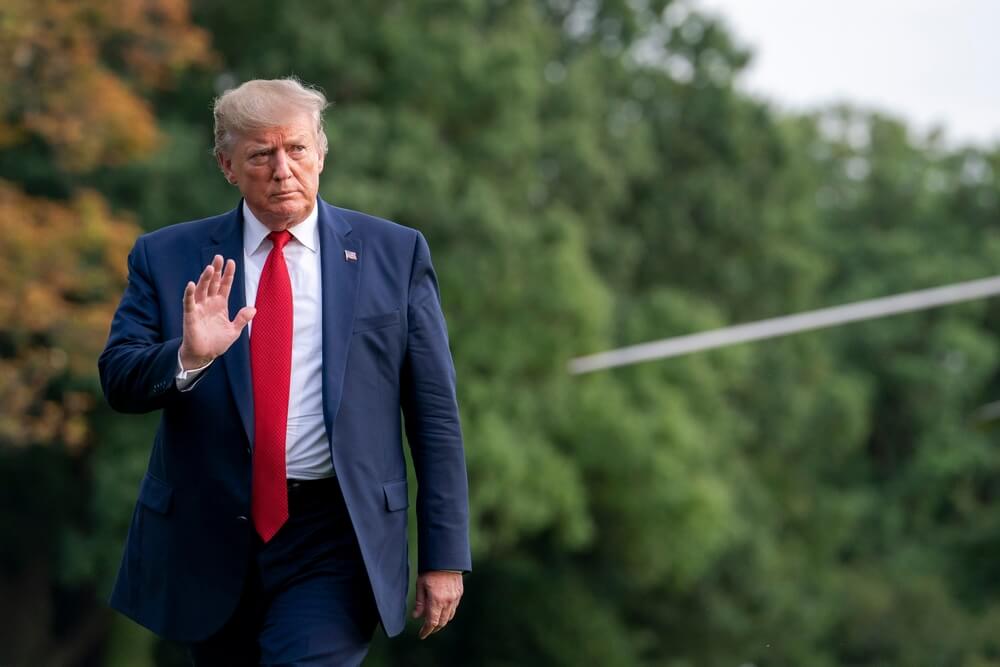 Changing borders is no longer taboo or a punishable practice; on the contrary, it has become part of regular political discourse - Donald Trump
Moreover, the order of state sovereignty and the inviolability of borders is also severely violated by the other party – the United States, whose president is demanding that Greenland become part of America.
Changing borders is no longer taboo or a punishable practice; on the contrary, it has become part of regular political discourse and an issue that further relativises the current international order.
Maia Sandu’s statement, therefore, has broader significance beyond the local context, as it hints at what the world may face if it becomes a stage where changing the borders of sovereign states is permitted.
The case of Moldova is the mildest in this respect, as it would require a prior democratic decision by the majority of the population, provided that neighbouring Romania has similar aspirations. Mutual consent to such a solution would certainly be a necessary condition for its implementation.
However, such an option would undoubtedly encourage many other regions around the world, including in Europe, to act similarly. It would be especially welcomed by separatist movements, which would see the Moldovan case as an opportunity and a desirable precedent.
The climate created by major crises, such as the Ukrainian one or the situation regarding Greenland, is deadly for the stability of the international order, which for decades since WWII was based on the principle of the inviolability of state borders and their sovereignty.
Sovereigntist policy in Washington, paradoxically, becomes its opposite by relativising the sovereignty of nations and states to the extreme, and even their abolition.
