The most serious protests to shake Iran in recent years, and brutally put down last week, echo events that triggered the 1979 Iranian revolution and brought the current regime to power.
In 1978, Iranian militants set fire to the Rex Cinema in Abadan, and more than 400 people died. Then as now, there was a blame game between a threatened regime and its opponents over who was responsible.
The Islamic movement was able to capitalise on the confusion and eventually prevail the following year.
Iranian authorities have been blaming foreign-backed agitators for instigating violence in the recent protests and said this week that “sedition is over now”.
More than 3,000 people died, according to Iranian state TV this week. The number of confirmed deaths is 4,519, says the Human Rights Activists News Agency, a toll that is likely to rise as more information trickles out amid an internet blackout.
Few Iranians and analysts believe this is the end of the story. The Islamic regime appears entrenched for now, but anger continues to simmer over a collapsing economy and political repression.
The Iranian revolution that brought the Islamic clerics to power took more than a year of protests to reach fruition, and many Iranians who hope for another regime change are in for the long haul.
Locked and loaded, but no further action
Much may depend on how Washington chooses to proceed. Media commentators, including notably in Israel, said the US president had lived up to his moniker TACO - Trump Always Chickens Out - after failing to follow through with direct military threats against Tehran.
Trump had said on 2 January that the US was “locked and loaded” to protect Iranian demonstrators whom he encouraged to take over government institutions. He also posted on social media that “HELP IS ON ITS WAY”.
By this week, as the regime reestablished its control over the country, he was saying “We hope there’s not going to be further action.” But Trump did not rule out military action, telling CNBC on 21 January, “They gotta stop with the nuclear.”
Does Washington want regime change, or would it be content with completely eradicating Iran’s nuclear programme?
Iran’s nuclear ambitions appear intact, although its programme suffered a serious setback after Israel launched a 12-day war on Iran last June that was backed up with US air strikes.
Iran has defiantly warned against any further US aggression, and the country has “no qualms about firing back with everything we have if we come under renewed attack,” Abbas Araghchi, foreign minister, said in a Wall Street Journal op-ed on 20 January.
US media reports say Trump was presented with strike options on 13 January, but on 14 January, Trump had decided to hold back
US media reports say Trump was presented with strike options on 13 January, including strikes on Iranian regime targets around the country launched from US warships and submarines. But on 14 January, Trump had decided to hold back.
Several factors appeared to have weighed in his decision to refrain from strikes, which alone might not have led to regime change, which is likely to require military support and assistance on the ground.
Some US officials believed the military was not ready to help the protestors given that many US forces and assets were moved to the Caribbean and East Asia. Israel and several Gulf countries warned the US president they feared Iranian retaliation while there was reduced US firepower in the region.
There was also a diplomatic backchannel in which Araghchi texted US Steve Witkoff to say Iran was backing away from planned executions of Iranian protestors and would stop the killing, according to reports.
US officials have told US media they hope the communication, some of which may have been assisted by a third party such as Russia or Oman, may develop into further talks.
Regional powers move closer as US hesitates
A likely more lasting development to emerge from the diplomatic flurry is the desire of several countries in the region to seek closer defence ties.
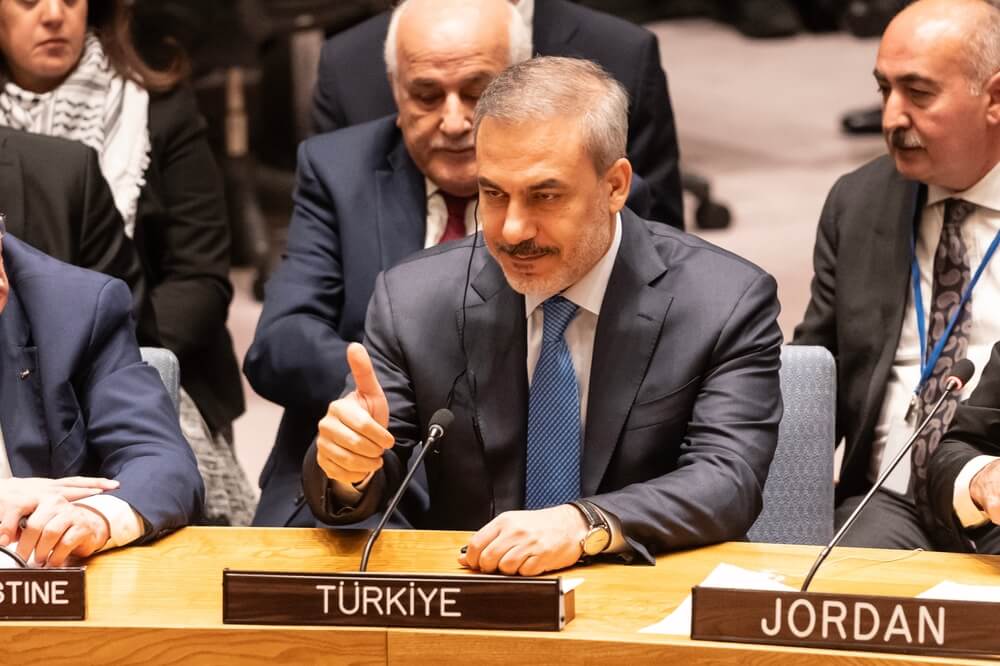 Stability in the region can only be achieved by its lead countries - Hakan Fidan
Hakan Fidan, Turkey’s foreign minister, said Turkey had held talks on deepening defence relations with Saudi Arabia and Pakistan, which formed their own mutual defence pact last year. “Stability in the region can only be achieved by its lead countries,” he said.
Given Washington’s crowded foreign agenda from Greenland to Venezuela, as well as Trump’s aversion to entanglements involving boots on the ground, ousting the mullahs in Iran may take a back seat.
“The objective is not regime change in the classical sense but strategic submission, compelling Iran’s leadership to accept permanent constraints on its nuclear ambitions, a narrowed regional role, and the reality that the US is prepared to escalate abruptly if its red lines are crossed,” wrote Sanam Vakil of Chatham House.
The USS Abraham Lincoln carrier group is heading to the region, according to reports, although the US Navy says it cannot comment on future naval operations.
But Iranian protestors already feeling betrayed by Trump may not want to raise their hopes of any further US support for now.
