Many analysts try to compare the war in the Persian Gulf with the war in Ukraine. Despite the obvious differences between these conflicts, there are certain parallels.
This comparison is insufficient if it ends there. The key issue is not the similarity, but that the war against Iran is already changing the conditions under which the war in Ukraine is being waged, through the reallocation of resources, shifting priorities, and pressure on defence systems.
The key difference is that the Israel-US strike on Iran had a clear strategic objective: the neutralisation of Iran’s nuclear and missile programmes.
This objective is clearly defined militarily, but its political effects remain uncertain.
Thus, the purpose of the operation was not only to destroy production facilities but also to possibly seize enriched materials.
This means that the operation was not only a degradation of capacity, but also an attempt to resolve the problem entirely, which was clearly not achieved.
According to Washington and Tel Aviv, a significant part of Iran's nuclear and missile capabilities has been damaged and degraded, but not destroyed, as confirmed by continued operational activities and the ability to launch missiles.
Experts noted the extremely high cost of interception: in some cases, six to eight air defence missiles were required to destroy a single ballistic missile.
This cost ratio changes the nature of the conflict. Offensive systems remain inexpensive, while defence consumes significantly more costly resources.
This turns the conflict into a process of attrition, where the outcome depends on the capacity to sustain defence in the long term, not merely on technological superiority.
In such conditions, prolonged engagement in the Gulf inevitably affects the availability of these systems for Ukraine.
Although some leaders were killed, no power vacuum emerged – they were quickly replaced by new, even more conservative figures.
This shows that eliminating the leadership does not necessarily destabilise the system but can instead lead to its further consolidation.
Thus, for Israel, the main objective was the destruction of Iran’s nuclear and missile programmes.
It is important to distinguish between the goal and the result: the military effect has been partially achieved, but the political effects remain limited.
Russia’s goals and strategy in its war against Ukraine
Russia’s attack on Ukraine aimed to eliminate Ukrainian statehood.
Unlike the operation against Iran, the Russian strategy has no time limit and relies on the long-term exhaustion of its adversary.
Moscow began to generate significantly higher revenues
After the partial loosening and adjustment of sanctions on Russian oil exports during the crisis in the Persian Gulf, Moscow began to generate significantly higher revenues, and the rise in energy prices further increased these revenues and reduced the pressure previously created by the sanctions.
This directly extends Russia's ability to wage war without the need for compromise.
Escalation in the Persian Gulf and the role of missiles and drones
In response to long-range strikes, Iran actively deployed ballistic missiles and attack drones.
In this segment, Iran adopts the model of mass deployment of inexpensive systems that has already been tested in Ukraine.
After losing most of its air force and missile capability, Iran has increasingly relied on attack drones with ranges of up to 2,000 km, causing damage to infrastructure in Gulf states, primarily oil and gas processing facilities.
These systems create a disproportionate effect because they force the adversary to use significantly more expensive defensive measures.
Ukraine is becoming a source of knowledge and operational experience, not just a recipient of aid
Thus, the price-to-volume ratio becomes a key factor, more important than individual technological advantages.
Washington underestimated the threat posed by Iranian drones.
This is not merely a tactical error but indicates that Western doctrines are lagging behind a reality dominated by cheap, scalable systems.
Currently, 11 countries in the region have approached Kyiv to request Ukrainian interceptor drones and operator training.
This marks a turning point: Ukraine is becoming a source of knowledge and operational experience, not just a recipient of aid.
Its experience in the war against Russia is now being used as a model for defending against similar threats.
Geopolitical consequences
The war in Ukraine could end relatively quickly if peace negotiations between Kyiv and Moscow, mediated by Washington, are successful.
In the current circumstances, this scenario is becoming less likely.
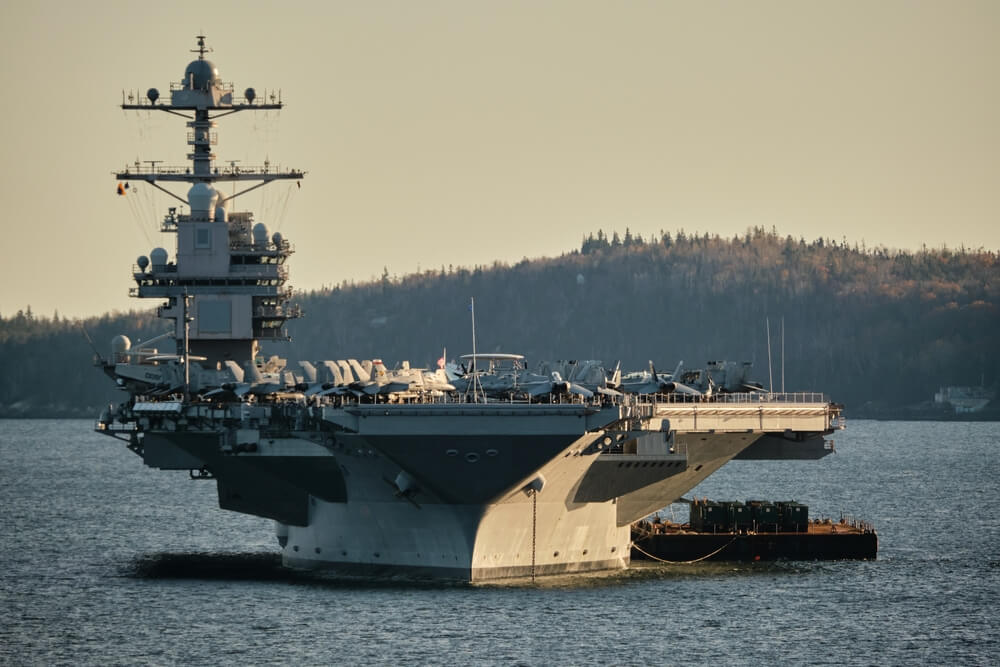 In the coming months, Washington's priority will be to stabilise the situation in the Gulf, creating opportunities for Russia to consolidate its positions
The United States is increasingly focused on challenges in the Gulf and other regions, reducing its political and operational capacity to actively manage the process in Ukraine.
In the coming months, Washington's priority will be to stabilise the situation in the Gulf, creating opportunities for Russia to consolidate its positions.
Europe will face increasing responsibilities without sufficient capacity, Russia will gain more time and financial flexibility, while Ukraine will lose priority in Western planning and become further embroiled in a war of attrition.
If these trends persist, the outcome of the war in Ukraine will not depend on a single decision or offensive, but on the cumulative effect of external crises that alter the allocation of resources and political attention.
Oleksandr Levchenko, a former Ukrainian diplomat, is a professor at the State University (Kyiv) and a member of the Academy of Geopolitics and Geostrategy (Kyiv).
