Anti-racism campaigners staged a vigil this week for Jason Arday, a black academic found dead at his home after what his mourners claim was a relentless campaign of press harassment that targeted his life and career.
The 41-year-old, who became the youngest ever black professor at Cambridge University when he was appointed in 2023, had been the subject of multiple articles and opinion pieces in the UK press in recent weeks focused on plagiarism allegations that he faced.
The controversy threw up some pressing questions for both the media and academia. Would Arday have been subjected to such intense press scrutiny had he been white? And was he over-promoted by Cambridge to serve as poster boy for its diversity policies?
The university’s chancellor, Lord Chris Smith, said there was no contradiction between maintaining academic integrity by rigorously investigating plagiarism allegations, while refusing to join in a “racist feeding frenzy” over a particular academic.
A week before his death, Arday quit as professor of sociology after Cambridge announced it would hold an internal inquiry into his academic qualifications but that he could meanwhile remain in his post.
Arday said he took the decision because of the “relentless accusations, speculation and public commentary” that had taken a profound toll on him and those he loved.
Race, neurodiversity, and academic hiring
The London-born son of Ghanaian parents was scarcely the first UK academic to have his scholarly output queried. Others have been found wanting and remain in post.
The questions surrounding him nevertheless generated hundreds of articles that went beyond his academic career to query his sometimes fanciful claims about his achievements after a childhood during which he described himself as an autistic late-developer, unable to read or write until he was 18.
Simon Baron-Cohen, a cognitive neuroscientist and fellow at Trinity College, Cambridge, raised concerns about the impact the media coverage was having on Arday.
Two weeks of intense media controversy, involving both his defenders and detractors, spread beyond the UK to spark attention in the US and beyond.
Arday had accepted errors in his work but denied plagiarism
The New York Times reported after his death that the controversy exploded along cultural fault lines – race, neurodiversity, and academic hiring.
Until last month, there had been minimal public or media attention to allegations that Arday had plagiarised his PhD dissertation at Liverpool John Moores University, which reported it had investigated and dismissed last year.
The media interest took off after publication of a Substack posting by American post-doctoral researcher Nathan Cofnas, who ran Arday’s work through plagiarism detection software that found “many passages are lifted with minimal editing, sometimes retaining copy-editing mistakes from the original source”.
Arday had accepted errors in his work but denied plagiarism.
Cofnas is a minor figure of controversy himself as a self-declared race realist who was fired from his post at a Cambridge college after expressing his view that, in a true meritocracy, black people would “disappear from almost all high-profile positions outside of sports and entertainment”.
A symbol of the cult of diversity
Before the press outpouring, Arday was scarcely a prominent national figure, let alone an international one. He had made a number of media appearances and written a personal memoir, due for its posthumous UK publication this month.
For elements of the right-of-centre press, he nevertheless became a symbol of what some called the cult of diversity that they claimed afflicted the higher education sector.
A single black man had provided them with proof that the higher education system was biased towards minorities
The Spectator magazine described Arday as “the gift that keeps on giving” in the headline of a commentary by Conservative life peer and Free Speech Union founder Toby Young that labelled him a DEI [diversity, equity and inclusion] poster boy.
A former editor of the left-of-centre Guardian, Alan Rusbridger, echoed that sentiment from the opposite perspective in Prospect magazine after Arday’s death.
He wrote ironically of the “torrents of verbiage” that had cascaded from the pens of those who couldn’t believe their luck: a single black man had provided them with proof that the higher education system was biased towards minorities, while his chequered life and writings conclusively exposed a two-tier system of promotion in higher education.
An irreversible trend
Although both the media and academia have questions to answer over the Arday controversy, it would be wrong to see it as a straight fight between the two camps.
The contrary stances apparent in the press are reflected at Cambridge, where even supporters of diversity argued against short-cuts to promote DEI.
Priyamvada Gopal, a professor of postcolonial studies at the university, told the Financial Times: “If you pluck Black scholars at an early career stage and put them into a major professorship, you walk into the criticism that you are doing DEI rather than excellence, and I don’t see any reason why the two should be opposed.”
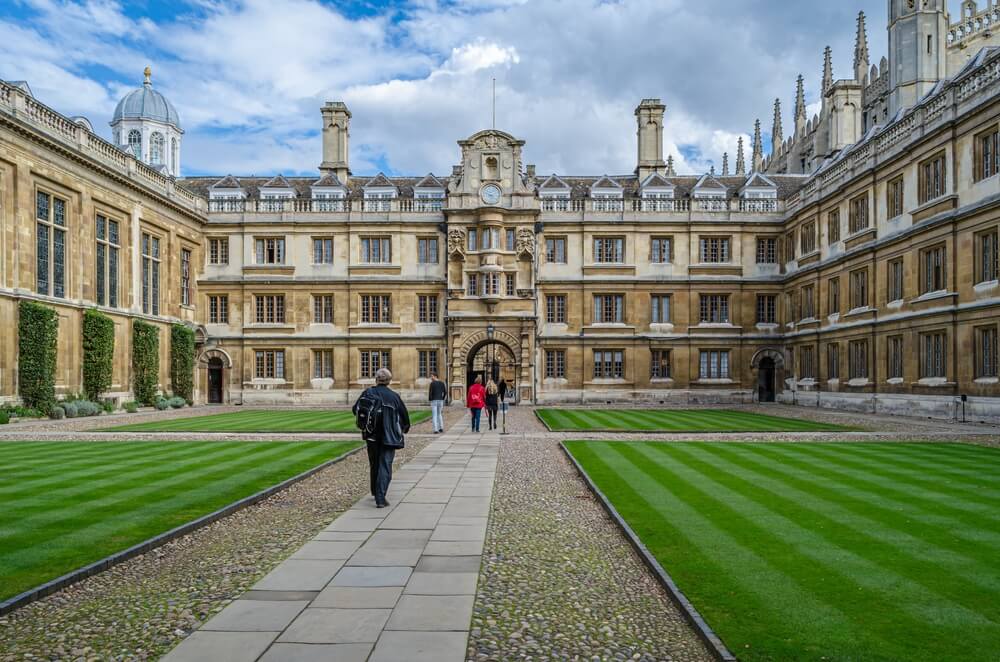 A policy of pursuing diversity will surely survive despite some internal resistance that goes beyond the issue of race - Cambridge University
The prestigious university at least appears open to reviewing its procedures. A policy of pursuing diversity will surely survive despite some internal resistance that goes beyond the issue of race.
A more muted controversy surfaced earlier this year when the former head of the Independent Schools Council, Barnaby Lenon, argued that rhetoric against private schools had led to a brain drain of Oxford and Cambridge candidates to American unversities.
An Oxbridge education was once regarded as a right of passage for pupils at elite fee-paying schools. In recent decades, most Oxbridge colleges have made significant strides in encouraging those from state-funded schools and more modest backgrounds to seek undergraduate places.
Despite a rearguard action by the private schools, wider social access is now an irreversible trend.
Self-regulation of the press had comprehensively failed
Cambridge may have learned some lessons from the Arday controversy. But what about the media, sections of which remained largely unrepentant about how they handled the affair even after his death?
In an editorial under the one-word headline “Hounded”, the liberal Observer urged the news business to look itself squarely in the mirror to understand the academic’s death.
Potentially censorious oversight is not a promising option and should ring alarm bells in newsrooms on all sides of the political divide
The press regulator IPSO, which monitors most UK national newspapers, said this week that it was reviewing a high volume of complaints and concerns received since Arday’s death.
The Good Law Project, which defended Arday, is appealing for more names on a letter to the government in which 100,000 signatories have already called for a public inquiry into how to ensure a responsible press. It said self-regulation of the press had comprehensively failed.
Potentially censorious oversight is not a promising option and should ring alarm bells in newsrooms on all sides of the political divide.
It would be better for editors to give greater thought to the potential consequences of their decisions and cut back on the current trend towards partisan and sometimes fact-free opinion in favour of covering the news.
