One characteristic that has always set the British apart is an enduring obsession with class.
They appear uniquely attuned to the subtle differences in accent, attitudes and habits by which they determine their place, and that of their fellow citizens, in the social pyramid.
Although decades of change in the economy, education and work have dissolved some of the traditional barriers between the upper, middle and working classes, there is evidence the old distinctions and prejudices persist.
One survey this year reported that 39 per cent of Britons said they no longer belonged to the class they grew up in, while one-in-four who had switched class no longer identified with their former status.
A further one-in-seven belonged to a so-called “polyclass”, a new demographic that managed to combine multiple class identities at the same time.
It would be a mistake, however, to conclude that such social fluidity means the old class divisions are on their way out.
While those from more privileged backgrounds are more likely to adopt a multi-class identity, those from a working-class background are more likely to identify with their origins, according to the survey by consumer research firm Attest.
The Attest analysis and other recent related surveys are an indicator that class is back at the centre of the national debate, if indeed it ever went away.
The focus on class is back
At the turn of the century, there were those who predicted that Britain’s old class structure was a thing of the past.
New Labour prime minister Tony Blair declared the class war over when he predicted the emergence of a new meritocracy anchored in an alliance between an upwardly mobile working class and an expanding progressive middle class.
In 1999, he foresaw a middle class that would include millions of people who might traditionally have seen themselves as working class, but whose ambitions were far broader than those of their parents and grandparents.
Every political party, from right to left, now declares itself the champion of the left-behind working class
It didn’t exactly work out that way and, a quarter of a century later, in these more straitened times, the focus on class is back.
Every political party, from right to left, now declares itself the champion of the left-behind working class, although their analyses of what went wrong and how to fix it differ markedly.
Attention is above all on the white working class, a demographic that in many regions was suffering from the impact of deindustrialisation and dwindling opportunities even before Blair took office.
A messy concept
The new emphasis was confirmed when the Labour government this month set up a new Class Unit dedicated to improving the life chances of the working class.
Equality minister Bridget Phillipson said it was time to end “squeamishness” about class and focus on improving the lives of low-income families and disadvantaged communities and rooting out child poverty.
Phillipson had previously voiced her concerns about the prospects of the white working class in particular when she spoke in July of the pernicious gaps between the achievements of the richest and poorest children, “between white working-class children and virtually every other group”.
Her remarks came after publication of an independent inquiry into white working-class educational outcomes, which concluded that the education system was not set up to serve white working-class children.
The inquiry stressed their underachievement was not the fault of the children themselves, but reflected a link between educational disadvantage, economic decline and weakening trust in public institutions.
Race and class are presented as competing forms of inequality - Eleni Stamou
Not everyone is happy about the government’s new focus on class.
Alun Francis, chair of the Social Mobility Commission that will be scrapped as part of the Class Unit reform, said class was a messy concept on which to organise policy. Equating being working class with disadvantage risked being “deeply patronising”.
Others cautioned that a focus on the white working class should not eclipse the persistent inequalities confronting other communities.
In a London School of Economics blog last month, educational sociologist Eleni Stamou lamented that a familiar argument that diversity agendas had privileged minority groups while neglecting the white working class had returned to the centre of British politics.
“Race and class are presented as competing forms of inequality, as though attention to one necessarily comes at the expense of the other,” she wrote. The race-versus-class narrative was not just divisive, it also overlooked other experiences of inequality.
Traditional political loyalties splintered
Labour’s new prime minister, Andy Burnham, has harked back to his party’s traditional working class roots. He has championed the cause of left-behind regions hollowed out by the loss of secure jobs and public services in a decline dating back to Margaret Thatcher’s 1980s.
Historian Ewan Gibbs records the transformation in a forthcoming book, An Injury to All: The Unmaking of the British Working Class, which describes how the sense of solidarity once shared among industry-based communities has been ground down by decades of insecurity.
Writing in the left-wing Tribune this month, Gibbs acknowledged that class had now returned to politics after being pronounced dead at the end of the last century. But he noted that the new appeals to class were not confined to the Labour Party.
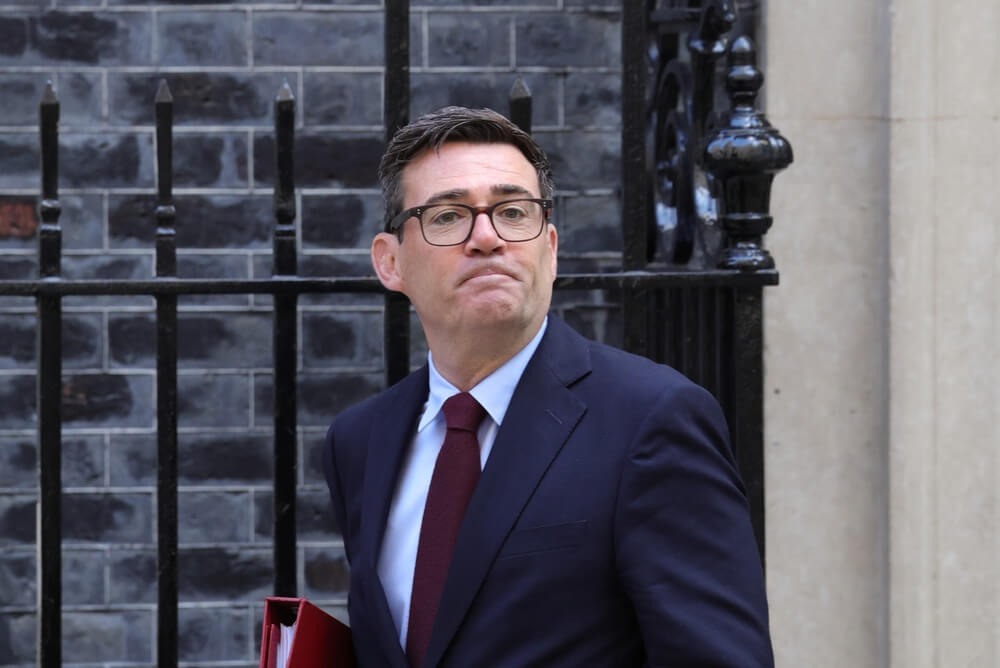 Andy Burnham, has harked back to his party’s traditional working class roots
What has changed in the two decades since Blair is that the traditional political loyalties of the working class have splintered. Once a fairly reliable voting bloc for Labour, divisions arose over the Brexit issue and the immigration debate.
Labour saw its northern ‘red wall’ of loyal working class constituencies virtually demolished in 2019 as voters switched to the Conservatives, in part on a promise from their leader Boris Johnson to “get Brexit done”.
Others have been drawn to right-wing parties such as Reform UK and its rival Restore, who blame the ills of the working class on mass immigration and the remote and uncaring liberal elite that allegedly runs the Labour Party and the bureaucracy at large.
The prejudices go both ways
The prejudices go both ways, with some better off liberal urbanites prepared to venture that the white working class is full of Brexit-loving, reactionary racists who got what they deserved by backing the country’s departure from Europe in order to keep foreigners out.
With the apparent revival of the class debate, politicians should be cautious with the terms they use
With the apparent revival of the class debate, politicians should be cautious with the terms they use.
A Great British Class Survey undertaken in 2011 identified seven classes, ranging from the elite to the precariat, the 15 per cent of the population with little capital, low pay and expectations and insecure employment.
Perhaps they are the ones whose needs should be focused on, regardless of their origins, identity, background or race.
Prioritising solutions to their problems might be preferable to casting the entire working class, an identity with which many are confident and proud, as inveterate losers in the game of life.
