Two aging leaders are struggling to get out of disastrous wars that they personally drove their countries into. Neither is succeeding.
When Russian President Vladimir Putin launched his full-scale invasion of Ukraine in early 2022, his goal was to bring about regime change in Kyiv and declare victory within days—not a “war” but a “special military operation.”
Similarly, when US President Donald Trump launched an all-out attack against Iran, his goal was to bring about regime change in Tehran and declare victory within days—not a “war” but an “excursion.”
Both men made the decision to start a war without following the normal policy-planning process, let alone considering all the possible consequences and second-order effects.
Putin had been sitting in isolation during the COVID-19 pandemic, reading histories of the old Russian empire.
When the time came, he rammed his “special military operation” through Russia’s Security Council, brooking no dissent.
The official most directly responsible for the Ukraine file did object, but was overruled and has since resigned.
Similarly, Trump went to war after chalking up a quick victory in Venezuela, and after hearing from Israeli Prime Minister Benjamin Netanyahu that the Iranian regime would surely collapse under pressure.
Trump’s own CIA director dismissed that optimistic scenario as “farcical,” and even his obsequious vice president, JD Vance, expressed reservations. But the decision was made, and the file was handed over to the “Secretary of War,” whose comically bellicose rhetoric has invited more ridicule than respect.
No clear path out of the mess
Now, both leaders are bogged down with no clear path out of the mess they have made.
Ukrainian President Volodymyr Zelensky has mustered a successful defense of his country, limiting Russia’s advances for four straight years.
Meanwhile, despite losing its senior leadership and suffering major blows to its conventional military capabilities, the Iranian regime has survived and asserted de facto strategic control over the Strait of Hormuz by leveraging the same drone technologies as the Ukrainians.
Since neither Ukraine nor Iran is contemplating surrender, the misguided men who started each conflict have begun to roll back their war aims
Since neither Ukraine nor Iran is contemplating surrender, the misguided men who started each conflict have begun to roll back their war aims.
Although Putin cannot openly acknowledge that he will never conquer Ukraine, he is now desperately hoping for a political settlement that hands him the slices of the Donetsk region that his armies have failed to control.
And although Trump has recklessly threatened to eradicate the Islamic Republic, he is desperately hoping for a political settlement that will reopen the Strait of Hormuz and allow for a nuclear agreement not unlike the one from which he withdrew the United States in 2018.
But neither leader has made much headway even toward their more modest objectives.
It is much easier to start a war than to end one
Putin can order his armies to advance, but they cannot actually do it. Tens of thousands of increasingly low-quality recruits are being sent to die, with nothing to show for it.
The Russian war economy is churning out Iranian-model attack drones in huge numbers, but the Ukrainians have proven to be even more innovative.
Their drones are not only holding the line of defense but also striking energy infrastructure and military targets deep within Russia.
To be sure, Ukraine receives external support—primarily from the Europeans, now that the US has blundered into its war with Iran, burning through half its stockpile of advanced missiles in the process.
Fortunately, Ukraine’s own defense industry now meets half of its military needs, whereas Russia has grown increasingly dependent on China for economic support, and on North Korea for shells and cannon fodder.
The glorious Russian army that Putin read about in his history books is a thing of the past.
The old adage is true: it is much easier (and more exhilarating) to start a war than to end one
The US and Israel certainly enjoy overwhelming military superiority over Iran. They can bomb at will across the country, laying waste wherever they want.
But without putting boots on the ground, they cannot convert military dominance into political success. No country can be subjugated by air power alone.
I imagine that Putin is gnashing his teeth in the Kremlin, or in some hidden bunker, yelling at the people who cannot give him the victory he desperately needs.
And Trump unwittingly airs his own desperation daily on Truth Social. The old adage is true: it is much easier (and more exhilarating) to start a war than to end one.
Each leader’s failed war will change his regime
At some point, each leader’s failed war will change his respective regime.
Although rising oil prices might offer some financial respite for Putin, the Russian economy will need much more than that in the long term.
And now that the Russian population has grown accustomed to the comforts of the digital age, there are limits to what traditional propaganda and repression can do.
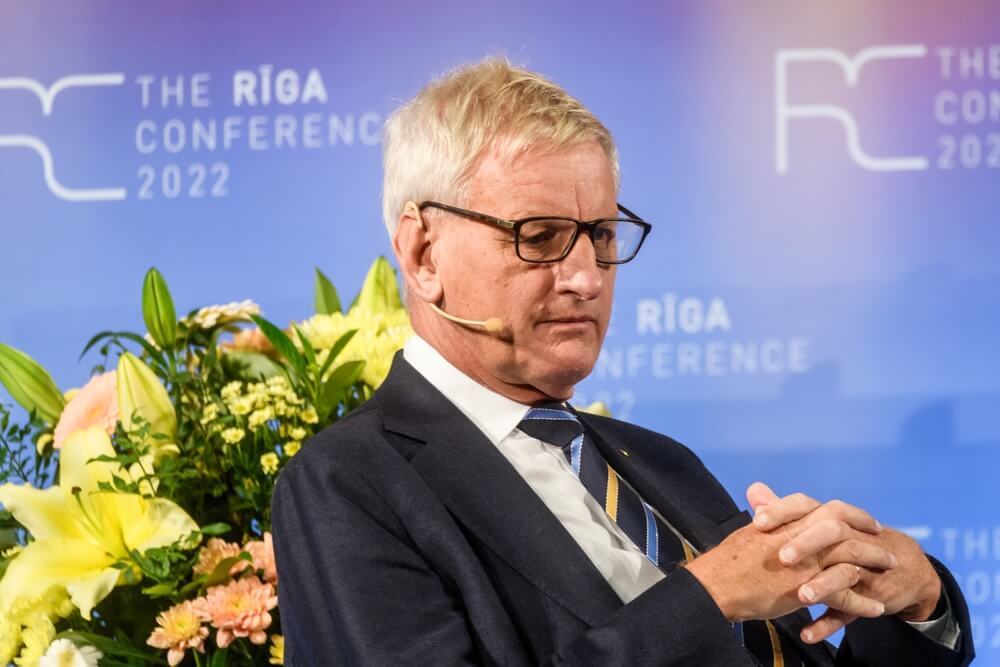 At some point, each leader’s failed war will change his respective regime - Carl Bildt
If Russian history is a guide, failed wars lead to political change—as happened after the Russian defeat to the Japanese in 1905 and the Soviet defeat in Afghanistan. Putin’s legacy will be defined by his failure in Ukraine.
As for Trump, he promised no more regime-change wars. But he convinced himself that there is nothing the US military cannot do, and now every American consumer is paying the price.
Many of his supporters see a man who has lost his way, while the rest of the world sees a superpower that has discredited itself.
We know that Putin and Trump occasionally have long conversations. Putin wants Trump to help him win in Ukraine; but Trump cannot, because he no longer holds the cards to bring about such a result.
Meanwhile, Trump has probably asked Putin to help him subdue Iran; but Putin couldn’t even if he wanted to, because he doesn’t hold any cards, either.
Putin and Trump have achieved one thing, at least. The Norwegian committee that awards the Nobel Peace Prize will be able to work without distraction. Putin was never under consideration, and if Trump was, he never will be again.
Carl Bildt is a former prime minister and foreign minister of Sweden.
