The fifth year of the full-scale war against Ukraine is having a significant negative impact on the Russian economy.
The deepening economic crisis has led to one in five Russian citizens becoming dependent on microfinance organisations (MFOs).
The increased use of their services has resulted in the accumulation of record levels of debt, which continue to grow, further increasing the population’s financial dependence on credit institutions.
According to Russian media, in 2025 the volume of microloans issued reached a historic high of 2.1 trillion rubles, 35% more than the previous year.
According to the Central Bank of Russia, about half of these loans were issued at rates exceeding 250% annually.
The most common remain unsecured short-term loans of up to 30 days for amounts up to 30,000 rubles, with an average interest rate of 290.3% per year, indicating the widespread practice of loan refinancing among the population.
As of mid-2025, 13.8 million people were clients of MFOs, accounting for about 18% of the working-age population.
Compared to June 2022, their number increased by 6.5 million and continues to grow.
Some studies indicate a significant deterioration in citizens’ financial conditions: 31% of the population report lacking funds even for basic needs, including food, while 39% note a worsening economic situation in their regions.
Lending at extremely high interest rates has effectively become legalised mechanism for redistributing income in favour of the financial sector, operating with the tacit support of regulatory and legislative bodies.
In conditions of prolonged war, high inflation, and stagnant incomes, a significant portion of the population is forced to turn to MFOs to cover basic expenses.
In these circumstances, short-term loans quickly become long-term debt dependence due to the rapid accumulation of interest and penalties.
At the same time, in most developed countries, the activities of such institutions are significantly restricted or strictly regulated.
Household savings
An additional pressure factor is the transformation of sources of economic financing.
Following the introduction of sanctions, household savings have become a key domestic source of funding.
Before 2022, Russian companies actively used cheap loans from EU and US markets, but access to these has now been almost completely lost.
This has forced businesses to turn to more expensive domestic resources, resulting in increased debt burdens and reduced profitability.
Citizens are de facto acting as the main creditors of the state and the corporate sector
As a result, citizens are de facto acting as the main creditors of the state and the corporate sector without having any real influence over these processes.
In a militarised economy, limited resources are primarily allocated to financing the defence-industrial complex, while civilian sectors face capital shortages.
Regulatory pressure
At the same time, fiscal and regulatory pressure is increasing. Legislative changes have been initiated regarding the taxation of income from cryptocurrency and digital asset transactions, as well as the introduction of mandatory reporting to tax authorities.
These measures are intended to strengthen control over financial flows and identify additional sources of budget revenue amid a deficit. Meanwhile, the quality of credit portfolios is deteriorating.
Russian banking statistics show that the share of non-performing consumer loans increased from 9% at the beginning of 2025 to 13.1% in 2026. In the mortgage segment, this figure also rose from 1% to 1.8%.
The greatest difficulties in servicing debt are seen among borrowers with low credit ratings, no credit history, and high debt burdens – an issue that became particularly evident after the credit overheating of 2023–2024.
Despite this, representatives of the regulator emphasize that the level of non-performing debt remains below historical peaks, creating an illusion of relative stability.
Tight monetary policy encourages the replacement of bank products with less transparent and more expensive financial instruments, such as pawnshops or instalment schemes
However, actual trends indicate the opposite: the growth of overdue debt is mainly occurring in “old” credit portfolios, while existing restrictions are holding back lending to new borrowers.
This reduces the effectiveness of monetary policy and complicates the stabilisation of the banking sector.
The combination of these factors – declining real incomes, rising debt burdens, limited access to external financing, and increased state control – creates systemic risks to financial stability.
The increasing proportion of overdue loans raises the risk of widespread household defaults and increases the vulnerability of the banking system.
Tight monetary policy also encourages the replacement of bank products with less transparent and more expensive financial instruments, such as pawnshops or instalment schemes.
Risks for the corporate sector
The policies of the Central Bank of Russia and the government also create significant risks for the corporate sector, contributing to an increase in bankruptcies.
According to Russian statistics, the volume of overdue accounts receivable of Russian companies reached 8.2 trillion rubles in January 2026, compared to 6.7 trillion rubles in 2025, equivalent to about 3.8% of GDP.
Thus, this indicator increased by 21% year-on-year and has grown 2.5 times over the past five years.
One of the key reasons is tight monetary policy, which restricts the real sector’s access to financial resources.
The largest share of overdue accounts receivable is concentrated in manufacturing, particularly in the production of petroleum products and aluminium.
Restrictions on industrial financing lead to reduced production, the emergence of goods shortages, and increased inflationary pressure
An additional problem is payment delays from large companies, including state-owned enterprises.
As a result, small and medium-sized businesses effectively perform the function of financing key sectors of the economy. In conditions of high interest rates, fulfilling government contracts becomes financially unprofitable.
The increased tax burden and reduced budget expenditure on civilian sectors in favour of the defence-industrial complex further worsen the situation.
This slows financial flows, worsens payment discipline, and reduces companies’ working capital.
In response, businesses are forced to pass costs on to end consumers, leading to faster price increases for food, medicines, and services.
Restrictions on industrial financing lead to reduced production, the emergence of goods shortages, and increased inflationary pressure.
The combination of high interest rates and a growing tax burden leads to business closures and job cuts, negatively affecting macroeconomic stability and living standards.
Mass layoffs
Rising military expenditures also significantly affect the labour market. Some Russian outlets report that the number of planned layoffs in the public sector has increased by 43%, while in the fourth quarter of 2025 the pace of dismissals rose by 59% year-on-year.
At the same time, the expansion of the budget deficit limits regional authorities’ ability to pay public sector wages on time.
Mass layoffs, officially described as public sector optimisation, in fact indicate deep structural imbalances in Russia’s financial policy
Mass layoffs, officially described as public sector optimisation, in fact indicate deep structural imbalances in Russia’s financial policy.
These processes are most acute in depressed regions, where public sector cuts drive the outflow of working-age populations to large cities, weakening local economies.
Current trends indicate a transition of the Russian economy into a phase of structural stagnation, in which financing defence needs occurs at the expense of shrinking resources in the civilian sector.
The war in the Persian Gulf is helping to stabilise the situation
The Kremlin is currently trying to avoid informing the Russian public that there is no growth in economic indicators, and in some sectors there is a noticeable decline.
For four years, Moscow media claimed that the war against Ukraine had mobilised the Russian economy and had a positive effect on it. However, this narrative has disappeared over the past six months.
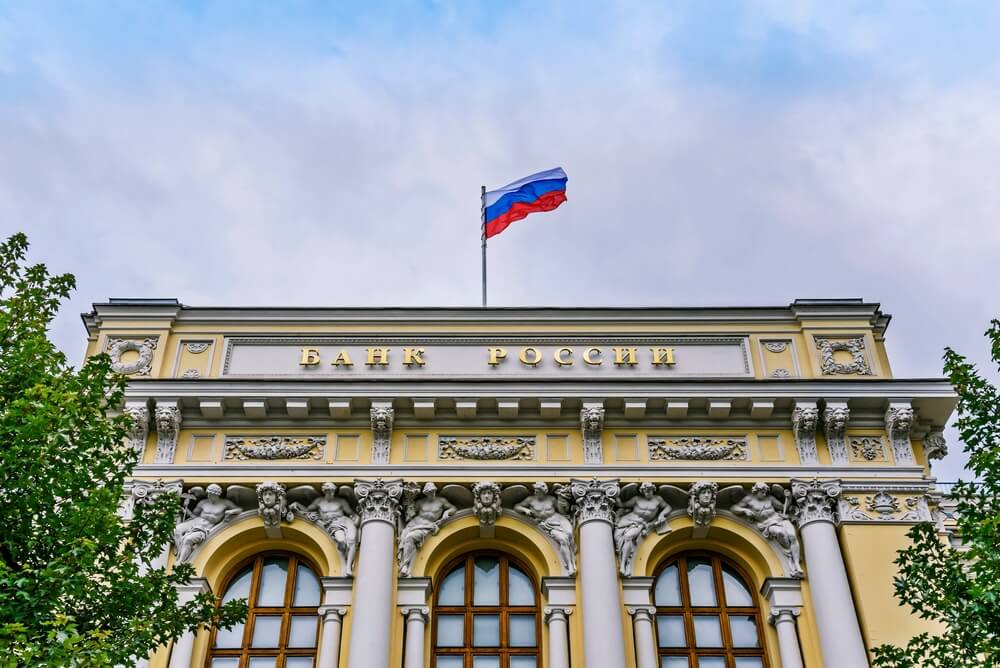 The Kremlin has fewer financial resources to sustain the war in Ukraine - Russia's central bank
This suggests that the Kremlin has fewer financial resources to sustain the war in Ukraine.
Only the war in the Persian Gulf is helping to stabilise the situation by enabling Moscow to earn additional revenue from oil and gas exports due to rising prices.
However, once the conflict in the Middle East ends, energy prices are expected to stabilise, and Russia will immediately face a shortage of resources to continue military operations in Ukraine.
At that point, a genuine willingness by the Kremlin to engage in peace negotiations and discuss concrete terms for ending the war in Ukraine can be expected.
Oleksandr Levchenko, a former Ukrainian diplomat, is a professor at the State University (Kyiv) and a member of the Academy of Geopolitics and Geostrategy (Kyiv).
