On 27 January, Donald Trump posted a message on Truth Social that immediately triggered a political storm in Baghdad.
The President of the United States issued a direct warning to Iraq that, should Nouri Kamal al-Maliki (aka Abu Ezra) return to the post of prime minister, Washington would cease providing any form of assistance to the country.
The message read: “I’m hearing that the Great Country of Iraq might make a very bad choice by reinstalling Nouri al-Maliki as Prime Minister. The last time Maliki was in power, the Country descended into poverty and total chaos. That should not be allowed to happen again. Because of his insane policies and ideologies, if elected, the United States of America will no longer help Iraq. If we are not there to help, Iraq has ZERO chance of Success, Prosperity or Freedom. MAKE IRAQ GREAT AGAIN!”
This was not solely a social media comment. It was an unmistakable ultimatum that was directed at one of America's most important allies in the Middle East.
At the centre of the confrontation stands Nouri Kamal al-Maliki, who served as Iraq’s prime minister from 2006 to 2014 as a leader of the DAWA party.
For part of the Shiite majority, he remains a symbol of resistance to American dominance and a leader who defended the interests of the country’s majority population.
For Washington and Sunni political groups, he is a figure whose decisions deeply divided the country, marginalised the Sunnis, and contributed to the turmoil that culminated in the rise of the Islamic State in 2014.
Maliki maintains close ties with Iran. Tehran regards him as a reliable partner, and his links with Iran’s Revolutionary Guard and pro-Iranian militias in Iraq have been well established for decades.
Iraq political crisis deepens after Trump’s intervention
The crisis began when the largest Shiite bloc in the Iraqi parliament, the Coordination Framework, backed al-Maliki as its candidate for prime minister on 24 January. This prompted an immediate and public reaction from the President of the United States.
A parliamentary session scheduled to elect the president of the republic—a procedural step that opens the way for appointing a prime minister—was not held on 27 January due to the absence of a quorum, amid a broader political stalemate and ongoing bloc manoeuvring.
Another reason for postponing the session is the intense struggle between the two primary Kurdish parties, KDP and PUK, even though traditionally the federal president is automatically selected from the PUK, which governs the two northeastern provinces of Sulaymaniyah and Halabja (Talabani, Masoum, Saleh, Rasheed).
Nouri al-Maliki described Trump’s message as “blatant American interference in Iraq’s internal affairs” and “a violation of its sovereignty”
The political crisis in Baghdad deepened at the very moment Trump chose to intervene publicly.
The following day, on 28 January, al-Maliki responded sharply. He described Trump’s message as “blatant American interference in Iraq’s internal affairs” and “a violation of its sovereignty”. “We categorically reject such threats,” he said.
“We will continue to proceed to the end, in accordance with the Iraqi constitution and the will of the people, through dialogue between states, not through threats or imposition.” His position was unequivocal: he would neither withdraw nor yield to external pressure.
That same evening, hundreds of demonstrators gathered outside the US embassy in Baghdad. They burned images of Donald Trump, waved Iraqi flags and chanted slogans against foreign interference. A portion of the protesters openly expressed support for al-Maliki.
Social media as a primary instrument of pressure
What would a suspension of American support actually mean?
US forces remain present in Iraq with approximately 2,000 troops, following an earlier reduction from around 2,500. They provide training, air support and critical intelligence in counter-terrorism operations.
Even more significant is the financial dimension: a substantial portion of Iraq’s oil revenues is channelled through accounts in the United States.
Were Washington to restrict or condition access to those funds—a mechanism previously used as a tool of pressure—the Iraqi economy would face severe disruption.
Such a move could, paradoxically, strengthen al-Maliki’s domestic standing: in Iraq, resistance to American pressure is often interpreted as a sign of patriotism.
The Trump administration views the situation through a different lens. Its objective is to curb Iranian influence in Iraq at a time when tensions with Tehran are rising on multiple fronts—from the nuclear programme to proxy conflicts across the region.
Maliki is seen as a key bridge between Baghdad and Tehran. His return would reinforce Iranian-aligned militias such as Kataib Hezbollah or Asaib Ahl al-Haq, both of which are already subject to US sanctions.
What distinguishes this approach from previous administrations is style. Trump makes no secret of his desire for swift results.
Maliki remains the strongest candidate within the Shiite bloc, yet pressure from Washington may compel some MPs to seek a compromise
Rather than relying on negotiations conducted through ambassadors or special envoys, he uses social media as a primary instrument of pressure. This may produce immediate impact, but it carries the risk of pushing Iraq further towards Russia, China or Iran.
Beijing and Moscow are already offering alternatives—economic packages, infrastructure projects, and arms—and Maliki is not a figure likely to hesitate in accepting them should Washington close its doors.
On the other hand, Maliki, as one of the most experienced and pragmatic politicians, is capable of maintaining good relations with both sides and exerting pressure, which he did during his previous terms.
By creating the perception that he is entirely pro-Iranian, Maliki ensures that Iraq will not be positioned to treat the USA as a serious adversary, primarily because 95% of the state's budget from crude oil sales is generated exclusively through American banks.
For now, the political process in Baghdad remains at a standstill. The Coordination Framework continues to meet, weighing its options and calculating the consequences.
Maliki remains the strongest candidate within the Shiite bloc, yet pressure from Washington may compel some MPs to seek a compromise.
Failing that, Iraq could slide into a prolonged government-formation crisis—reminiscent of those in 2018 or 2022—leaving the state paralysed at a time when the wider region is already in turmoil.
Iraq at a political crossroads
The most realistic scenario in the coming weeks is that the Coordination Framework yields under pressure and withdraws Maliki’s candidacy in favour of a less controversial figure from within its ranks — perhaps someone from the bloc of Mohammed Shia al-Sudani or a compromise candidate acceptable to both Washington and Tehran.
This would allow for the faster formation of a government and avert financial chaos, but it would simultaneously weaken the position of the Shiite bloc insisting on its own nominee.
In such a case, Maliki would retreat into the background while retaining influence through the Dawa Party and allied networks.
Should Maliki nevertheless persist and secure parliamentary support—a possibility that cannot be ruled out given internal divisions—Iraq would face serious sanctions.
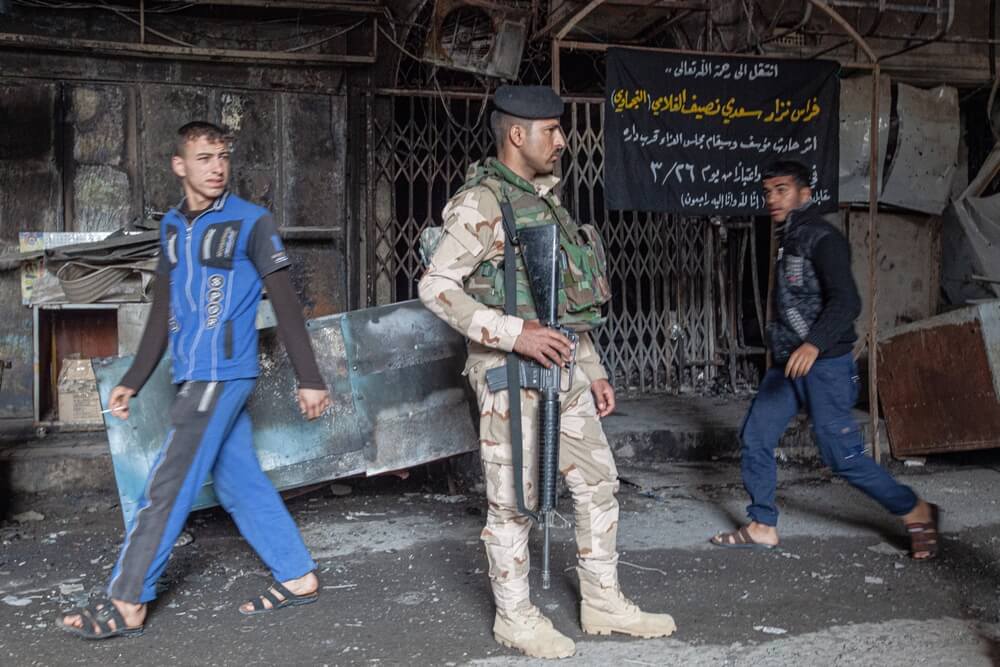 The coming weeks, if not months, will determine whether Baghdad opts for compromise in order to survive or risks everything in the name of sovereignty
Restrictions on access to oil revenues would trigger a depreciation of the Iraqi dinar, shortages and protests, particularly in Sunni and Kurdish areas where Maliki is already deeply unpopular.
This could spark a new wave of violence, with militias accusing the United States of waging economic warfare, and potentially lead to an escalation of attacks on US bases.
In that scenario, Russia and China would be quick to step in with loans and investments, turning Iraq into yet another theatre of global confrontation.
The most dangerous outcome would be a prolonged deadlock: parliament fails to elect a president, Maliki remains a candidate without a government, and the United States intensifies pressure through sanctions.
Such a stalemate would paralyse the state for months, create space for the resurgence of Islamic State cells, and further deepen sectarian divisions.
Iraq would become even more vulnerable to external influence, with Iran using militias to preserve the status quo and the United States potentially forced to increase its military presence to prevent outright collapse.
This confrontation is not merely about Maliki or Trump. It exposes the extent to which Iraq remains trapped in a web of dependencies — on the US dollar, Iranian militias, and its own internal divisions.
Baghdad's potential attempt to disarm the Iranian and Shia militias (Hashd al-Shaabi), estimated to number over 150,000 well-armed and experienced fighters, poses a significant risk and must not be underestimated.
Such a risky move could potentially lead to a lengthy and bloody civil war in Iraq, a country that has been slowly but visibly recovering since its victory over DAESH.
The coming weeks, if not months, will determine whether Baghdad opts for compromise in order to survive or risks everything in the name of sovereignty.
The outcome will shape not only the next government but also whether Iraq can avoid yet another cycle of instability in a region already on fire.
