Israel’s recent deal to supply Egypt with gas from its Leviathan offshore field – the largest such agreement in the country’s history – has been presented domestically as an economic and diplomatic triumph.
Officials point to projected fiscal revenues and the potential for enhanced regional cooperation, emphasizing Israel’s status as an emerging eastern Mediterranean energy hub.
But while there is some truth in these claims, the deal also exposes structural vulnerabilities that Israel and other gas-dependent economies can no longer afford to overlook.
Beyond bilateral ties, the agreement with Egypt reflects a broader reordering of gas flows in the eastern Mediterranean after two years of regional conflict.
For Egypt, purchasing Israeli gas is not just a commercial choice, but a strategic response to declining domestic production, fiscal constraints, and limited capacity to import liquefied natural gas.
As the Egyptian government grapples with declining domestic production and surging demand, Israeli gas offers a critical lifeline.
For Israel, becoming a critical supplier to Egypt enhances its own regional influence and strengthens its position in a competitive geopolitical environment and energy market.
Although energy interdependence can promote stability, it is rarely symmetrical.
By committing Egypt to purchase 130 billion cubic meters of gas over nearly two decades, the deal will provide Israel with stable export revenues.
It also deepens Israel’s strategic ties to a key regional actor at a time when other suppliers, like Qatar, are seeking to do the same.
Israel’s electricity system is dependent on natural gas
But energy security is not measured only by export volumes or diplomatic outcomes.
It also rests on the long-term balance between a country’s domestic supply, demand growth, and institutional capacity to manage future scarcity.
Here, the picture is more troubling for Israel, because the country’s electricity system is structurally dependent on natural gas, which fuels over 70% of its power generation.
Under current production and export trajectories, its domestic gas reserves are expected to last only two or three decades.
Several official assessments already warn that Israel could face supply constraints as early as the mid-2030s, precisely when its export commitments will peak.
Once long-term contracts like the Egypt deal are in place, flexibility narrows dramatically.
Israel’s electricity demand is not only growing; its composition is changing
Future governments may find themselves forced to choose between honoring export obligations and safeguarding domestic energy affordability and reliability. Indeed, such pressures are likely to intensify.
Israel’s electricity demand is not only growing; its composition is changing.
Electrification across transport and industry, combined with the rapid expansion of energy-intensive digital infrastructure, is expected to increase peak loads and reduce the system’s tolerance for supply disruptions.
Under such conditions, long-term export commitments reduce Israel’s margin for error, making resilience increasingly dependent on non-gas alternatives that are not yet deployed at scale.
Moreover, the upstream gas market is highly concentrated. A single supplier, Chevron, controls much of domestic production while also acting as the principal exporter.
This dual role creates an inherent tension, because the same party responsible for ensuring a reliable and affordable supply to the domestic market is incentivized to commit supplies for sale abroad over longer horizons.
External contracts can shape internal price dynamics
Under such a market structure, any export expansion has implications that go beyond questions of volume or reserves.
When the dominant supplier to the domestic market is also the primary exporter, external contracts can shape internal price dynamics.
As export prices rise, the benchmark for what constitutes a “reasonable” domestic price shifts accordingly, even without explicit indexation.
Long-term export contracts do not just allocate gas. They also allocate risk across generations of policymakers
The result is not necessarily an immediate price shock, but gradual upward pressure on domestic gas prices toward export parity, increasing costs across the electricity system and narrowing the scope for effective competition.
Supporters of the deal argue that regulatory mechanisms will allow the state to adjust export volumes if shortages arise. In practice, however, these safeguards are limited.
Once long-term contracts are in place, legal commitments, diplomatic costs, and geopolitical considerations will reduce regulators’ room for maneuver.
Long-term export contracts do not just allocate gas. They also allocate risk across generations of policymakers.
The test of Israel’s gas strategy
This reality underscores a broader challenge. Israel’s gas reserves are finite, while electricity demand is expected to grow steadily, owing to electrification, population growth, and the expansion of energy-intensive digital infrastructure (especially data centers to power AI).
In such a context, energy security cannot rest indefinitely on gas exports and optimistic reserve assumptions.
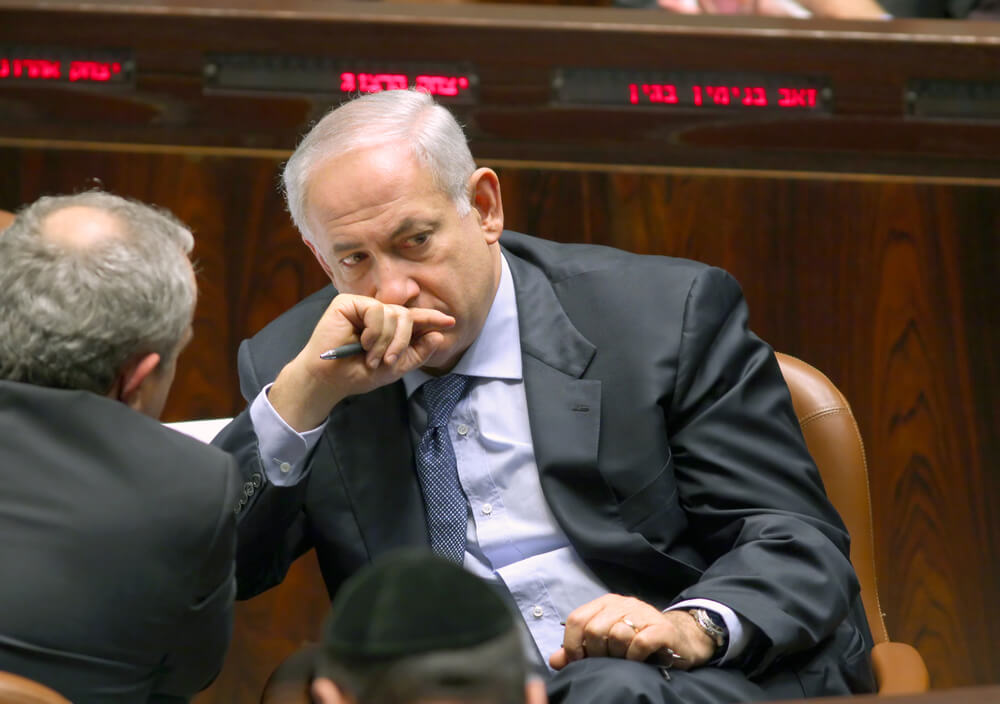 Israel’s gas deal with Egypt should be understood not as a destination but as a step in a longer journey - Benjamin Netanyahu
None of these problems negates the strategic value of cooperation with Egypt.
Economic interdependence can indeed serve as a stabilizing force in a volatile region.
But stability built on finite resources is inherently temporary unless it is paired with a credible long-term transition strategy.
Israel’s gas deal with Egypt should be understood not as a destination but as a step in a longer journey.
Export revenues must be leveraged to accelerate diversification by expanding renewable energy deployment, scaling energy storage and grid flexibility, diversifying generation sources, and reducing structural dependence on a single fuel and supplier.
Monetizing today’s gas assets without investing in tomorrow’s system would trade short-term gains for long-term vulnerability.
The test of Israel’s gas strategy will not be measured in export revenues or diplomatic headlines, but by whether it uses this moment to build an energy system that remains resilient long after the gas is gone.
Avri Schechter is Director of the Yannay Institute for Energy Security at Reichman University in Herzliya, Israel.
