Luiz Inácio Lula da Silva’s victory in Brazil’s presidential election is a blow to Donald Trump’s plan for the Western Hemisphere.
The US president was hoping to huddle with client states to the south who mimic his business and mano dura (iron fist) posturing, while further betraying liberal partners. That plan, within reach until Sunday’s vote, is now in tatters.
Disentangling from the world and retreating into a seemingly controllable hemispheric stronghold has been an American dream since the early 19th century.
It was inscribed in the Monroe Doctrine, pronounced by President James Monroe in 1823 to warn Europeans against meddling in the Americas, then revived in the 1890s, during the US war against Spain.
The inter-American project then moved backstage until Trump tried to revive it once again.
Had Brazil lurched from left to right, the election would have capped an annus mirabilis for Trump in the region (in contrast to his debacles elsewhere).
The abduction of Venezuelan President Nicolás Maduro at the start of the year handed Trump a supine client state, following elections in Chile that handed power to the far-right candidate, José Antonio Kast, whose father was a Nazi lieutenant in the Wehrmacht.
Then, in Colombia, the left fell to the Trump-backed right-wing candidate, Abelardo de la Espriella.
In the wake of these victories, veteran Trump allies like Nayib Bukele of El Salvador and Javier Milei of Argentina are no longer isolated oddballs.
A victory for the far-right Flávio Bolsonaro in Brazil would have meant nearly a clean sweep for Trump allies south of Mexico.
Shield of the Americas
In November 2025, the Trump administration’s National Security Strategy called for a pivot to the Western Hemisphere.
Under Operation Absolute Resolve, US forces then seized Maduro and licensed his successor in Caracas to give new 100-year concessions to an American firm over 17 oil fields containing 65 billion barrels of proven reserves.
In March, the White House doubled down on hemispheric convergence with the Americas Counter Cartel Coalition.
Euphemistically called the “Shield of the Americas,” the administration sought a hemispheric alliance to counter the drug trade and organized crime.
The Shield was more than a security pact
After a staged event at US Southern Command headquarters in Doral, Florida, 12 Latin American leaders followed Trump to his golf club to celebrate.
US officials heralded the coordination to tackle cartels, insurgents, and foreign “interference in the hemisphere,” especially by China.
In his closing remarks, Trump connected hemispheric security to his strikes against Iran.
The Shield was more than a security pact. Negotiators at Doral emerged from behind closed doors brandishing agreements on Venezuelan gold and oil and mineral contracts from Chile, all favorable to US companies.
The commercial purpose became official in late September, when Shield signatories added “economic cooperation” to the mission, including “investment screening,” “mineral supply chain” security, and “trusted supplier regulations for digital infrastructure.”
The Shield’s weakness is economic
But even before Lula’s nail-biting victory, Trump’s hemispheric coalition had overstated the strength of the regional alignment.
The original head of the Shield of the Americas, Kristi Noem, was sacked in disgrace as US Secretary of Homeland Security two days before the Shield was unveiled.
Her demotion to “special envoy” lapsed in September, and the State Department has not bothered to designate a successor.
Meanwhile, US ambassadors in Buenos Aires and Santiago have stirred regional contretemps.
Brandon Judd, a career US Border Patrol agent who is now Trump’s envoy to Chile, publicly questioned his host country’s sovereignty over the Strait of Magellan and tied Shield support to Chile’s willingness to cooperate with the US.
And then there is the squalid, openly corrupt White House infighting over the Venezuelan spoils.
For all the bonhomie among right-wingers, the north and south of the hemisphere have drifted apart economically
But the Shield’s bigger weakness is economic. For all the bonhomie among right-wingers, the north and south of the hemisphere have drifted apart economically.
The rhetoric about inter-American security masks the broader reality: Since 2000, China, not the US, has become Latin America’s preferred export market. China now buys roughly 28% of Latin America’s exports, far surpassing the US’ 16% share, which has shrunk substantially.
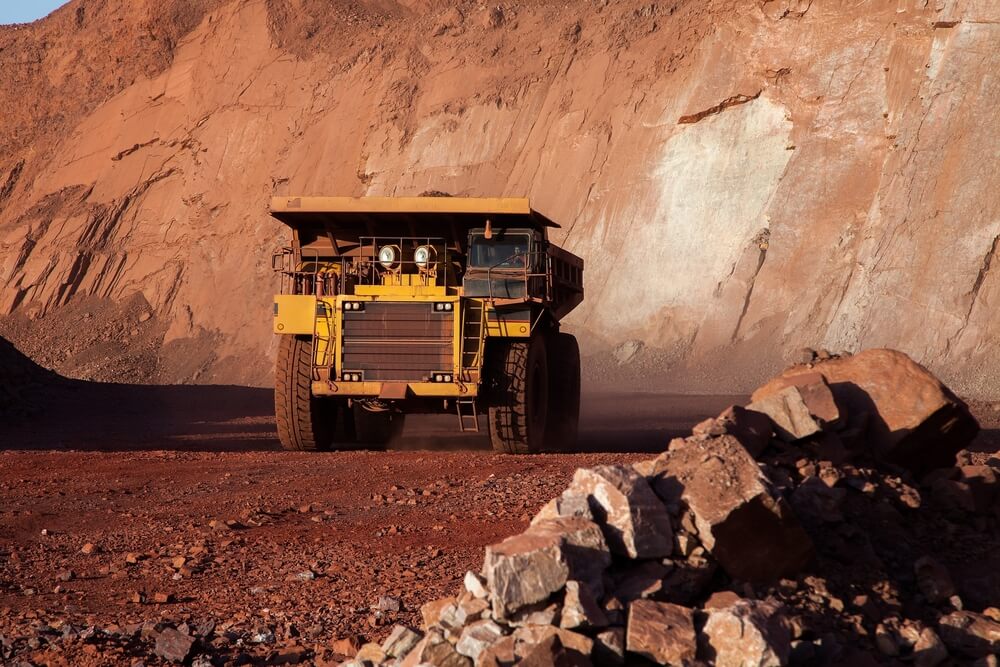
Driving the new trade axis has been Latin America’s metals, minerals, and energy products.
The lithium triangle straddling Argentina, Bolivia, and Chile sends 77% of its output to China.
Firms like Tsingshan (the world’s largest stainless steel and nickel producer) operate regional headquarters in northern Argentina, having made massive investments in electrochemicals, industrial plastics (to build enormous chemical storage facilities), and other facilities to support the post-fossil-fuel economy.
What the region really needs?
South America is also key to China’s space ambitions. To facilitate geostationary orbital solar power stations above the Earth, China is investing in hundreds of telescopes to create an enormous observational park across the same drylands that hold valuable minerals.
While Trump indulges visions of “Trump-class” battleships sailing through the Strait of Magellan, the China Aerospace Science and Technology Corporation and sections of the People’s Liberation Army are building facilities in Patagonia to manage a sprawling fleet of satellites and deep-space power stations.
The Shield of the Americas never addressed what the region really needs. Its far-right leaders’ most important task is to pull their countries out of their productivity rut.
 Latin American debt levels have soared. Hyper-dependency on commodity rents has coincided with lavish borrowing
In the first quarter of the 21st century, labor productivity grew by less than 0.9% per year, steadily falling behind the OECD average.
The result is a trap of low innovation, swelling informal sectors, and aging populations—precisely the long-term challenges that populists tend to neglect.
Finally, Latin American debt levels have soared. Hyper-dependency on commodity rents has coincided with lavish borrowing.
Roughly 3.5% of regional GDP is spent on servicing public debt, a staggering sum that is being siphoned away from investments in public goods or social services.
With interest rates climbing, debt-service payments will, too, forcing treasuries to impose austerity.
There was nothing in the Shield to help Latin American partners out of this vice.
Lula certainly has his work cut out for him, since he is confronting the same basic challenge.
But with Trump’s grand plan for the Americas in shambles, that work may be somewhat easier.
Jeremy Adelman is Director of the Global History Lab at the University of Cambridge.
