Doral, Florida, is today the site of a political meeting that clearly demonstrates how the administration of Donald Trump views relations in the Western Hemisphere.
At the Trump National Doral Miami complex, the President of the United States is gathering a group of Latin American leaders for a summit called the Shield of the Americas.
The meeting is not part of existing regional institutions, nor is it a continuation of any previous diplomatic format. Washington is organising it independently, with carefully selected participants.
In doing so, the administration signals that it no longer relies on broad multilateral forums as its main policy instrument for the region but is instead building a narrower circle of countries with which it seeks direct political and security cooperation.
In recent months, American political circles have increasingly referred to a "Trump corollary to the Monroe Doctrine."
The essence of this approach is straightforward: the Western Hemisphere is once again regarded as a space in which Washington has special security and political interests and where it wishes to limit the influence of external powers.
In political and media commentary, this concept is already being colloquially called the "Donroe Doctrine," a combination of Trump's name and the original Monroe Doctrine from 1823.
The Doral summit is the first attempt to translate this approach into a concrete political format.
When multilateral formats fail
This meeting does not arise from any regional process or from the initiative of Latin American countries. It is primarily a consequence of the American assessment that existing hemispheric formats no longer yield political results.
The best example of this is the Summit of the Americas, which was supposed to take place at the end of 2025 in the Dominican Republic.
Political disputes embroiled the summit's organisation even before it began. Several governments in the region announced a boycott due to the US's stance towards Cuba and Venezuela, while the host, faced with growing disagreements among participants, decided to postpone the event.
As a result, the forum that formally brings together all the countries of the Western Hemisphere failed to take place.
Washington perceives that epilogue as proof that broad multilateral formats can no longer ensure political consensus in the region. Therefore, the current administration is pursuing a different approach: meetings with a smaller group of countries prepared for concrete cooperation.
There is no attempt at representativeness in Doral; a political coalition is being formed
The administration is shifting to a model of selective partnerships. The summit in Doral, therefore, is not a diplomatic forum representing the region; it is a political meeting of states that Washington regards as reliable partners.
Doral hosts the presidents of Argentina, El Salvador, Ecuador, Costa Rica, the Dominican Republic, Panama, Paraguay, and Guyana, as well as the prime minister of Trinidad and Tobago.
Among the participants is the newly elected president of Chile, José Antonio Kast, who formally takes office in a few days but arrives in Miami before the inauguration.
The American delegation is led by Donald Trump, Secretary of State Marco Rubio, Secretary of Defence Pete Hegseth, Secretary of Commerce Howard Lutnick, and Trade Representative Jamieson Greer.
Equally important is the political geography of those absent from the hall. Brazil and Mexico – the two largest economies in Latin America – are not participating. Nor are Colombia, Peru, or Venezuela.
This means that more than half of the region’s economic potential remains outside this format. There is no attempt at representativeness in Doral; a political coalition is being formed.
China’s expanding economic presence in Latin America
The background to this meeting lies in the changed economic reality of the region. Over the past fifteen years, China has become one of Latin America’s main trading partners.
According to available international trade data, total trade between China and countries in the region reached approximately $518 billion in 2024.
At the same time, Chinese state-owned banks and companies have significantly increased their presence through loans and investments.
Over the past fifteen years, more than $120 billion has been invested in infrastructure, energy, and mining projects.
The Doral summit represents an attempt to include at least part of the hemisphere in a political framework that limits China’s presence
Chinese capital is present in several strategic sectors: construction and management of ports, exploitation of lithium and copper, power projects, and telecommunications infrastructure.
In some countries, Chinese companies already participate in the management of major logistics hubs or infrastructure crucial for the export of raw materials.
For Washington, it is no longer just a matter of trade. It is a long-term economic and infrastructural presence that alters the balance of power in the region.
The Doral summit represents an attempt to include at least part of the hemisphere in a political framework that limits China’s presence in sectors of long-term security importance.
The Doral Charter
The meeting concludes with the adoption of a document the White House calls the Doral Charter.
It is not an international agreement or a legally binding act; it is a political declaration intended to set the framework for cooperation among the countries participating in the summit.
The document clearly identifies Washington’s main priorities for joint action. At its centre is security cooperation against transnational criminal networks, especially drug cartels, which in recent years have expanded their activities far beyond traditional drug trafficking routes.
In addition, there is an effort to coordinate the migration policies of countries along the main migration routes towards the north of the continent.
The third element concerns infrastructure and investment in sectors the US administration considers strategically sensitive, including ports, energy, and digital networks.
The security dimension is particularly prominent in the discussions held in Doral
In other words, the document serves a practical political purpose. Washington aims to establish a select group of countries that will cooperate more closely in security operations while also adopting a more cautious approach to foreign investment in key infrastructure systems.
The security dimension is particularly prominent in the discussions. US officials have already announced plans to deepen operational cooperation with Ecuador and El Salvador in combating criminal organisations operating throughout the region.
Today, cartels run complex networks involving people smuggling, arms trafficking, and sophisticated money laundering systems using multi-state financial flows.
For Washington, this is no longer merely a matter of regional crime; it is a problem that directly affects the security and migration policy of the United States.
This is why coordination with regional partners is central to the American strategy.
The political architecture of the Shield of the Americas
One detail from the Doral summit illustrates how this initiative is organised. Kristi Noem, who until a few days ago was Secretary of Homeland Security, left her position after a political dispute over a promotional campaign funded from the department’s budget. Her departure from the administration did not mean leaving the president’s political circle.
Almost immediately, she was appointed as a special envoy for the Shield of the Americas initiative. The very next day, she appeared in Doral and took part in preparing a meeting with Latin American leaders.
This move demonstrates the administration’s approach to the project. The initiative is not placed within the existing institutional framework of US foreign policy, nor is it led by any standard state structure.
Instead, it operates through a political team with direct access to the president and his close associates. In practice, this means decisions are made quickly and outside the usual bureaucratic procedures, but it also means the project bears a strong political imprint of the administration itself.
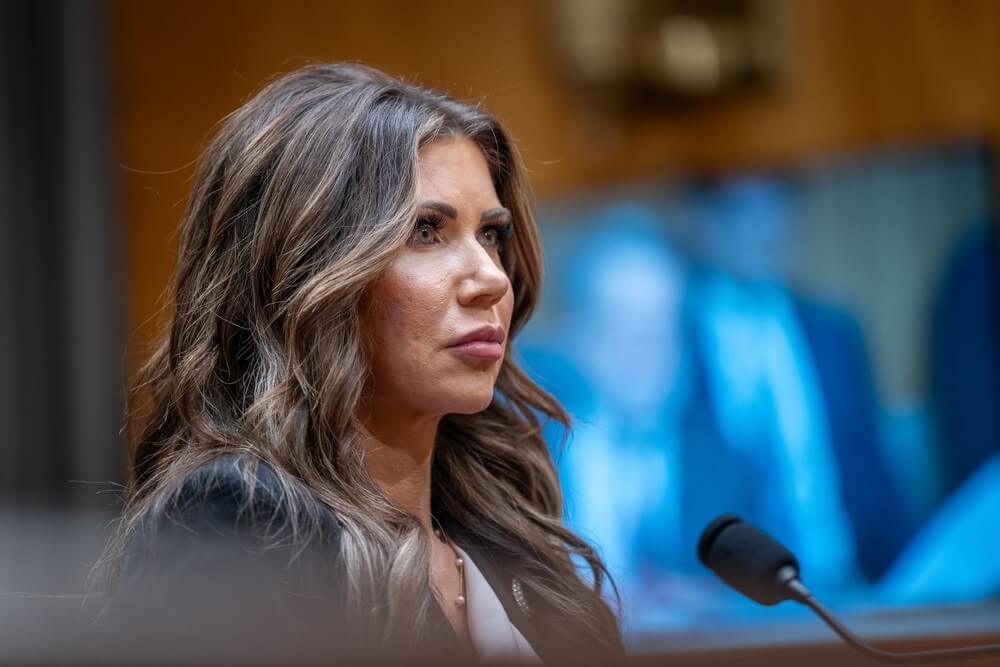 Kristi Noem appeared in Doral and took part in preparing a meeting with Latin American leaders
The limitations of this format are immediately apparent when considering who was absent from Doral. Without Brazil and Mexico, it is difficult to speak of a political framework that encompasses the entire hemisphere.
Brazil is the largest economy in Latin America and one of the world’s main exporters of food, iron ore, and other strategic raw materials.
Mexico, meanwhile, is closely linked to the US economy through the USMCA and is a key part of the North American industrial system.
Both countries are also developing intensive trade relations with China. Therefore, while the meeting in Doral may carry political weight, it does not in itself alter the economic structure of the region.
A regional initiative during a global security crisis
The summit is taking place at a time when the American foreign policy agenda is weighed down by other crises. Just a few days earlier, American forces suffered losses in an Iranian missile attack on the Ali Al Salem base in Kuwait.
Meanwhile, tensions are rising in the Middle East, and the price of oil has once again exceeded $85 per barrel, with ongoing uncertainty about the safety of navigation through the Strait of Hormuz.
In this context, Washington is attempting to pursue several foreign policy objectives simultaneously. While the major powers' security focus is on the Middle East and the Indo-Pacific, the administration is also seeking to strengthen its position in the Western Hemisphere.
The Doral summit forms part of this broader effort to bring regional politics back under more direct American influence. The summit should primarily be seen as a political message, rather than as an event that alters the balance of power in the region.
The administration is now working with a smaller group of governments willing to engage in closer political and security cooperation
With this meeting, Washington signals a change in its approach to Latin America. Instead of attempting to unite all the states of the hemisphere through large regional forums, the administration is now working with a smaller group of governments willing to engage in closer political and security cooperation.
This approach has its own rationale. With fewer partners, it is easier to reach concrete agreements and coordinate policy. At the same time, it clearly demonstrates the limitations of this model.
Latin America remains a politically divided region, where the largest economies pursue their own foreign and economic policies and maintain extensive relations with China, Europe, and other global actors.
