When the Kremlin proposed that the White House begin negotiations on concluding a peace agreement regarding Ukraine, Vladimir Putin insisted that the U.S. side be led by Witkoff and that representatives of the State Department and U.S. intelligence services be excluded from the negotiating process.
This demand appeared atypical. It later became clear that Witkoff fully met the expectations of the Russian side and enjoyed a favourable reception in Moscow and at other venues.
At the same time, it became evident that contacts between the Russian side and Witkoff covered not only issues related to ending the war in Ukraine but also a much broader range of topics.
Moscow apparently concluded that proposals contrary to international law were impractical to discuss with professional American diplomats or intelligence officials, as they would be able to quickly classify them as unacceptable and bring them into the public domain.
The negotiation process aimed at ending the war in Ukraine began in parallel with a corruption scandal in Ukraine’s nuclear energy sector.
It was initiated by Ukrainian anti-corruption bodies that operate under significant U.S. influence, including that of the Federal Bureau of Investigation.
Ukrainian society responded positively to concrete steps in the fight against corruption.
At the same time, this process began to be used both in Moscow and in Washington for generalised accusations of corruption against the entire Ukrainian government.
Many international media outlets noted, however, that the anti-corruption situation in the United States itself is far from flawless, while the level of corruption in Russia is well known.
It is known that key financial projects in the Russian Federation are under the personal control of Vladimir Putin.
The wealthiest Russian
According to Amnesty International, in 2019, he was recognised as the wealthiest Russian, with assets estimated at around $60 billion.
Putin accumulated his first significant capital in the early 1990s during the period known as “bandit Petersburg,” when he was responsible for the city’s foreign economic relations.
It was at that time that his close contacts with representatives of the criminal underworld were formed, including with Yevgeny Prigozhin.
In 2023, Prigozhin openly opposed Putin’s inner circle, accusing it of large-scale embezzlement within the Russian Armed Forces
Prigozhin created the private military company Wagner, which combined business activities related to the extraction of natural resources in Africa and the Middle East with political influence, facilitating the establishment of military regimes oriented towards Moscow in a number of countries.
These include, in particular, Mali, Burkina Faso, Niger, and others. In 2023, Prigozhin, wielding significant influence in Russia, openly opposed Putin’s inner circle, accusing it of large-scale embezzlement within the Russian Armed Forces during intense combat operations against Ukraine.
As a result, he was declared a mutineer and died under unexplained circumstances during an air flight.
The true nature of Witkoff’s mission
Despite this, Putin remained in power and, two years later, began actively using anti-corruption rhetoric, accusing Ukraine of corruption.
He called on European countries to cease supporting Kyiv, claiming that all assistance was allegedly being embezzled. It was during this period that Witkoff presented the so-called 28-point peace plan prepared by the Russian side.
Moscow and Washington began exerting coordinated pressure on Kyiv to force it to agree to all the proposed terms.
In 2025, the United States blocked financial assistance, while European partners had not yet been able to promptly offer an adequate alternative
The calculation was based on the assumption, that, after the winter of 2026 Ukraine would lack sufficient financial resources to continue the war.
In 2025, the United States blocked financial assistance, while European partners had not yet been able to promptly offer an adequate alternative.
At a moment when the issue of European financing from March 2026 remained unresolved, the Ukrainian side was confronted with a demand to quickly agree to the terms of a peace treaty that fully aligned with Russia’s interests.
In Kyiv, the true nature of Witkoff’s mission became clear. The Ukrainian negotiating team, together with European partners, began a detailed examination of the proposed document.
Russian scenarios
During the same period, a new U.S. National Security Strategy was published, in which the European continent was effectively designated as a secondary direction of American strategic policy.
The White House informed allies that from 2027 Europe would have to independently ensure its own defence against conventional threats and that most U.S. troops were planned to be withdrawn from the continent.
Europe found itself facing the need to confront Russia on its own. The Kremlin tested the reaction of the allies with a limited drone attack on Polish territory.
In Moscow, it was concluded that Europe was insufficiently prepared for such challenges.
Russian scenarios also do not exclude a limited strike against Finland or Poland
This reinforced the Kremlin’s assessment that even in the event of a local conflict in one of the Baltic states—Estonia, Latvia, or Lithuania—the Alliance might prove unprepared to respond effectively.
Russian scenarios also do not exclude a limited strike against Finland or Poland.
At the EU summit in Brussels, European leaders ultimately decided to provide substantial financial support to Ukraine.
Kyiv was granted an interest-free loan of €90 billion for 2026–2027, sufficient to cover basic budgetary needs and measures to counter Russian aggression. This fundamentally changed the situation.
Europe did not use frozen Russian assets but instead allocated its own resources, depriving Moscow of the opportunity to use this argument as a pretext for escalation. Ukraine ceased to be an easy target.
Security guarantees
At the same time, Russia remains dissatisfied with the demands of Ukraine and its European partners for clear and reliable security guarantees.
U.S. President Donald Trump stated his readiness to provide Ukraine with security guarantees equivalent to Article 5 of the NATO Charter, calling them “platinum.”
Ukraine, in principle, agrees with this approach but insists on its clear legal formalisation.
Witkoff held talks with the head of the Russian delegation, Kirill Dmitriev, conveying the coordinated proposals of the Ukrainian side and European partners. In Moscow, these signals were met without enthusiasm.
Putin's key task at present is to avoid new sanctions by shifting responsibility for a potential breakdown of the process onto Ukraine
Meanwhile, influential Republican Senator Lindsey Graham warned the Kremlin that if peace agreements were derailed, Russia and the main buyers of its energy resources—primarily China—would face extremely severe sanctions.
Putin seeks to obtain more from the negotiations; however, his key task at present is to avoid new sanctions by shifting responsibility for a potential breakdown of the process onto Ukraine.
Kyiv, for its part, is acting with extreme caution and does not reject the peace format proposed by Washington, despite the fact that it entails serious territorial losses and leaves millions of Ukrainian citizens under Russian occupation.
A deep crisis in the process
French President Emmanuel Macron is also attempting to join the negotiation process, proposing to begin direct talks with Putin.
If the United States declares partnership relations with Moscow, Paris considers it possible to act similarly.
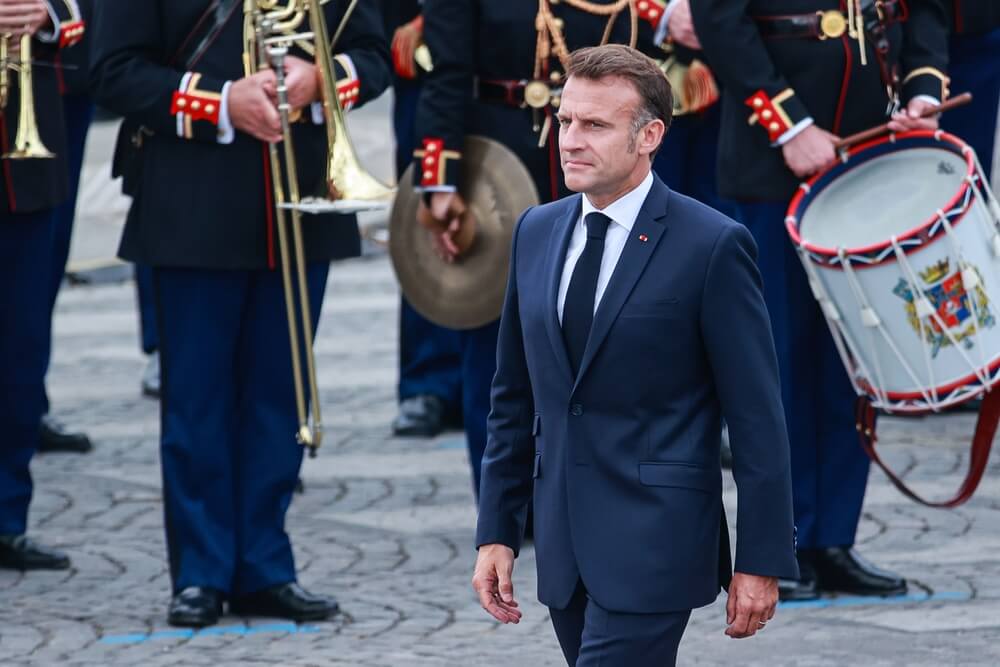 If the United States declares partnership relations with Moscow, Paris considers it possible to act similarly - Emmanuel Macron
The Kremlin promptly supported this initiative, viewing it as an opportunity to exit negotiations with Washington while formally remaining within the “peace track.”
It is evident that Putin will attempt to buy time and may later abandon this format as well, hoping to avoid American sanctions.
The question of whether Paris realises that such steps effectively create a rescue mechanism for the Kremlin remains open.
Overall, the situation indicates a deep crisis in the process of making strategic political decisions at the global level.
Think tanks that recommended the White House distance itself from Europe are effectively undermining the long-term national interests of the United States.
Abandoning support for Europe appears particularly paradoxical given that the overwhelming majority of the white population of the United States is of European origin.
Such a policy signifies a symbolic rejection of the historical homeland for tens of millions of Americans and constitutes an unprecedented geopolitical paradox.
Over time, these mistakes are likely to be corrected; however, the current course carries serious political risks for the incumbent U.S. administration, including the loss of support from a significant portion of the electorate.
Oleksandr Levchenko, a former Ukrainian diplomat, is a professor at the State University (Kyiv) and a member of the Academy of Geopolitics and Geostrategy (Kyiv).
