In January, US President Donald Trump suggested that his newly created Board of Peace might eventually replace the United Nations.
It’s easy to dismiss this as Trump’s typical bluster, but it also underscores the UN’s loss of credibility.
The problem is that the world still desperately needs an institution capable of bringing countries together to tackle global challenges like climate change.
Amid escalating geopolitical rivalries, Security Council paralysis, funding cuts, and the growing willingness of countries like the United States to disengage from multilateral institutions, almost every UN mandate is under strain.
Whoever succeeds António Guterres as secretary-general in January will need to work with member states to restore confidence in the UN’s ability to act and show that multilateralism can still work.
The UN remains the closest thing the world has to a universal forum. Its legitimacy rests on the scope of its membership. But legitimacy does not guarantee credibility.
To prove itself worthy of the role the world needs it to play, the UN must demonstrate that multilateral processes can be transparent, that commitments can be enforced, and that those who make the rules can be held accountable.
This credibility test begins with the process for choosing the next secretary-general. While candidates vying to replace Guterres have published detailed vision statements and faced questions from civil-society groups, the decision remains largely opaque, with the Security Council’s five permanent members wielding outsize influence.
Behind closed doors
The irony is striking: the UN is asking the world to trust multilateral institutions, yet its most important appointment is decided behind closed doors.
How leaders are chosen affects their credibility once in office, making it essential that the process itself be free of conflicts of interest.
The same applies to collective negotiations. While the 2015 Paris climate agreement remains the broadest pact the UN has ever brokered, its largely non-binding structure has left implementation dependent on governments’ willingness to follow through on their pledges.
A decade later, that willingness has been no match for the industries working to impede climate action.
The UN Framework Convention on Climate Change (UNFCCC) still lacks clear, system-wide rules for identifying and managing conflicts of interest
The UN Framework Convention on Climate Change (UNFCCC) still lacks clear, system-wide rules for identifying and managing conflicts of interest, and fossil-fuel interests continue to influence climate negotiations with little scrutiny.
Research by Transparency International found that more than half of the participants at last year’s UN Climate Change Conference (COP30) in Belém did not fully disclose their institutional affiliations.
Climate action
Guterres has used his tenure to push for climate action, criticizing the fossil-fuel industry for expanding production despite knowing that its business model was incompatible with human survival, and has called for a windfall tax on oil and gas profits. But even that is not enough.
With the UN Environment Programme warning that, at the current rate, the global-warming threshold of 1.5° Celsius will be breached within three years, the stakes are too high not to know who shapes the world’s response—and to what end.
The next secretary-general won’t have the authority to set conflict-of-interest rules for the UNFCCC process; such rules are for governments to negotiate and adopt. But that does not mean the secretary-general is powerless.
The position’s public platform and influence across the UN system could be used to press governments and COP presidencies for tougher integrity standards, thereby making it clear that the credibility of the UN’s climate efforts depends on the credibility of those given a seat at the negotiating table.
Collective action is also needed to tackle high-level corruption, state capture, and the global networks that conceal illicit wealth.
International rules are only as effective as the governments willing to implement them and the institutions enforcing them
International rules are only as effective as the governments willing to implement them and the institutions enforcing them.
Both sets of actors can be compromised by the very interests they’re supposed to regulate.
The UN Convention against Corruption remains one of the most important global frameworks for setting common standards and holding governments to them. The next phase of its review in Vienna, which will focus on criminalization and enforcement, offers a unique opportunity to bolster its accountability mechanisms.
But for it to succeed, governments must allow their own records to be scrutinized.
Does multilateralism still have teeth?
These are not separate problems. Whether it is fossil-fuel interests compromising the COP process, the UN’s corruption framework going unenforced, or the Security Council being paralyzed by great-power interests, the question is the same: Does multilateralism still have teeth, or can governments ignore its rules without consequence?
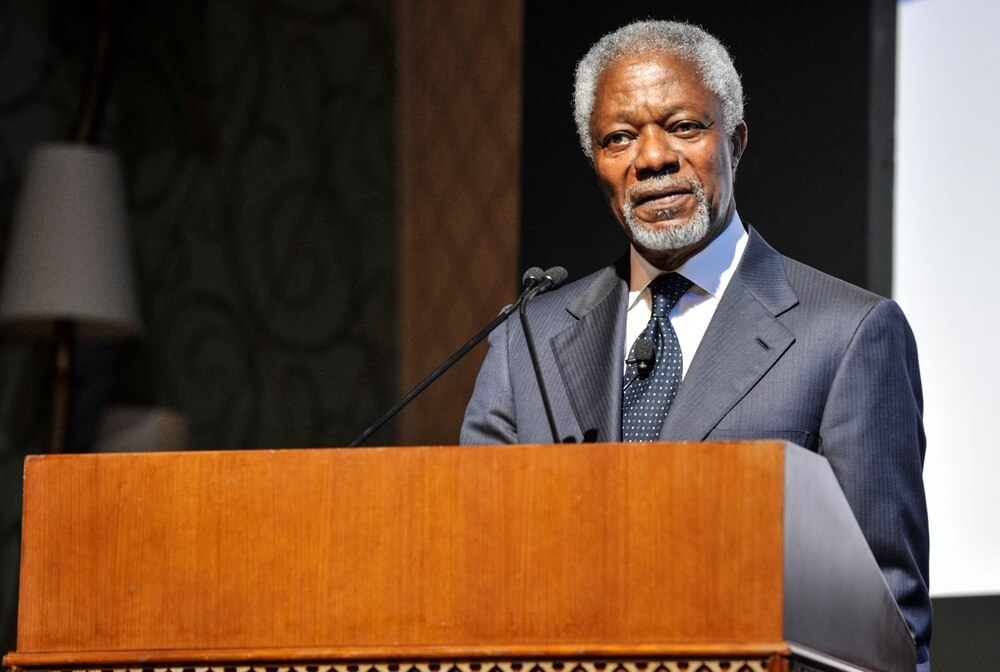 Secretaries-general have repeatedly exercised influence well beyond their formal mandates by building political credibility and personal authority - Kofi Annan
The next secretary-general cannot answer that question alone. But they can decide to spend their political capital on making transparency a top priority, pushing conflicts of interest into the open before they become scandals, and pressuring governments to keep their promises.
History offers plenty of precedents. From Dag Hammarskjöld to Kofi A. Annan, secretaries-general have repeatedly exercised influence well beyond their formal mandates by building political credibility and personal authority.
While candidates in this round have spoken about efficiency, preventive diplomacy, and restoring confidence in the UN, they have said far less about how they would ensure transparency and hold member states to account.
To rebuild credibility, the UN must start from within. That means greater openness about how decisions are made, how resources are used, and how commitments are implemented.
With trust in multilateralism already in decline, the UN must hold itself to the same standards it expects of others.
Maíra Martini is CEO of Transparency International.
