Ayatollah Ali Khamenei was assassinated on 28 February. In the first hours of Operation Epic Fury, another fifty high-ranking officials of the Islamic Republic were killed alongside Ayatollah Ali Khamenei.
Washington described it as a historic moment. Tel Aviv celebrated. For hours, global media broadcast images of the ruins where the man who had ruled Iran for four decades had vanished.
The calculation was straightforward: remove the leader and the system collapses. However, this did not occur. On the eighth day of the war, Iran is still launching ballistic missiles. The Strait of Hormuz is effectively closed. Oil prices have risen by more than ten per cent.
QatarEnergy has declared force majeure on all LNG exports. Iraq has shut down more than two million barrels per day of production because it has nowhere to send its oil.
Mojtaba Khamenei, the son of the assassinated Supreme Leader, remains alive and operational within the system his father spent years building for precisely this scenario. This is not a war that will end quickly.
What Iran actually built
The Iranians knew they would be attacked. It was no secret. Talks in Oman and Geneva broke down in February; tensions had been building for months, and intelligence assessments of a possible strike had circulated in Tehran long enough for action to be taken. And action was taken.
Iran's preparations focused on creating a strategic replacement, not on defending the central headquarters. Several independent structures, many operating from fortified underground facilities in mountainous regions, distribute key functions of authority and command.
This organisation enables management continuity even after the loss of individual centres. Therefore, the elimination of individual headquarters does not interrupt the functioning of the state or the army.
Underground complexes are located in the Zagros Mountains range and its branches. They have been built over years and are a key component of Iran’s survival strategy in the event of a major air war.
According to available estimates, part of the infrastructure was developed with technical assistance from foreign partners, most likely Chinese engineering firms.
These facilities are not traditional shelters. They are large underground systems that include command rooms, communication centres, weapons depots, and launch sites for missile forces.
The Islamic Revolutionary Guard Corps has reorganised itself into semi-autonomous combat groups that can continue operations without orders from above
The tunnels are arranged on several levels and connected by a network of internal corridors, allowing the movement of people and equipment without going to the surface.
Such a structure allows certain parts of the system to continue functioning even if the central command is affected. This is why the destruction of surface facilities does not necessarily paralyse operational capacities located underground.
Ali Larijani, former Speaker of Parliament, assumed the role of central coordinator of the war administration. The current president, former presidents, and the president of the Supreme Court are all functional parts of a system that does not depend on a single person at the top.
Mojtaba Khamenei remains active within that network, and despite Trump’s declaration that he is “unacceptable”, Tehran has not sought American approval regarding who will lead Iran.
The Islamic Revolutionary Guard Corps has reorganised itself into semi-autonomous combat groups that can continue operations without orders from above.
Each has its own target list. None is waiting for approval that may never come because the person meant to give it may no longer be alive. This model was not improvised in the first hours of the war; it has been practised for years.
Missiles that are not easy to find
The United States has been bombing Iran for eight days. More than two thousand targets have been hit. Air supremacy is complete, and American and Israeli aircraft operate over Iranian territory without serious resistance.
Despite this, the most advanced part of Iran's missile forces remains operational and beyond the reach of previous strikes.
These systems are not deployed in traditional missile bases. Missiles such as Fattah-2 and Khorramshahr, as well as newer hypersonic variants modelled on China's DF-17, are housed in underground launch complexes buried deep within mountain ranges. On the surface, there are often no permanent launch pads or infrastructure to reveal their exact location.
The launch systems emerge only when preparing and launching the missile, then return to the underground facilities. As a result, the time between detection and launch is very short, which greatly complicates attempts to identify and destroy such positions with airstrikes.
When the missiles enter the final phase of their flight, their manoeuvrability presents an additional problem. Such a flight profile reduces the effectiveness of existing anti-missile systems and makes interception difficult.
Claims that Iran's missile capabilities have already been neutralised must be viewed with great caution
The American campaign is now entering the phase of targeting underground infrastructure. For these tasks, heavy penetration bombs designed for the destruction of fortified structures are used.
The targets are the entrances to the underground complexes and the transport tunnels that connect the launch sites with the missile depots.
Satellite images show damage at several locations in western and northwestern Iran, including areas around Kermanshah, Tabriz, and Hajj Abad. However, damage to the entrance of an underground facility does not necessarily mean the destruction of the system located below the surface.
If the missiles and launch equipment are located deeper in the complex, they can remain undamaged even if the entrance is blocked.
In such a situation, the arsenal is temporarily unavailable but does not have to be permanently destroyed. There is another possibility: that part of the system has not been located at all and is situated elsewhere.
Therefore, claims that Iran's missile capabilities have already been neutralised must be viewed with great caution. In such a conflict, the difference between an estimate and a confirmed fact can have serious consequences.
Hormuz closed without a navy
As we previously wrote, the Strait of Hormuz is not closed by a military blockade. Iran has neither deployed warships in the passage nor laid mines.
Instead, it took a simpler and, as it turned out, more effective approach: it sent drones towards several tankers and announced via VHF radio that the passage was unsafe.
Insurance companies withdrew coverage. Maersk suspended transit, as did Hapag-Lloyd. More than 150 ships are anchored outside the passage, waiting.
Traffic, which under normal circumstances carried about twenty million barrels of oil per day, has, according to satellite vessel tracking, dropped to virtually zero. There is no need for a navy when market risk achieves the same result.
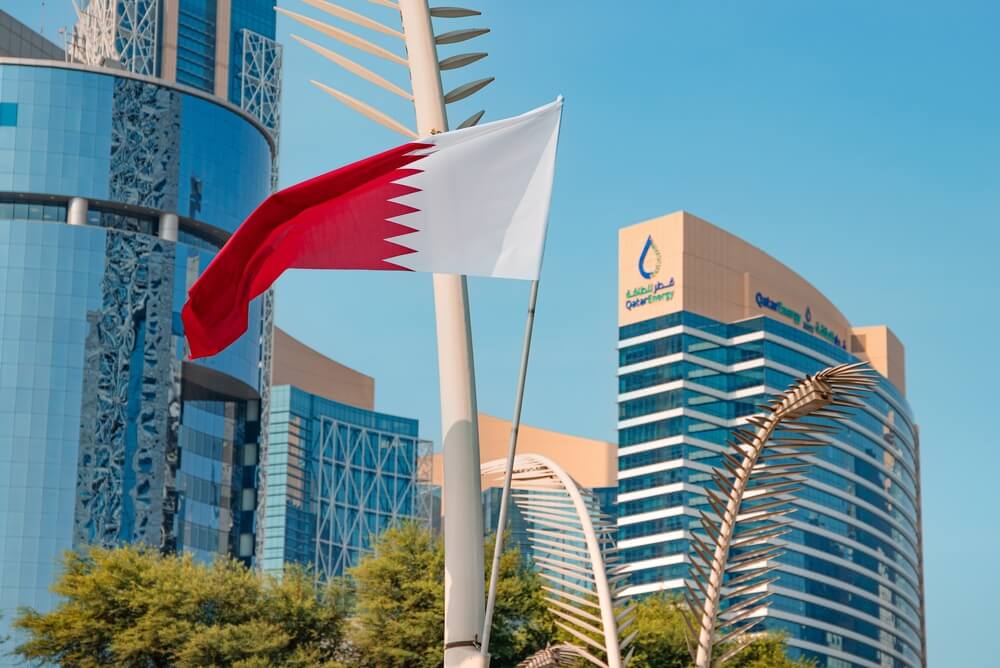 European natural gas prices jumped more than 30% in one day after QatarEnergy halted production at Ras Laffan and Mesaieed
Iraq had to shut down production at several major oil fields as storage capacity was reached and could no longer be emptied. More than two million barrels per day are out of operation, and estimates suggest another one and a half million could be halted in the coming days.
Kuwait and the UAE face the same situation. The oil exists. There are customers. Hormuz stands between them.
Brent crude oil has risen by more than ten per cent since the start of the war and is hovering around $83 per barrel. Bank of America analysts warn of a potential increase of forty to eighty dollars per barrel if the disruption continues.
European natural gas prices jumped more than thirty per cent in one day after QatarEnergy halted production at Ras Laffan and Mesaieed. Qatar supplies a fifth of the world’s LNG, all of which passes through Hormuz.
Helima Croft, who currently leads global commodity market analysis at RBC Capital Markets and previously worked as an analyst at the Central Intelligence Agency, estimates that a prolonged disruption of exports from the Persian Gulf could lead to the biggest energy crisis since the oil embargo of the 1970s.
Saudi Arabia and the limits of alternative routes
Riyadh has one advantage that other Gulf exporters lack: the East-West pipeline, which runs from Abqaiq to Yanbu on the Red Sea, with a capacity of five to seven million barrels per day.
It is the only major infrastructure that bypasses Hormuz. Saudi Arabia also has the largest reserve storage capacity in the region and can endure longer than any other exporter.
The Red Sea has its own vulnerability. At its southern entrance lies the Bab el-Mandeb Strait, a key sea passage between the Indian Ocean and the Mediterranean.
The Houthis, the only pro-Iranian force in the region not significantly weakened during recent operations, remain active in northern Yemen.
Saudi Arabia’s export infrastructure is already beginning to feel the effects of disruptions in maritime traffic
So far, they have avoided full escalation. Their leadership is clearly weighing between a possible political agreement with Saudi Arabia and openly entering the war on Iran’s side. Opting for full military activation would significantly increase the risk of maritime traffic through Bab el-Mandeb.
In such a scenario, Saudi Arabia would probably retain the military advantage. However, even limited attacks on ships or energy infrastructure could have serious consequences for regional energy flows and the stability of maritime transport.
Saudi Arabia’s export infrastructure is already beginning to feel the effects of disruptions in maritime traffic. The Ras Tanura and Juaymah terminals, located on the Persian Gulf coast in eastern Saudi Arabia and serving as key loading points for Saudi oil, are filling up rapidly as tankers cannot leave the region at their usual pace.
If the stoppage in transport continues, storage capacities at these terminals will quickly be reached. In that case, Saudi Arabia would have to cut production, not due to a lack of demand, but because the oil cannot be exported.
What this war really is
The United States and Israel possess complete air superiority; that is not in dispute. However, control of the airspace alone does not determine the outcome of a war.
Iran’s strategy is to prolong the conflict and increase its political and economic costs. If disruptions in energy flows from the Persian Gulf begin to seriously affect global markets, political pressure on the governments conducting the operation may increase.
The political dynamic in Washington is currently moving in the opposite direction. The US Senate rejected a resolution that would have required special congressional approval from the president to continue military operations against Iran, effectively confirming political support for the campaign.
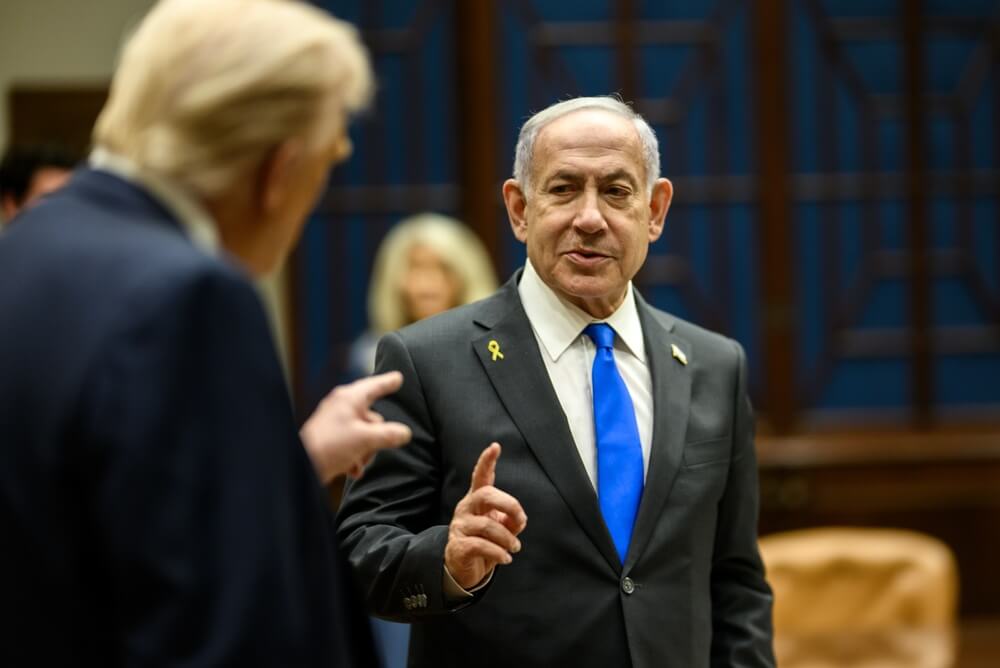 The key question of this war does not yet have a clear answer: can US and Israeli forces reliably locate and destroy the main part of Iran’s underground missile system? - Donald Trump, Benjamin Netanyahu
At the same time, the first American military losses have occurred. At least six members of the US forces lost their lives in the early stages of the conflict. All this has happened in the first week of the war.
The key question of this war does not yet have a clear answer: can US and Israeli forces reliably locate and destroy the main part of Iran’s underground missile system?
If that happens, Iran will lose its most important instrument of military retaliation, and the space for negotiations will open much more quickly.
If this does not happen, the conflict will enter a longer phase in which the consequences will increasingly shift from the battlefield to the energy economy and international politics.
In that scenario, the consequences of war will extend beyond Iran, Israel, and the United States; they will be felt by global energy markets and countries not formally involved in the conflict.
The first week of the war showed that the initial assessment of Iran’s rapid collapse was unrealistic. The airstrikes destroyed a large number of targets but did not change the basic fact: Iran’s system is still operational and retains the ability to influence the course of the conflict.
Therefore, this war can no longer be seen as a short operation with a clear ending. Its further course will depend on a number of factors far broader than the battlefield itself – from the stability of energy flows to political decisions in Washington, Tehran, and other capitals.
What just a week ago looked like the beginning of a rapid unravelling now appears to be the start of a conflict whose real scope is only beginning to emerge.
The world that on 28 February thought it was witnessing the swift end of a dictatorship is today witnessing something with no foreseeable end.
That error in judgement will be one of the most important lessons of this war.
