The message could not be more stark from civil rights and immigrant welfare groups to the millions of fans thinking about attending the football World Cup co-hosted by the US this summer: “Know the risk before you travel.”
A travel advisory from the groups in Florida, including the American Civil Liberties Union, says aggressive immigration measures, such as racial profiling and detention, mean travellers should think again about visiting the US.
“Florida is no longer a safe destination for international tourists,” says the advisory. “With the FIFA World Cup 2026 coming to Miami, travellers may face unprecedented risks of racial profiling, wrongful detention in inhumane conditions without consular access, and heinous human rights violations—regardless of legal travel status.”
Many tourists have already opted to steer clear. The US was the only major country to see a fall in travellers in 2025, recording a record 6% drop, according to the World Travel and Tourism Council.
The US tourism industry was hoping for bumper tourism receipts, but these may well take a hit from the heavy-handed tactics of US Immigration and Customs Enforcement (ICE) agents.
President Donald Trump’s anti-immigrant drive and general hostility towards the outside world, including long-standing allies, is keeping many people away. “Once aspirational, a US trip now feels for many like both a political act, a leap of faith for entry and a financial burden,” wrote Sarah Kopit on the tourism industry website Skift.
Before Trump, this year’s celebrations for the 250th anniversary of US independence had also been expected to add to record numbers of foreign visitors this summer.
Gianni Infantino, president of FIFA, or the Fédération Internationale de Football Association, last month forecast the World Cup would generate $30 billion for the US “in terms of tourism, catering, security investments and so on” and attract 20 million to 30 million tourists.
Tourists alarmed by ICE detentions and shootings
But these numbers will have to be seen to be believed, say many Americans. Around the world, would-be visitors have watched with trepidation the shooting dead of two US citizens in Minneapolis by ICE agents in January, along with the ongoing detentions of people with no criminal records and without having committed any offence.
Karen Newton, a 65-year-old British grandmother, was blunt after she and her husband spent 45 days in ICE detention despite having valid visas: “Don’t go to the US.”
Newton told The Guardian that she overheard ICE officers speaking about the bonus they received for each detention they instigated. Since last August, new ICE recruits receive a signing-on bonus of up to $50,000, while the agency’s budget is now $85 billion, up from $6 billion a decade ago.
Washington has not ruled out ICE agents working at the soccer games
Her story is similar to those recounted by other travellers, and many others are believed to have had similar experiences but have chosen not to go public, often to protect family members living in the US.
Trump is upbeat about the football tournament, saying: “This will be a once in a lifetime opportunity to showcase the beauty and the greatness of America. And we can’t wait to welcome soccer fans from all over the globe.”
But not everyone shares his optimism, particularly because Washington has not ruled out ICE agents working at the football games. Sepp Blatter, former FIFA president, said on X: “For the fans, there’s only one piece of advice: stay away from the USA!”
Travel bans and visa fees
The World Cup is being hosted jointly by the US, Canada and Mexico, where recent cartel violence may also deter visitors. The tournament will last for a month starting on 11 June, and a record 48 national teams will play 104 matches in 16 cities across the Americas.
But there is some uncertainty over the exact venues, as Trump has repeatedly threatened to move matches away from several Democrat-run cities, and those at risk are Boston, Los Angeles, San Francisco and Seattle.
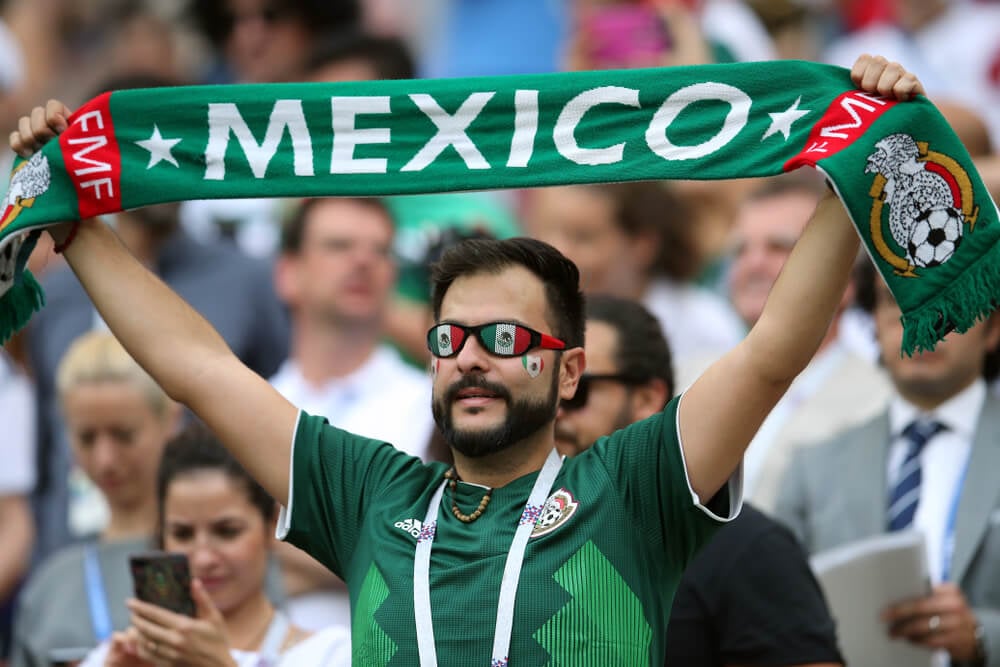 The World Cup is being hosted jointly by the US, Canada and Mexico, where recent cartel violence may also deter visitors
In addition, citizens of 19 countries, including World Cup participants Haiti and Iran, have faced US travel restrictions since June, and many have now had their US asylum decisions frozen indefinitely.
The ban does exempt World Cup athletes, coaches and their immediate relatives. But their fans are barred. Those theoretically allowed entry on non-immigrant tourist and business visas but not from visa waiver countries face a new $250 “visa integrity fee”.
The US also plans to start vetting the social media histories of foreign visitors, including those from countries with visa waiver arrangements, including those in Europe. Social media has been abuzz with rumours of thousands of fans cancelling their World Cup tickets because of their potential arrest by ICE.
Bookings for summer travel are looking weak. Flight data company Cirium said last month there was a 14.2% fall in July bookings from Europe compared with last year.
It is hard to see how the US may counter the trend, particularly after federal funding for Brand USA, the national marketing organisation, was cut in mid-2025 and it suffers from staff shortages.
Wharton Business School sports economist Kenneth Shropshire told Marketplace that he was not hopeful that large numbers of people will come this summer.
“People come to be part of the festivities of the ‘beautiful game,” he said. “So how are we going to treat the Black and brown people of the world that are simply fans coming to the United States to enjoy the World Cup?”
