The Swiss voted today on a proposal to insert detailed rules on neutrality into the constitution and appear to have rejected an initiative that would have prohibited the country from imposing sanctions on a state participating in a war, unless such measures are required by the United Nations or are necessary to prevent other countries’ sanctions being bypassed through Switzerland.
The referendum proposal, backed by the country’s largest party, the hard-right SVP, also called for Switzerland to limit its military cooperation with defence alliances unless the country itself is attacked or an attack on it is imminent.
In a country where numerous international banks operate, and where European security also depends on the exchange of information between neighbours, these decisions are far more concrete than the usual debate about national identity.
Neutrality already prohibits Switzerland from participating in wars between other states and from ceding its territory for their military operations.
The government, however, distinguishes those obligations from political decisions on economic sanctions, diplomatic positions and cooperation in training.
The proponents wanted to restrict that freedom of choice with a constitutional rule that future governments would not be able to circumvent easily.
Citizens have therefore decided whether future governments and parliament will retain the ability to determine the limits of neutrality in each case.
Sanctions against Russia before the constitutional test
After Russia’s invasion of Ukraine, Bern adopted a large part of the European Union’s sanctions. In August, it also accepted measures from the EU’s twentieth package, including further restrictions on individuals and companies, as well as steps against attempts to circumvent bans.
According to the Swiss authorities, on 1 July about 8.5 billion francs in assets linked to Russian individuals and companies subject to sanctions were frozen in the country.
Switzerland is not a member of the EU, so each decision to adopt European measures is made independently.
If the referendum initiative were to pass, precisely these decisions would have to be subjected to legal review.
The federal government estimates that existing sanctions on Russia would most likely need to be lifted or amended, but the final scope of these changes would depend on how an exception to prevent the circumvention of other countries’ sanctions is interpreted.
Some measures could remain in force if necessary to prevent Swiss banks and companies from being used for activities banned in other countries.
The constitutional text itself does not require that all frozen assets be immediately unfrozen: for each measure, a legal basis would have to be established and the appropriate procedure followed.
Switzerland is an important financial and trade centre, so its sanctions also affect the operations of companies from other countries
Switzerland is an important financial and trade centre, so its sanctions also affect the operations of companies from other countries. Under the proposal, in a future war Bern would no longer be able to impose sanctions independently on a warring state.
It could apply UN sanctions and prevent Switzerland from being used to circumvent measures imposed by other countries.
However, any Security Council decision can be blocked by a veto from any of the permanent members, including Russia.
If that happens, Bern’s response would depend on the measures others have already put in place and on what Swiss law allows to prevent those measures being circumvented.
Supporters of the initiative see the sanctions as a break with neutrality that diminishes the country’s ability to speak to all parties in a conflict.
The government and parliament warn of the opposite practical risk: the rule would also apply to future wars, when Bern might have reason to react swiftly to serious violations of international law without a Security Council decision.
The new constitutional article would restrict that discretion, regardless of who starts the next war or what response Bern considers justified.
Cooperation established before an attack
Switzerland has been cooperating with NATO through the Partnership for Peace programme since 1996, while maintaining its decision to remain outside the alliance. Swiss and NATO officials have agreed on a cooperation framework for the period 2025 to 2028 that includes, among other elements, training, harmonisation of military communication systems and civil service preparations for crises.
This framework is voluntary and does not oblige Switzerland to participate in wars or defend a NATO member. The government itself decides which activities to accept.
The initiative would allow military cooperation with defence alliances only if Switzerland is attacked or an attack on it is being prepared.
Proponents argue that exchanging information with neighbouring countries and taking measures necessary for self-defence would still be possible.
However, the government believes that some current joint exercises and preparations should be discontinued.
The government believes that the proposal would make preparations for the defence of the country more difficult
The proposal does not prohibit all information exchange, but, if adopted, it would be necessary to determine which data and activities fall under cooperation with a defence alliance.
Arrangements for military liaison, airspace surveillance and early warning exchange must be tested before a crisis. The initiative would restrict such preparations with NATO unless an attack on Switzerland were being prepared.
If problems in cooperation were identified only at that stage, there would be little time left to resolve them. The government therefore believes that the proposal would make preparations for the defence of the country more difficult.
Proponents warn that more frequent joint exercises and agreements with NATO could gradually align Switzerland’s defence policy more closely with the alliance’s priorities.
Citizens do not vote on such agreements, so proponents want to set limits on cooperation in the constitution. The government replies that participation in each programme is voluntary and that neutrality already restricts what it can accept.
The political dispute continues even after the vote
In the Tamedia/20 Minuten survey published on 16 September, 68 per cent of respondents said they were against the initiative and 31 per cent were in favour.
If this ratio is confirmed in the vote, the government will retain the right to decide on sanctions and cooperation with NATO on a case-by-case basis.
At the next contested decision, it will again have to explain why it considers this compatible with Swiss neutrality.
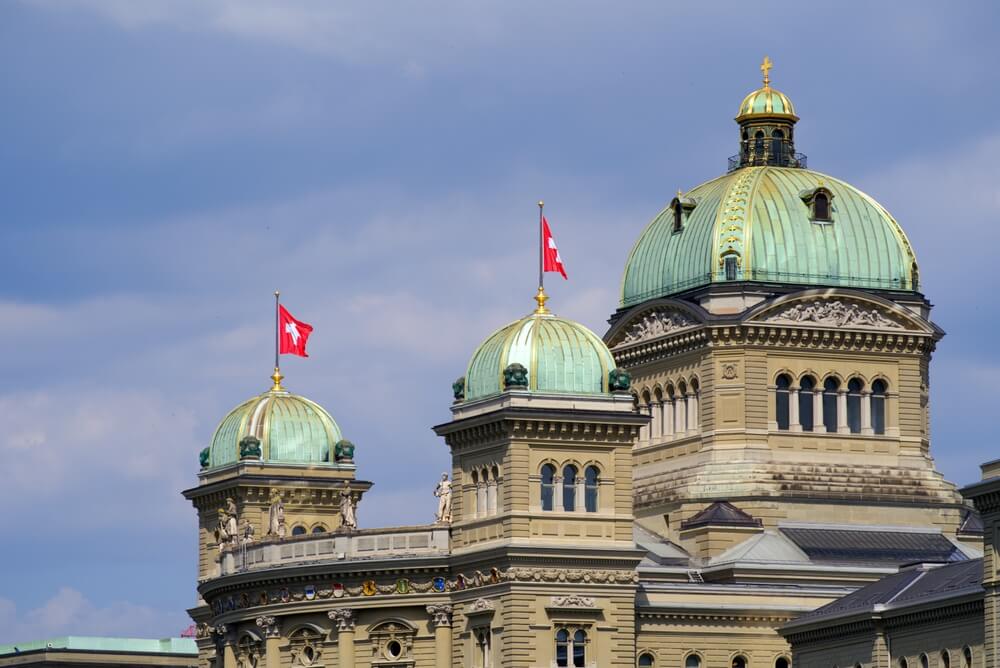 Bern would still have to decide how far it can follow the sanctions of its European neighbours - Federal Parliament
Passing the initiative would create a slower, more complex process than the simple wording of the referendum question suggests.
The authorities will have to compare existing sanctions with the new constitutional ban, distinguish measures against a warring state from bans that merely prevent the circumvention of foreign rules and review the military programmes in which Switzerland already participates.
The courts and Parliament could play an important role in clarifying the meaning of terms such as “imminent threat of attack” and “prevention of sanctions circumvention”.
A likely defeat of the initiative would leave unanswered the question it raised. Bern would still have to decide how far it can follow the sanctions of its European neighbours while retaining the possibility of talks with their adversaries, and how much military preparation it can share with NATO without joining the alliance. The next major international crisis will again demand answers.
The referendum will determine whether the government provides them within the limits of current law or under a new, much narrower constitutional mandate.
Even if the initiative were passed and Bern lifted some of its sanctions, Swiss banks would not automatically resume the business they are currently refusing to conduct.
Their association states that many also comply with foreign sanctions that do not formally bind them because of their relationships with banks and other partners abroad.
Changing the constitution could therefore significantly alter state policy, but would affect the day-to-day operations of its financial sector far less.
