Both Sweden and Japan are pursuing new civilian foreign intelligence services, though their efforts are at different stages.
Russian sabotage and Chinese military pressure are sharpening the need for better intelligence, even as artificial intelligence and pervasive digital surveillance are changing how it is gathered.
Both countries have a chance to build services that bring human intelligence, technical expertise, and strategic analysis together from the start.
As Japan strengthens its military capabilities in the face of an increasingly aggressive China, it is also seeking to consolidate intelligence capabilities currently spread across the police, defense and foreign affairs ministries, and other parts of government.
Tokyo has not yet approved a new intelligence agency, but it has reorganized how intelligence reaches the prime minister and introduced reforms to coordinate collection and analysis across ministries.
The governing coalition has also called for an independent foreign intelligence agency by the end of Japan’s 2027 fiscal year.
Sweden’s new foreign intelligence service will reportedly begin operations in January, and the government has named a former ambassador as its first director-general.
Although Sweden already has well-respected military intelligence, domestic security and signals intelligence services, the Riksdag has approved legislation establishing a civilian service to collect and analyze foreign intelligence.
Russia’s invasion of Ukraine, Sweden’s accession to NATO, and the growing vulnerability of Europe’s infrastructure have increased Stockholm’s need for timely, independent foreign intelligence.
Human intelligence remains essential
Both Sweden and Japan are creating new civilian intelligence capabilities at a moment of profound change in both the world’s security environment and the practice of espionage itself.
Modern surveillance systems can track travel, financial transactions, mobile devices, biometric signatures, and online behavior on a scale that would have been unimaginable just a decade ago.
Artificial intelligence can detect patterns and uncover connections long buried in the vast amounts of data intelligence agencies collect.
Commercial satellites, social media, corporate records, and technical databases reveal information that once required classified collection.
Meanwhile, many of the most consequential strategic developments in artificial intelligence, telecommunications, biotechnology, quantum science, and advanced manufacturing are taking place outside government.
Human spying is becoming harder even as the universe of potentially valuable information grows larger
While the intelligence world will necessarily increase its use of technical tools, human intelligence remains essential because governments still need information that cannot be found in databases, satellite imagery, or public reporting. Governments still need human sources to understand leaders’ intentions, adversaries’ private deliberations, and the hidden relationships that shape events.
I spent my career in the CIA’s Clandestine Service, recruiting and handling sensitive sources.
Human spying is becoming harder even as the universe of potentially valuable information grows larger.
Throughout my career I could be confident that if I was not caught red-handed meeting a source, the relationship remained secret.
Today, the surveillance tools available to domestic security services make it increasingly difficult to keep covert relationships secret.
Building new services
Sweden and Japan can learn from the strengths of older intelligence services without inheriting their structures, assumptions, or bureaucratic divisions.
They should resist the temptation to reproduce, even on a smaller scale, the CIA, Britain’s Secret Intelligence Service, or France’s DGSE.
While these new services cannot match the global reach or resources of their larger allies, they have an opportunity to rethink what an intelligence service designed for the twenty-first century should look like.
They are not burdened by the habits and operating methods that older institutions developed to confront earlier threats.
Building new services gives both countries room to organize around today’s needs.
The Tokyo and Stockholm governments should give their new civilian services a clear mandate to collect foreign intelligence and produce strategic assessments for civilian policymakers.
Swedish intelligence has a history of productive intelligence relationships with the foreign partners
Each should pair a small, professional clandestine service with strong technical and analytical capabilities, draw lawfully on expertise in business, science, finance, and academia, and work closely with regional partners.
Both governments should define how the new service will work with military intelligence, domestic security, and signals intelligence, and designate who is responsible for bringing their reporting together into coordinated assessments.
The strength of each service will come from how well it draws on expertise at home and builds intelligence relationships abroad.
Swedish intelligence, in particular, has a history of productive intelligence relationships with the foreign partners (liaison).
During the Cold War, liaison helped neutral Sweden maintain critical links with the U.S. and its allies.
NATO membership and longstanding ties with Western services give Sweden access to intelligence it might otherwise struggle to obtain.
NATO’s center for understanding Russian activity in the High North
However, intelligence cooperation is not built on friendship alone. Liaison relationships are fundamentally transactional, and services cooperate most effectively when each side brings something valuable.
Sweden’s most obvious expertise that it can share with partners is its deep understanding of the Baltic Sea, the Nordic region and the Arctic.
It has close integration with Finland, proximity to Russia, and deep relationships with Estonia, Latvia, Lithuania, Poland, and the other Nordic countries.
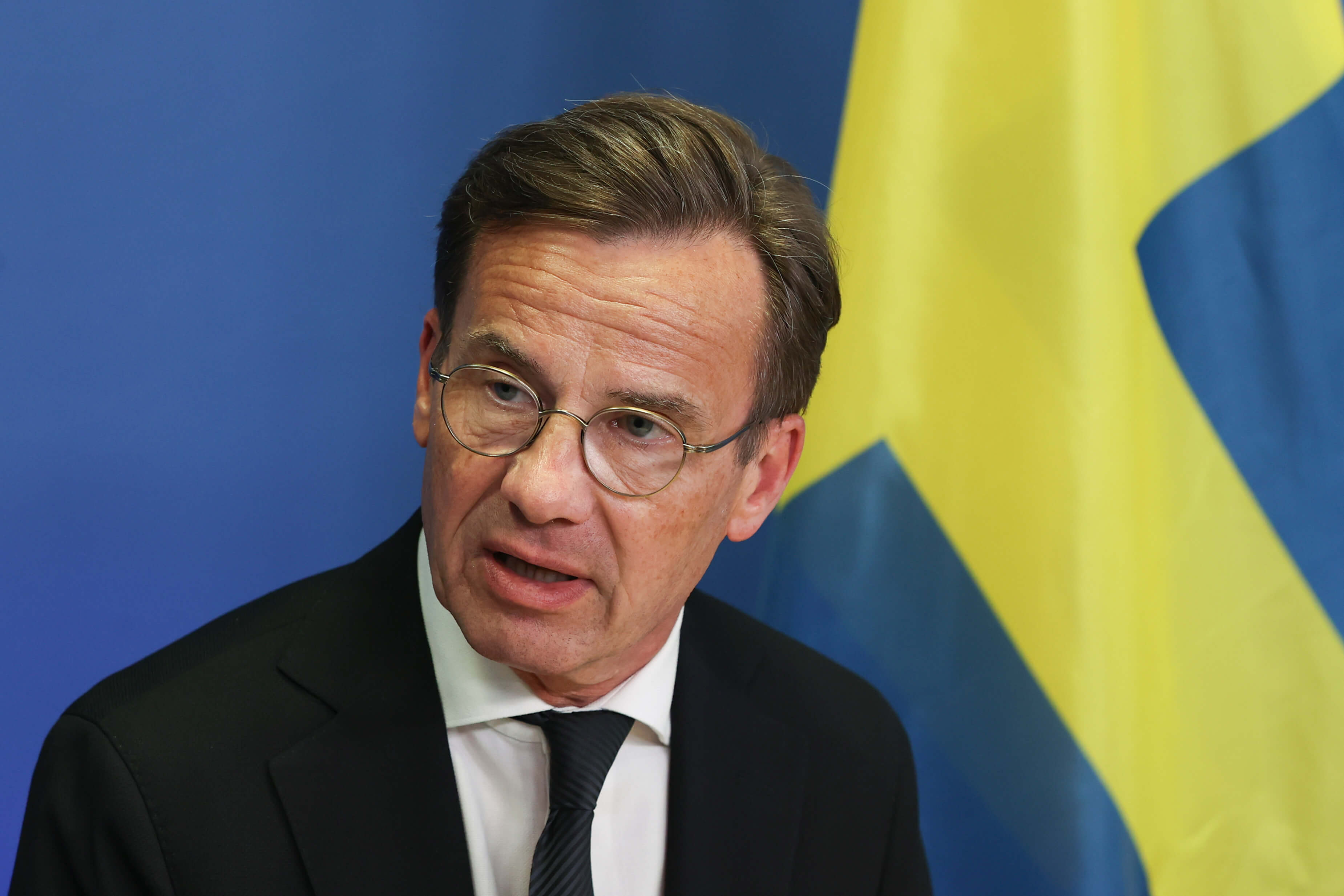 Sweden’s positive international reputation opens doors in places where larger Western powers may encounter suspicion - PM Ulf Kristersson
Sweden and Finland also understand the Russian threat more clearly than many other European states and maintain capabilities that others have allowed to weaken.
Its military intelligence service, MUST, has always been a leader in understanding threats from Russia.
Stockholm should therefore seek to become NATO’s premier center for understanding Russian military, political, and economic activity in the Baltic and the High North.
Its focus will likely include undersea infrastructure, ports, telecommunications cables, energy networks, Arctic development, sanctions evasion, Russia’s shadow fleet, sabotage, influence operations, and Moscow’s growing use of covert attacks and criminal intermediaries.
Although Sweden is a relatively small country, its companies, engineers, banks, scientists, diplomats, and universities operate far beyond its borders.
These networks offer access, technical knowledge, early warning, and potentially cover for intelligence officers.
Sweden’s positive international reputation opens doors in places where larger Western powers may encounter suspicion. Preserving that trust should be a strategic priority.
Extensive commercial ties
Japan brings a different but equally valuable set of advantages. Its proximity to China, North Korea, and Russia’s Far East puts it in a strong position to monitor naval movements, missile activity, and electronic emissions across a strategically important region.
Decades of technical collection and intelligence cooperation with Washington provide an established foundation on which to build.
Japan’s global businesses and diplomatic relationships also offer deep regional knowledge and insight into economic networks.
Tokyo should make its new civilian service a leading source of intelligence for its allies on how Beijing uses trade, technology, and finance to exert pressure across the Indo-Pacific.
Japanese trading houses, manufacturers, banks, and infrastructure companies have longstanding relationships across Asia and beyond
Both countries can draw strategic advantage from their extensive commercial ties.
Japanese trading houses, manufacturers, banks, and infrastructure companies have longstanding relationships across Asia and beyond, while Swedish industrial firms operate in dozens of countries.
Their executives bring extensive international experience, while their technical specialists offer expertise that intelligence services need.
Ericsson, for example, gives Sweden particular depth in telecommunications architecture, mobile networks, international standards, and global connectivity.
First-rate civilian foreign intelligence services
While outsiders often focus on collection operations – opening stations, recruiting sources, and gathering secrets abroad – a strong analytic cadre will be of equal or greater importance to the new agencies.
Both Sweden and Japan have world-class universities and should be able to quickly assemble teams of analysts, economists, scientists, technologists, regional experts, and military specialists to integrate clandestine reporting with signals intelligence, cyber intelligence, financial data, commercial records, satellite imagery, scientific knowledge, and foreign-language open sources.
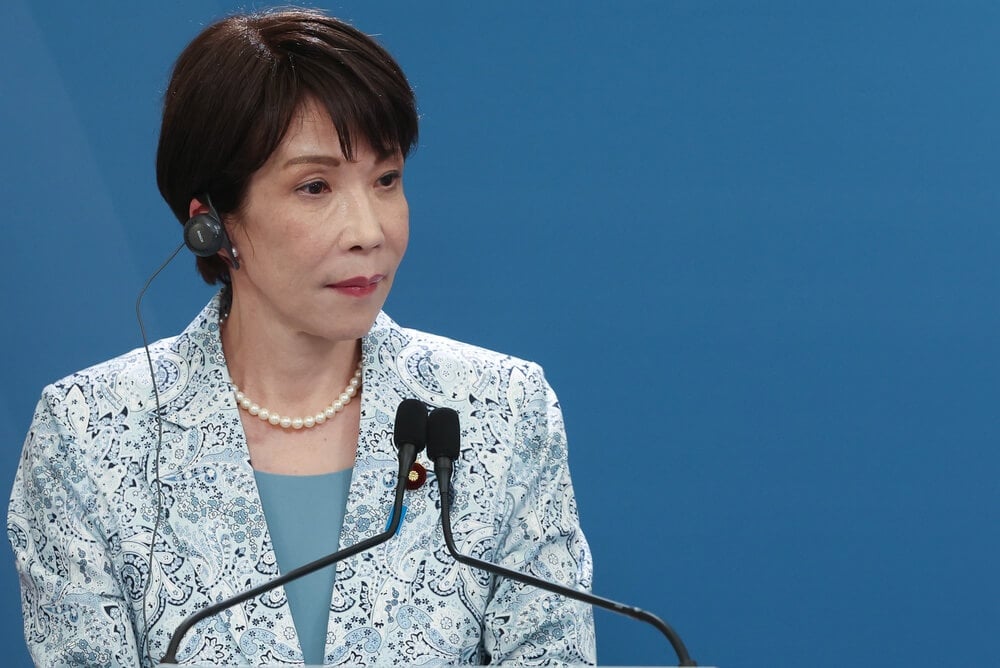 Sweden and Japan already have the resources, domestic networks, international relationships, and institutional memory to build first-rate civilian foreign intelligence services - PM Sanae Takaichi
The same principle applies to science and technology. Both Sweden and Japan have robust expertise and should build formal, transparent partnerships with universities, research institutions, and private-sector experts in fields such as AI, quantum science, telecommunications, advanced materials, and space.
Both countries have an opportunity to clarify how their new services will share responsibilities with existing military intelligence, domestic security, and signals intelligence organizations.
The new services should bring together the work of these institutions so policymakers can draw on coordinated assessments and spend less time reconciling separate reports.
It is equally important to set clear legal limits, provide for independent oversight, and foster a culture of professional integrity.
Operations require secrecy, but the public should understand why the services are needed, what they do, and where their authority ends.
Sweden and Japan already have the resources, domestic networks, international relationships, and institutional memory to build first-rate civilian foreign intelligence services.
They can bring operators, analysts, scientists, economists, and data specialists together from the start and make collaboration part of how the services work.
By building on their own strengths, Sweden and Japan can give their larger allies capabilities they need and show other democracies how to build intelligence services of their own.
John Sipher (@johnsipher.bsky.social) is a non-resident senior fellow at the Atlantic Council and co-founder of Spycraft Entertainment. He worked for the CIA’s Clandestine Service for 28 years and is the recipient of the Agency’s Distinguished Career Intelligence medal. He is also a host and producer of the "Mission Implausible" podcast, exploring conspiracy theories.
