On 17 November, the Canadian Prime Minister, Mark Carney, met the Chinese President, Xi Jinping, in Shenzhen, ahead of the Asia-Pacific Economic Cooperation (APEC) summit, and they agreed to expand customs facilities for Canadian exporters.
The next day, he announced that the two countries were opening access to each other’s banks and other financial companies.
The same summit was attended by Donald Trump, who, on 24 January, threatened a 100 per cent tariff on Canadian goods if Ottawa implemented a trade deal with Beijing. Trump then warned Carney not to turn Canada into a “drop-off port” for Chinese goods destined for the American market.
The Trump administration is now negotiating with Ottawa over rules that will determine the future of Canadian industry, while Beijing gains more room for new business in America’s neighbourhood.
On 1 July, the US administration refused to extend the trade agreement between the US, Canada and Mexico under its previous conditions. The agreement remains in force, but from now on it will be reviewed every year, and each of the three countries may withdraw from it with six months’ notice.
Canadian car manufacturers must now decide where to invest over the next decade, even though they do not yet know what conditions Washington will require for them to sell their vehicles in the American market.
A market that Canada cannot easily replace
In 2025, Canada exported goods worth 555.4 billion Canadian dollars, or about 389 billion US dollars, to the United States, and 34.9 billion Canadian dollars, or about 24.4 billion US dollars, to China.
American buyers accounted for about 72 per cent of Canadian merchandise exports, and Chinese buyers for less than 5 per cent.
Carney wants to increase exports to China by 50 per cent by 2030. Even with such growth, exports to China would be worth about C$52.4 billion, or US$36.7 billion, less than a tenth of the value of goods sold to the US in 2025.
Canada’s car industry shows how deep that dependence runs. Parts for a single vehicle can cross the border between Canada, the US and Mexico several times before the finished car leaves the factory.
Canada has more scope to diversify its raw materials and products so they can more easily find buyers in distant markets
When a new tariff is imposed, or a requirement to sell a vehicle in the US changes, the consequences are felt by manufacturers on both sides of the border, from large plants to small suppliers.
Canada’s motor vehicle and parts exports are down in 2025, and new US tariffs are making long-term investment planning even more difficult.
Canada has more scope to diversify its raw materials and products so they can more easily find buyers in distant markets. The expansion of the Trans Mountain pipeline has already made it possible to export more Canadian oil through Pacific ports, and China will be the main buyer of oil exported this way in 2025.
In services, dependence on the US is lower, as the US market accounts for about 53 per cent of Canadian service exports. Trade with Europe and Asia may grow, but the hardest industries to change will be those whose factories were built because of their proximity to the US market.
Canada gains customers, China seeks access to industry
Under the agreement with Xi, from the beginning of 2027 to the end of 2028 China will temporarily remove additional tariffs on certain Canadian products, whose annual exports are worth about 400 million Canadian dollars, or about 280 million US dollars. These include pork, shrimp, shellfish and fish.
Beijing imposed the tariffs in March 2025 in response to Canada’s October 2024 tariffs on Chinese electric vehicles, steel and aluminium. In return, Canada will extend tariff exemptions for certain Chinese steel and aluminium products and apply them to a further 32 types of products that are in short supply in the domestic market.
None of the current deals reduces Canada's dependence on American customers
Carney is seeking Chinese buyers at a time when the US government is trying to move more industrial production back to the US. Beijing wants new export markets and for its companies to be able to participate in investments in Canada.
The pork and seafood deal will benefit producers who have lost Chinese orders, while the scope of future financial and industrial deals will depend on specific decisions by investors.
This gives Ottawa new opportunities, but none of the current deals reduces its dependence on American customers.
A 200 billion yuan currency agreement awaits its first test
At a meeting in Vancouver on 9 November, the two governments agreed to closer cooperation between the institutions that supervise banks and financial markets.
Beijing has invited Canadian pension funds to invest in the Chinese economy, and Canadian financial institutions are considering raising money by issuing yuan-denominated bonds.
For large new investments, suitable banks and funds still need to be found, and they will assess the business and political risks themselves.
 The agreement between the central banks allows for the temporary exchange of currencies of up to 200 billion yuan (30 billion US dollars)
The agreement between the central banks, renewed in January for five years, allows for the temporary exchange of currencies of up to 200 billion yuan, about 30 billion US dollars.
When Canadian banks need yuan to make payments in China, Canada’s central bank can obtain them from China’s, rather than each bank having to navigate the market individually.
The two countries plan to complete a joint review of the procedures by the end of this year and to conduct a trial use of the funds in 2027. Only that trial will show how the agreement would work in a financial crisis.
By comparison, the Bank of Canada has a standing agreement with the US Federal Reserve, the US central bank, to obtain dollars without a predetermined ceiling. According to its report, it used neither that facility nor the agreement with China in 2025.
According to the International Monetary Fund, the dollar accounted for 56.7 per cent of the world’s foreign exchange reserves in the second quarter of 2026, while the yuan accounted for 2.11 per cent.
Wider use of the yuan may make it easier for Canadian companies to make payments to China, but it cannot compensate the carmaker for lost American orders or give it preferential access to the US market.
Chinese capital does not open the door to the American market
In January, Canada agreed an initial annual quota of 49,000 Chinese electric vehicles with a 6.1 per cent tariff, after the previous additional 100 per cent tariff on vehicles covered by the quota was lifted, with the new regime taking effect in March.
Carney said that if negotiations with Washington fail to save the Canadian car industry, he may discuss production with Chinese, European or Japanese companies.
At the same time, he stressed that Chinese investment would have to involve real factories, Canadian workers and suppliers, rather than reducing production to the assembly of imported parts.
In US–Canadian trade, the origin of parts is crucial. Under the rules of the North American agreement, at least 75 per cent of the value of a passenger car, calculated according to the prescribed procedure, must come from the US, Canada or Mexico for the vehicle to receive preferential customs treatment, and special conditions apply to key parts such as engines, transmissions and batteries.
Carney would benefit from new Chinese investment only if it created production that Canada could sustain in the long term
A vehicle assembled in Canada with a large proportion of Chinese components will not automatically receive preferential access to the US market, and Washington is seeking further restrictions on parts from China in the negotiations.
In Ontario, the consequences of American pressure are already being felt. In October 2025, Stellantis decided to transfer production of the Jeep Compass model, which had been planned for Brampton, to Illinois in the US.
The Canadian government threatened legal action this November after Stellantis announced the sale of its Brampton plant, claiming the company had breached state aid conditions by suspending the planned production.
The Premier of Ontario, Doug Ford, warns that opening the market to Chinese electric vehicles could threaten jobs and access to American customers. Carney would benefit from new Chinese investment only if it created production that Canada could sustain in the long term without losing its main export market.
Ottawa must maintain control over investments
Chinese banks have been operating in Canada for years, and the Bank of China has been there since 1993. In future investments in factories, technology and finance, it will be important to determine who controls production, data and corporate decisions.
Canadian law allows the government to review foreign investment, regardless of its value, for security reasons. In the 2026 budget, the government also proposed giving itself the power to order banks to sell stakes in Canadian companies if a security risk arises after the investment.
Canada wants to double exports outside the US by 2035
Such control must have real substance, because a new dependence on a single large investor would limit the freedom of decision-making that Ottawa is trying to preserve.
Canada wants to double exports outside the US by 2035, including sales to the European Union, Asia and other regions, and that goal requires investment in ports, rail and manufacturing capacity.
China will be an important part of that policy, but the Canadian government will have to assess any major Chinese investment in terms of its impact on domestic manufacturing, security and access to the US market.
Washington will pay the price for the uncertainty it creates
Over the next year, Ottawa is most likely to expand trade in agricultural products and energy and to develop financial relations with China, while deciding more cautiously on major Chinese investments in car factories, pending a clearer outcome of negotiations with Washington.
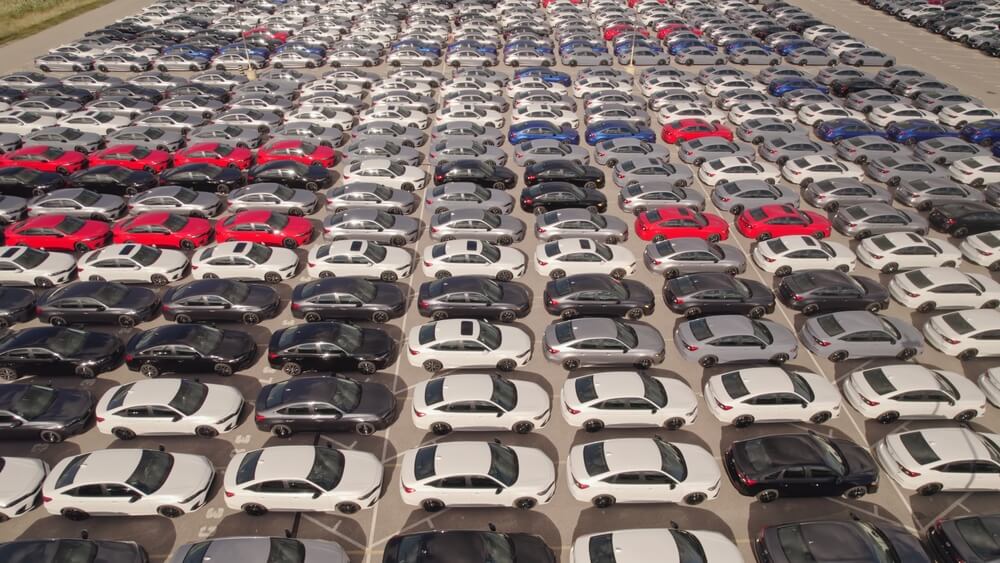 Tying Canadian factories too closely to Chinese suppliers could trigger US measures that would threaten the very jobs Carney wants to preserve
Beijing is already gaining new opportunities in the economy of a country whose industry is tied to the US, without any obligation to replace its primary export market.
Carney is bringing in alternative partners for the negotiations, but tying Canadian factories too closely to Chinese suppliers could trigger US measures that would threaten the very jobs he wants to preserve.
Washington may demand stricter rules on Chinese parts in North American cars, but it will have to provide stable enough conditions for Canadian manufacturers to make investment in joint production worthwhile.
If it continues to make it harder for Canadian factories to do business while trying to limit the presence of Chinese companies, it will open new doors for Beijing in the industries and finances of its closest trading partner, and part of the price will be paid by US manufacturers that depend on Canadian suppliers.
