Every year, our discussions about the technology's future change and evolve. While some predictions come true more quickly than anticipated, others fade.
We are simultaneously reaching multiple milestones as 2026 draws near. Opportunities and risks are revealed by the misuse and underuse of artificial intelligence.
Autonomous cars are almost ready for widespread use. We have just glimpsed how retail is evolving from digital and physical to experiential.
The list below outlines some of the most impactful changes I expect in 2026.
AI Overuse and Underuse
Nearly every company today claims to be an AI company. Every pitch deck includes AI. The curious note here is that most organisations still underuse the technology they already have.
AI has become a marketing term more than a strategy. This paradox will continue into 2026.
In 2026, leaders should invest in mature AI adoption, focusing on measurable outcomes to pull ahead
The overuse shows excitement and fear of being left behind. The underuse reveals a much deeper issue, which is that many companies adopt AI superficially without aligning it to real business problems.
AI for automation, prediction, and personalisation works best when organisations build around it and not around the hype.
In 2026, leaders should invest in mature AI adoption, focusing on measurable outcomes to pull ahead. They will need to move from experimenting with AI to operationalising AI.
Autonomous Vehicles: A Commercial Reality
More pilots, fewer rollouts, and increased visibility in day-to-day living are what we saw in 2025. In 2026, there will be extensive commercial operations.
As evidenced by their recent statements, Waymo will continue to grow internationally, and new competitors will appear to challenge the monopoly.
Progress is being accelerated by real-world data, innovative sensors, and safety enhancements
Human and freight self-driving cars will move out of regulated zones and into mixed traffic. Once an experiment, it will become useful. Progress is being accelerated by real-world data, innovative sensors, and safety enhancements.
As I noted in my earlier post, the commercial usage of autonomous trucks will spark discussion about supply chain economics, jobs, and safety.
More Immersive Retail
Retail has struggled to define itself in a digital age. We will see more immersive experiences that blend physical presence with digital intelligence.
Stores will be destinations that will educate, entertain, and operate as experiential hubs.
Shopping experiences tailored to individual preferences will be produced through personalised interfaces
Before making a purchase, shoppers will be able to see things in actual settings thanks to augmented reality and AI.
Shopping experiences tailored to individual preferences will be produced through personalised interfaces. We've seen a few brands toy with and trial some ideas, but they still need more advancement.
AI Governance and Ethical Standards
Businesses need to be held responsible for the outcomes of AI, as they will be subject to public criticism and regulatory scrutiny in the absence of transparent governance.
Stability should be the focus of ethical AI. Transparent reasoning, bias prevention, and audit trails are essential whether AI judgements impact hiring, lending, healthcare, or justice.
The Edge
Cloud computing has been the centre of digital transformation for a long time. The next wave is the edge.
Data is generated everywhere, from cars, factories, and homes to mobile devices and sensors. 2026 will be the year distributed computing becomes mainstream.
Consumer devices will handle more processing locally to increase speed and privacy
Smart cities keep evolving, and we will see an increase in the employment of distributed networks to control traffic, energy, and safety more efficiently; smart factories will use edge AI to optimise performance in real time; and consumer devices will handle more processing locally to increase speed and privacy.
We need to consider alternatives to centralised data centres and allocate funds to an edge strategy to reap the benefits.
Predictive Cybersecurity
In the past, cybersecurity has been too reactive. More predictive, security-driven by AI and real-time data is what we should see more of; rather than reacting to breaches, systems will foresee risks.
As more and more gadgets and services are connected, attack surfaces grow. Adaptive learning models that recognise typical activity and identify anomalies before they cause harm will be necessary to protect data and systems. Infrastructure, the cloud, the edge, and endpoints will all have a dynamic security layer.
The most precious currency in business and life is becoming digital trust.
Climate Tech Scales With Digital Intelligence
AI and digital technologies will help solve problems that affect our planet. Climate tech will be a major focus in 2026.
Solutions that monitor emissions, optimise energy grids, manage water, and support carbon tracking will gain more traction.
Robotics
Robotics needs to step beyond fun videos, factories, and warehouses. I anticipate a wider use of service robots in public infrastructure, logistics, hospitality, and healthcare.
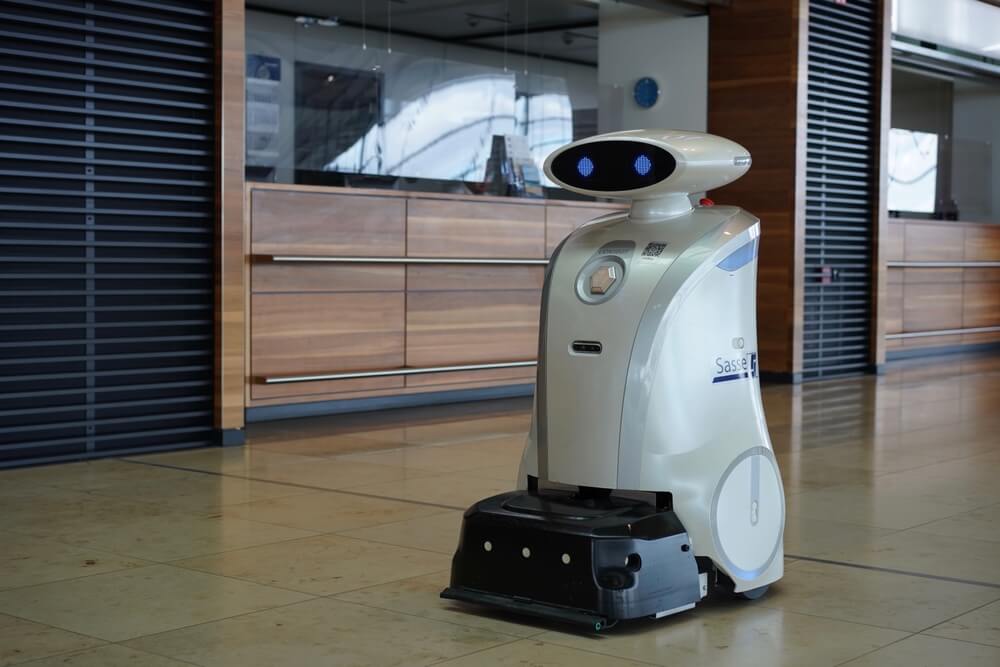 Robots are already used in hospitals for support care, supply delivery, and cleanliness
Robots are already used in hospitals for support care, supply delivery, and cleanliness. As the workforce scarcity persists and operational pressure rises, those deployments will increase next year.
Next year, intelligence will be different. Robotics will become more integrated with edge computing, real-time decision systems, and AI perception.
Robots should be able to comprehend context more fully and adjust to their surroundings more quickly. The novelty of dancing and running robots will wear out.
They will collaborate with humans a lot more naturally. For enterprises, robotics becomes a productivity strategy rather than an experiment or marketing attention.
More Integration
All these trends, and many more I will cover in 2026, support one another. They are intertwined. Predictive security is supported by AI governance, autonomous systems are supported by edge computing and distributed intelligence, and secure, reliable data are essential to immersive retail.
The following year will be about next-level integration. Companies will likely stop evaluating technology in isolation and adopt a more holistic approach. Next year, businesses and leaders will share three characteristics.
More data, pilots, commercial applications, and discussions about how technology can benefit rather than harm people
They will design platforms and ecosystems that scale with purpose, promote ethical and responsible technology adoption, and invest in fundamental capabilities rather than headlines.
Trends today indicate the path to our future. Systems that can think for themselves, communicate intelligently, adjust to their surroundings, and have practical effects are all around us.
We'll see what an AI-defined decade looks like in 2026 if 2025 is any indication. More data, pilots, commercial applications, and discussions about how technology can benefit rather than harm people.
Let's get ready for another year where technology and innovation move at lightspeed and continue to challenge our everyday thinking and boundaries.
